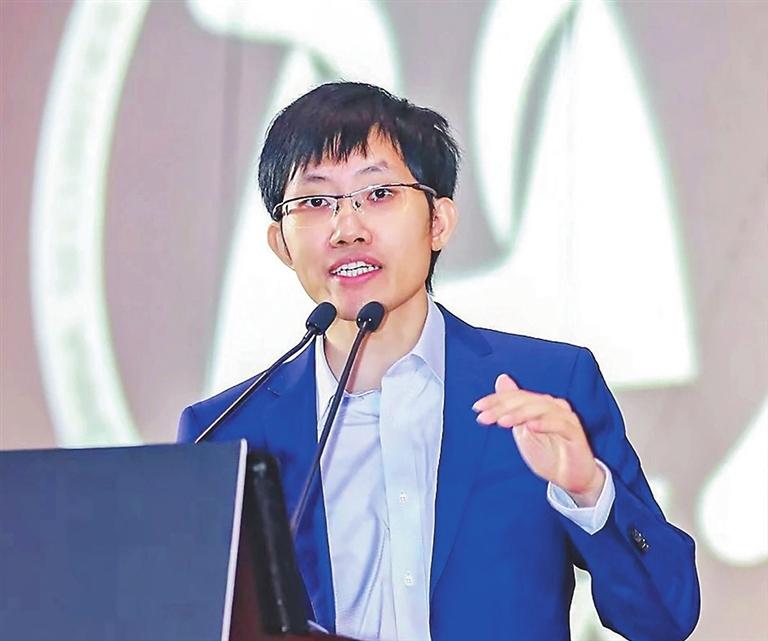
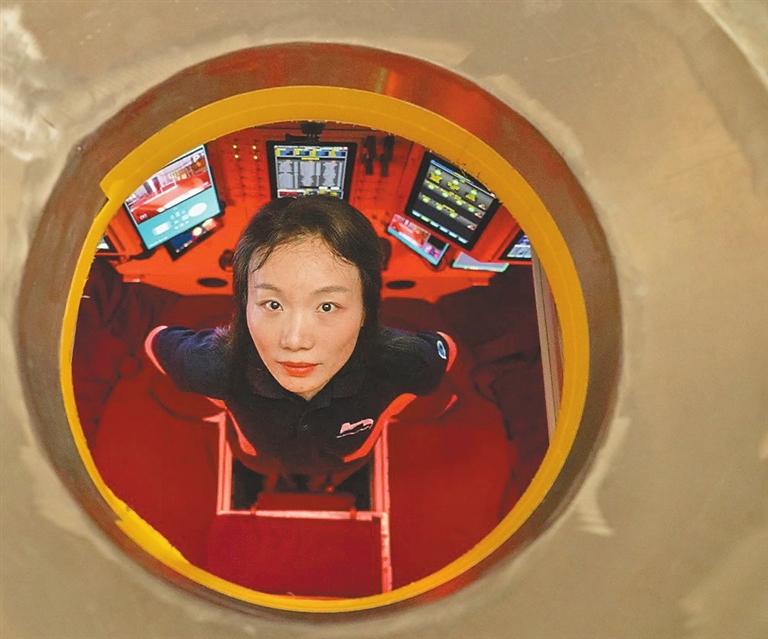
TWO scientists from China have been selected for Nature’s annual “Nature’s 10” list, which highlights significant scientific trends, discoveries, and the individuals behind them over the past year. Recognized in this year’s selection are Liang Wenfeng, founder of the AI company DeepSeek, and Du Mengran, a geoscientist known for her pioneering deep-sea exploration. They are honored respectively for advancing powerful large-scale AI models and for revealing some of the deepest animal ecosystems ever observed on Earth. Democratizing AI with open-source innovation In its profile of Liang, Nature notes that his company DeepSeek “rocked the world of artificial intelligence” in January with the release of its powerful and cost-effective R1 model. The launch immediately challenged the perception that the United States held an unassailable lead in AI. Behind the breakthrough stands Liang, a 40-year-old former financial analyst who reportedly earned millions applying AI algorithms in the stock market before founding DeepSeek in Hangzhou in 2023. The R1 model is a “reasoning” large language model (LLM) that excels at solving complex tasks — such as in mathematics and coding — by breaking them down into logical steps. It was the first model of its kind to be released with open weights, allowing researchers to freely download and build upon it, thus accelerating innovation across fields. Despite matching the capabilities of leading U.S. models like those behind ChatGPT, R1 was trained at a fraction of the cost. DeepSeek further promoted transparency by publishing full technical details and undergoing formal peer review — a first for a major LLM. “DeepSeek has been hugely influential,” said Adina Yakefu, a researcher at the AI platform Hugging Face in New York. Exploring life in the ocean’s deepest trenches Nature also spotlighted Du for her historic dives into the hadal zone — the ocean’s deepest layer, beyond six kilometers. In 2024, Du and her team explored the Kuril-Kamchatka Trench northeast of Japan, where they documented the deepest-known animal ecosystem on Earth. “As a diving scientist, I always have the curiosity to know the unknowns about hadal trenches,” said Du, who is based at the Institute of Deep-sea Science and Engineering in Sanya. “The best way to know the unknown is to go there and feel it with your heart.” The ecosystem her team discovered is sustained not by sunlight but by chemical energy from methane, hydrogen sulfide, and other compounds seeping from the seafloor. Du was the first to observe several species of gastropods, tubeworms, clams, and other life forms in these “cold seeps,” many likely new to science. This year, Du and colleagues explored another trench in the southern Pacific, finding similar ecosystems — evidence suggesting a global network of chemosynthetic life in the deep ocean. Reflecting science’s broad impact According to Nature, the 2025 “Nature’s 10” reflects a wide spectrum of scientific and societal challenges — from astronomy and deep-sea research to AI, public health, and research integrity. The list is not an award ranking but a curated exploration of key scientific stories and the people who shaped them. Brendan Maher, a features editor at Nature, described the selection as celebrating “the exploration of new frontiers, the promise of groundbreaking medical advances, an unwavering commitment to safeguarding scientific integrity, and those shaping global policies that save lives.” Also featured on this year’s list are Susan Monarez (former U.S. CDC director), Achal Agrawal (defender of research integrity), telescope pioneer Tony Tyso, pandemic negotiator Precious Matsoso, neurologist Sarah Tabrizi, mosquito researcher Luciano Moreira, biologist Yifat Merbl, and baby KJ Muldoon, who received the first personalized CRISPR gene-editing therapy. (SD-Agencies) | 