

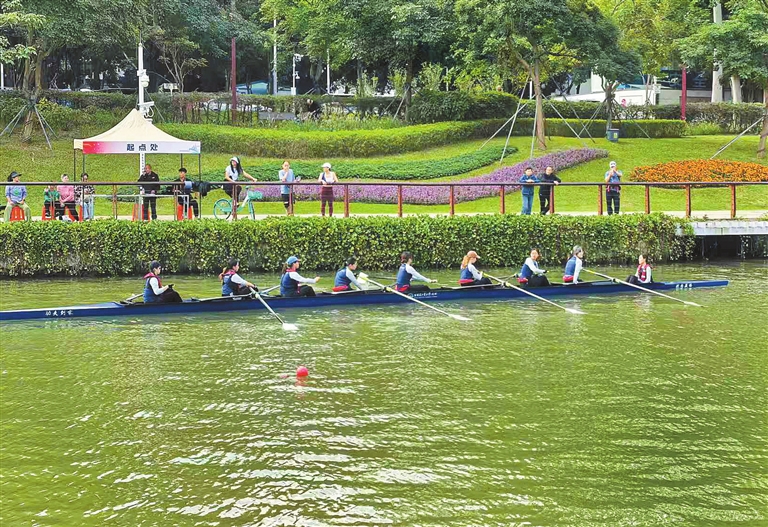
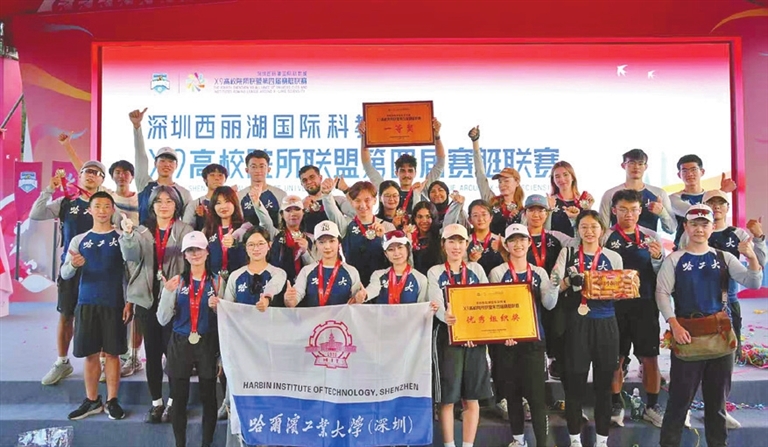

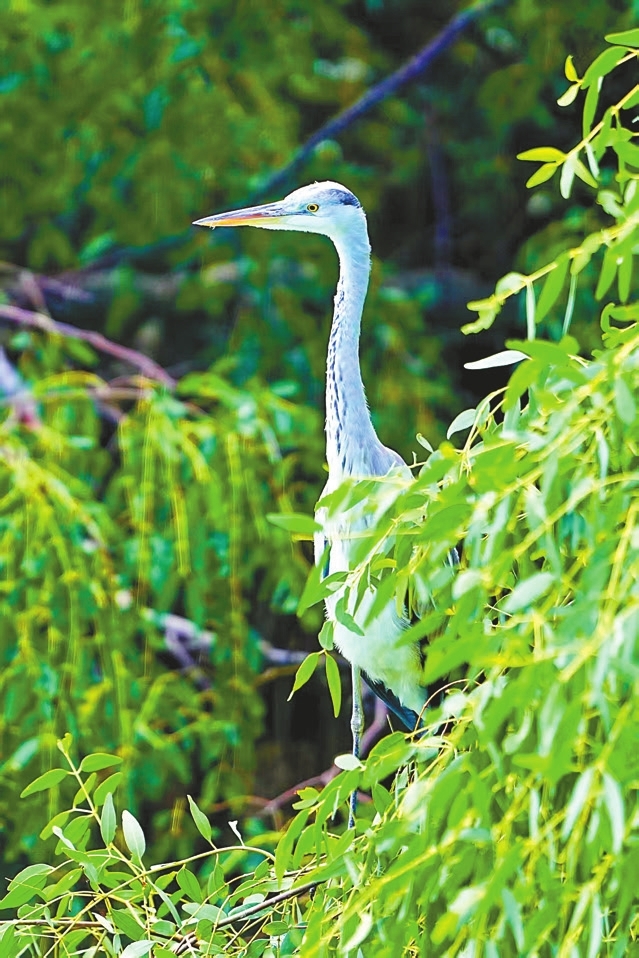
Editor’s note Welcome to Gen Z Weekly, our new column dedicated to showcasing the voices and experiences of Generation Z in Shenzhen and beyond. We’ve created this space to share authentic, youth-driven narratives that reflect the energy and perspectives of today’s young people. Through Gen Z Weekly, expect to hear directly from international students and Chinese youth about their campus lives, personal journeys, and thoughtful insights. Chen Siqi vankochensq@163.com IN the soft, grey light of a Shenzhen morning, while the city still murmurs in slumber, the Dasha River begins to stir. The first sound is not of traffic, but the gentle slap of oars dipping into calm water. In a long, slender racing shell, Kseniia Terenteva moves in perfect unison with her teammates, her breath forming faint clouds in the air. For this 20-year-old Russian student from the Harbin Institute of Technology (Shenzhen) (HITSZ), these 6 a.m. training sessions are more than a sport — they are a front-row seat to an urban metamorphosis. “Every time, I notice so many people walking around the river,” she told Shenzhen Daily. “People are just exercising, cycling, or doing traditional Chinese exercises in the early morning. It’s really interesting how this place has been made so comfortable for people.” Terenteva’s story with the Dasha River began with a simple invitation from a classmate to join the university rowing team this September. It has since evolved into a profound case study for her major in urban planning. The waterway she trains on is at the heart of one of Shenzhen’s most ambitious ecological revival stories. Once a fetid industrial canal, it is now a 13-kilometer blue-green corridor stitching together universities, high-tech parks, and bustling neighborhoods. The river’s story, retold Just a decade ago, the Dasha River was known locally as a “black and smelly” river — a concrete-lined drain for industrial runoff that severed communities. Today, it is the city’s liquid park. Its banks have been transformed into gentle, vegetated slopes where egrets wade and children chase butterflies. A continuous path meanders alongside, which is used by cyclists, runners, and elderly practitioners of tai chi whose slow movements mirror the river’s flow. Terenteva’s academic interest in this transformation deepened this November when a group of Chinese postgraduate students asked her to narrate a short documentary, “Where the Dasha River Flows: A Symphony of Ecology,” about the very river she rows. “They invited me as the main character,” she explained. The project became a deep dive into the ecology of a city that has chosen restoration over neglect. The film team traced the Dasha’s course over several days, moving from the water, to a small riverside museum, and then into university lecture halls. “We talked to staff and ordinary citizens who took pictures of the beautiful views and the birds,” Terenteva recalled. She was struck by hobbyists with professional cameras waiting to capture visiting birds — a sign of a healthier ecosystem. “We asked someone to send us his photos. It was so interesting and beautiful — he had a professional camera.” This hands-on exploration shattered her preconceptions. “Before filming, I imagined what we see now is what it was like years ago. But afterwards, I understood [that] years ago it was polluted and dangerous, and now it’s safe and clean.” The historical contrast was a revelation. “I was surprised the government decided to clean this river and make it part of Shenzhen — not to destroy it, but to make it part of life.” For Terenteva, the key lesson was systemic. “The river is not just a river. It’s part of the whole city’s ecological system.” This understanding now shapes her view of the city’s growth, especially around her campus. “The river developed with the city at the same time — they grew together. That’s real for our university town. As the river gets better, it improves the environment, daily life, and study life here.” She feels a personal stake in this success. “That’s true because I’m part of the rowing club, and we train on this river. Every time I think about it.” An urban planner’s inspiration As an urban planning student, the project transformed theory into tangible inspiration. “It was really interesting for me as a student,” she said. The Dasha River exemplifies the balance she now sees as fundamental. “It’s surprising — Shenzhen has so much development, but it’s also so green. The main point of urban planning is balancing development with green areas. Not just buildings, but also places for nature and people.” The experience in Shenzhen has reframed her professional ambition. “Now I’m going to learn more about Shenzhen’s history and its natural places. It’s so interesting to think about creating buildings that connect people and nature. I have so much inspiration for my future work.” When asked what she would film next about Shenzhen’s ecology, her mind turns to the city’s iconic peaks. “What about the mountains? Mountains are such an important part of any place.” She sees them as another vital connection to protect, citing Wutong Mountain, home to the city’s tallest peak. “It’s really interesting to think about how to integrate mountains into natural life for people — how to make housing coexist with them.” Call for shared understanding If she could propose one change for the Dasha River’s future, it would be to expand the understanding she has gained. “I would suggest public education,” she stated. “Because now I know more about this river, and I understand how it’s part of the city’s ecological system. If people understood its value, they would take better care of it — and of everything.” For Terenteva, this project has been more than an academic exercise — it’s a lesson in interconnectedness that she will carry into her career. “This process showed me how planning affects an area, nature, and people,” she reflected. “And now I’m going to learn more about it — about examples like this in Shenzhen and around the world.” As dawn breaks over the Dasha River, Terenteva’s oar dips into the water once more, not just propelling a boat, but connecting her to the flowing story of a city learning that its strength lies not in towering over nature, but in moving forward with it. | 