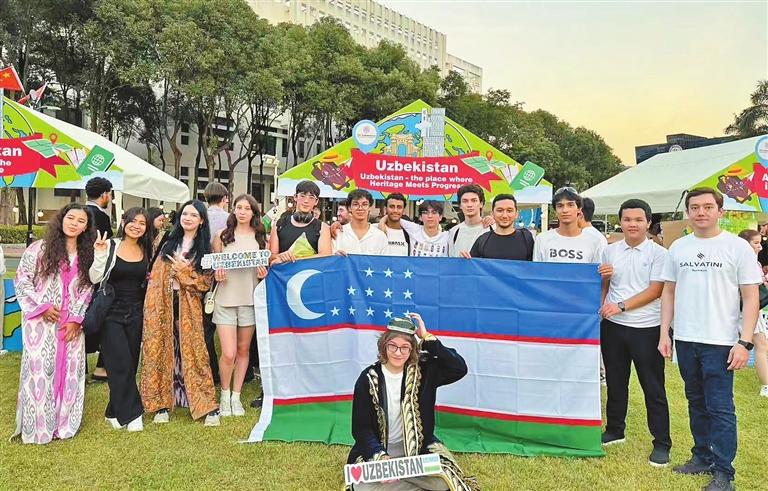
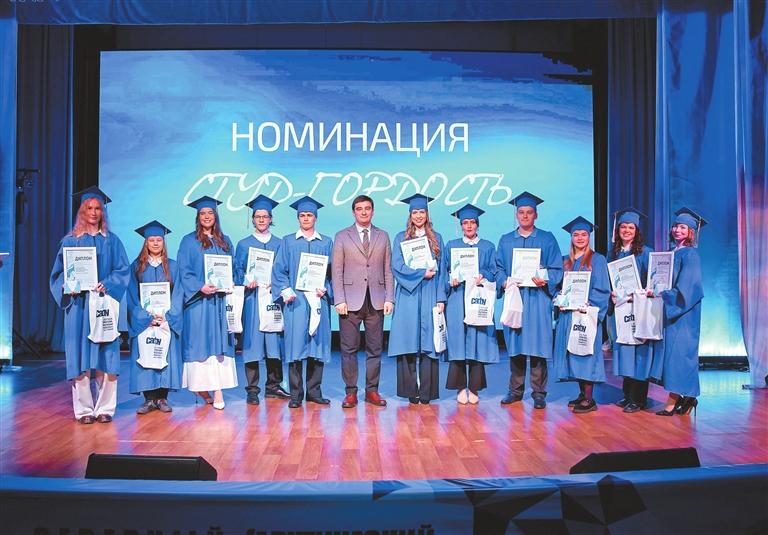

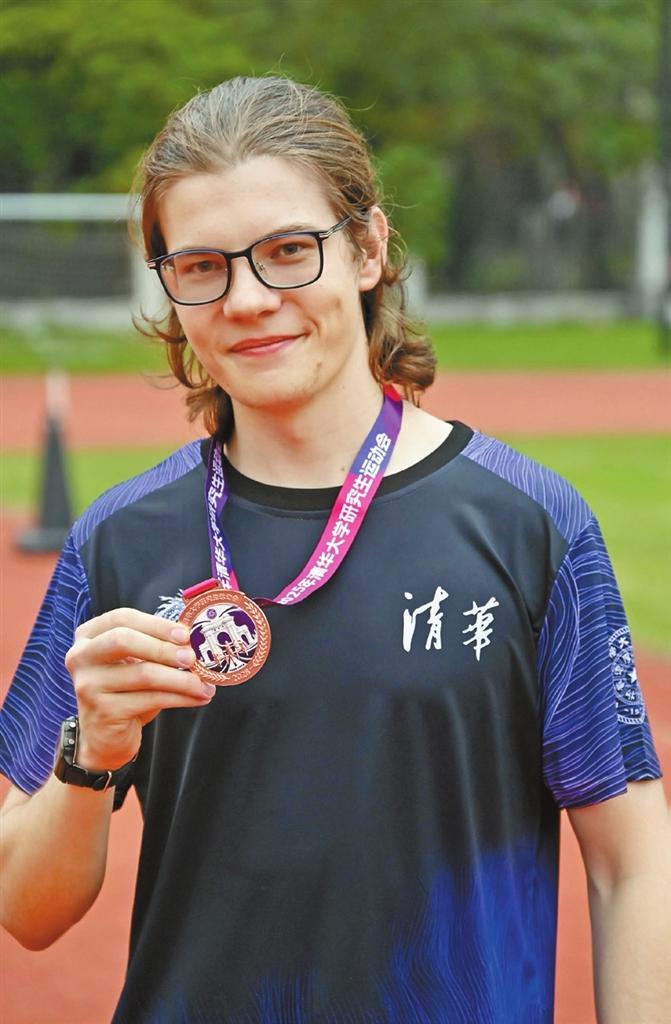

Editor’s note Welcome to Gen Z Weekly, our new column dedicated to showcasing the voices and experiences of Generation Z in Shenzhen and beyond. We’ve created this space to share authentic, youth-driven narratives that reflect the energy and perspectives of today’s young people. Through Gen Z Weekly, expect to hear directly from international students and Chinese youth about their campus lives, personal journeys, and thoughtful insights. Wei Jie claudiamente@hotmail.com ZIGANSHIN ARTUR RADIKOVICH, a student from Uzbekistan, had no idea of the significance when he was accepted to a summer program at the Tsinghua Shenzhen International Graduate School (SIGS) last year. He only understood the prestige after a Chinese friend, whom he met during his Spring 2024 exchange at the Beijing Institute of Technology, explained it to him. Artur and other exchange students were asked to vacate their dormitories after the last exam, which was scheduled around June 30. “My visa would be valid for one more month, so I figured I could look for something to do for the summer.” He applied online to several summer programs in China, one of which was the Tsinghua SIGS Global Summer School. He applied almost on a whim, drawn by curiosity more than a plan since he barely knew China’s higher-education landscape beyond a vague awareness of Peking University. When he received an offer from Tsinghua, he was simply relieved to have a place to stay. That relief turned into something else when his friend explained the significance of Tsinghua and Shenzhen in China. “I felt like I’d won the lottery being accepted by one of the top universities in China,” he recalled. “Had I known Tsinghua’s prestige, I might have hesitated, thinking that I wasn’t good enough.” Artur said he was thrilled but didn’t fully believe it until the taxi ride from the Shenzhen airport. The three weeks that followed were brilliant: an amazing campus, highly motivated peers from the world’s top universities, numerous visits to local high-tech companies such as Baidu and BGI, and the cross-cultural conversations he had hoped would help him decide where to apply next. The program left Artur with a deep impression of Shenzhen — fast-paced, youthful, and motivating, with a lifestyle that feels electric. “The pace and the population here are noticeably more dynamic, and I love a local saying, which is ‘Once you come to Shenzhen, you are a Shenzhener.’” As an international student for the second time, feeling at home was important to him. He noted that Shenzhen, made up largely of people from around the country who share big ambitions, offered exactly that sense of belonging and opportunity. A place for growth Having spent four years of his undergraduate study in the far north of Russia, a region with a more reserved, Scandinavian-type culture, Artur, who grew up in Uzbekistan, appreciated Shenzhen’s openness and hospitality. “Here people are open and warm in a way that immediately made me feel at home. The warmth was the first thing I loved,” he said. Exploring labs last year forced Artur to confront a real choice about his future, and he was torn between two options. The first was the Internet + Innovation Design Program at Open Fiesta Institute — a startup and entrepreneurship track where students spend their first year on entrepreneurship basics and some computer science before forming teams to build real projects in year two. The second was the Institute of Materials Research, which focuses on environmental science and new energy technologies. He ended up admitted to the materials program because, at a top university, he wanted more than a nice diploma — he wanted to take a deep dive into one scientific area and gain fundamental knowledge. The materials institute promised five exciting research directions — energy-storage materials (new battery chemistry), data-storage materials for microprocessors, novel functional materials, AI applications in materials research, and other applied topics including Energy Materials and Devices and Biomedical Materials and Devices — all of which felt directly relevant to his longer-term plan of launching a tech startup. Expanding the idea of success Equally important has been his effort to push beyond the campus bubble, using Shenzhen as part of his education and network. Artur said the city’s driven atmosphere has already reshaped his “basic minimum.” Back in Russia he measured success mostly by study and a few social activities; in Shenzhen, everyone’s day is a mix of sports, labs, classes and club meetings, raising his standards for success. Sports became a big part of his life here. Every Sunday, his running club heads out early from the Tsinghua campus along the Dasha River to Shenzhen Bay Park, a place he describes as his favorite in the city. He still vividly remembers his first 7 a.m. run, when the sunrise over the mountains and the Houhai skyscrapers was unbelievably beautiful. He runs regularly, finished his first 10K run at about a 5km/h pace in September, and recently completed the Shenzhen Nanshan Half Marathon. He also joined the university’s dragon boat and rowing teams. His fully international dragon-boat crew finished in third place against eight other established university teams after only two training sessions. “We would have won the first prize if not for a one-second penalty for missing a female crew member,” said the Uzbek student. His life in Shenzhen is organized around groups and events, most of which are coordinated through organizations like the Taoyan Subdistrict Service Station for Foreign Residents (TYC) and South Wind International (SWI), which invite members to conferences, pitch events, and networking sessions. He also teamed up with motivated Chinese students for a B2B company competition with a final in Beijing in November. Although they didn’t beat teams backed by major firms, judges encouraged them to pursue internships and said their work had value, opening real possibilities for internships and full-time roles. The experience made him more determined, and he wants to start a company in Shenzhen someday. For Artur, being surrounded by driven classmates from around the world — Turkey, Pakistan, Kazakhstan, Russia, Africa, and Europe — and living in an environment that breeds startups and entrepreneurship makes Shenzhen feel like the right place to study deeply and start building something meaningful. His advice for other potential international students is simple. Don’t be afraid to apply or try. Nothing fundamental changes if you fail, but a small chance of success is worth trying. “If I could do that, trust me — you can too,” he said. | 