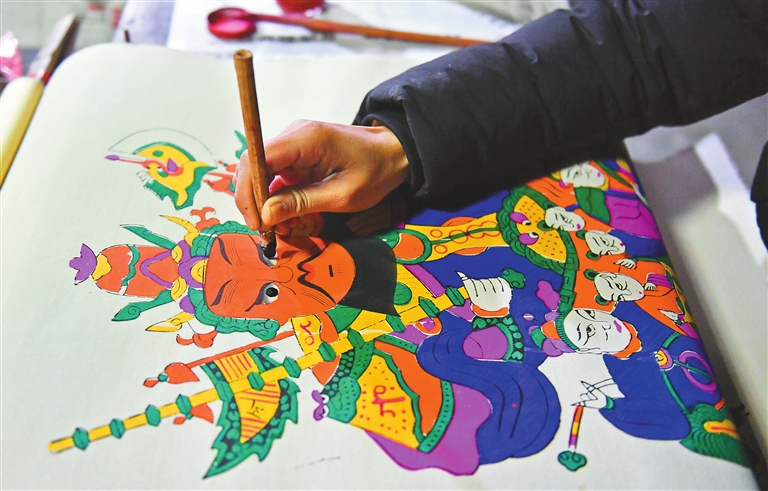
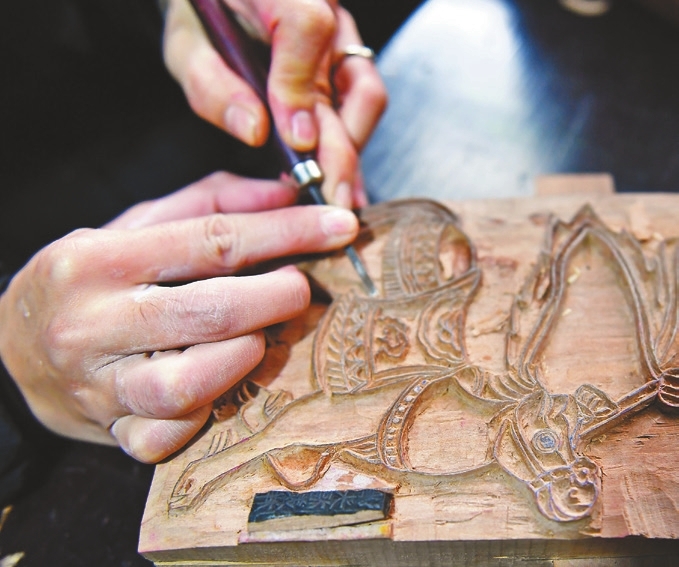
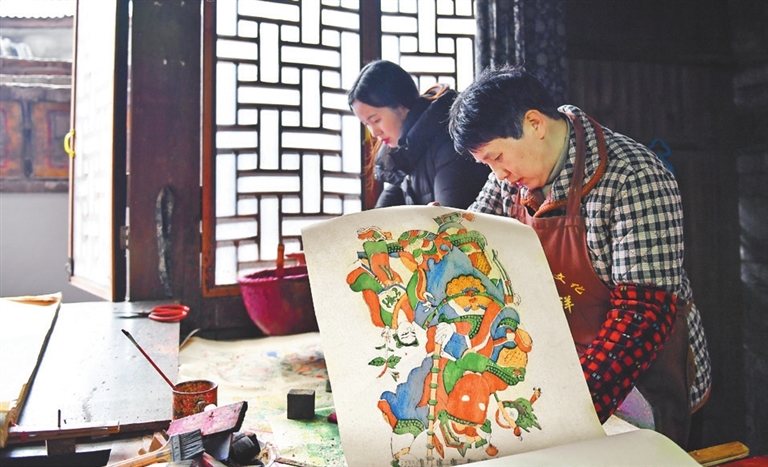
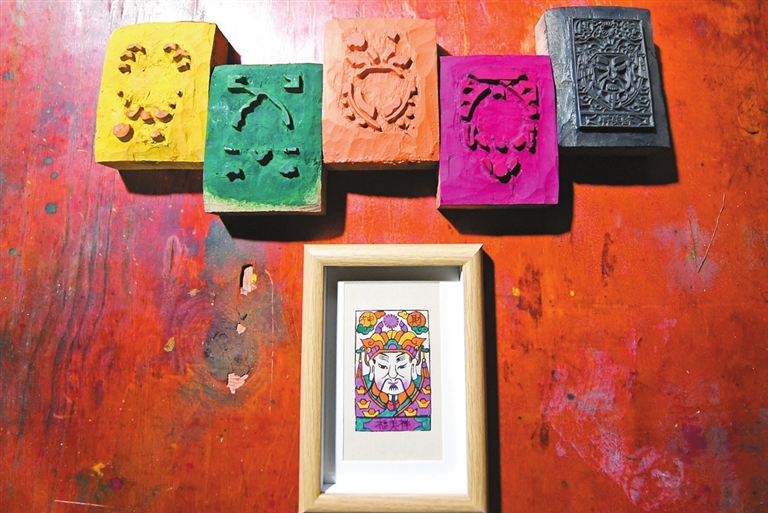
AS Lunar New Year approaches, some Chinese households still perform a century-old sacred ritual: adorning their doors with vibrant New Year prints (nianhua). These are not mere decorations; they are guardians, blessings, and bold declarations of hope. Traditionally featuring deities like the Door Gods, Qin Qiong and Yuchi Jingde, or auspicious symbols of prosperity and longevity, these prints serve to expel evil and welcome fortune. While the tradition has waned in modern cities, it continues to thrive in the ancient workshops of Tantou Town in Shaoyang, Hunan Province. New Year prints emerged with the invention of woodblock printing in the late Tang Dynasty (618-907), maturing by the Ming Dynasty (1368-1644). By the late Ming period, multi-color prints appeared. Although Suzhou’s Taohuawu and Tianjin’s Yangliuqing are more widely recognized as the historic centers of New Year prints in southern and northern China, Tantou’s tradition claims an earlier origin. According to the “Shaoyang Local Chronicles,” Tantou-produced prints featuring Marshal Zhao were already popular and sold to the south of the Yangtze River during the Dade era of the early Yuan Dynasty (1297–1307). Tantou’s New Year prints employ bright, vivid, and contrasting colors, creating a lively visual tension and strong decorative appeal. Some say the palette carries the pungent flavor of local spices, much like the regional cuisine. Large areas of orange-red, pale yellow, and rose-red are paired with shades like ultramarine, emerald green, and coal black. With their fiery, vibrant colors and bold, exaggerated forms, Tantou prints reflect the simple, humorous, and optimistic spirit of the local community. The famed Chinese writer Lu Xun (Zhou Shuren) specifically praised the Tantou New Year print “The Mice’s Wedding” in his essay collection “Dawn Blossoms Plucked at Dusk,” praising it as a treasured collectible. Today, the work is held in the collection of the British Museum. In June 2006, Tantou prints were listed among the first batch of national-level intangible cultural heritage items. Tantou has been designated by the Ministry of Culture as the “Hometown of Folk New Year Prints.” (SD News) | 