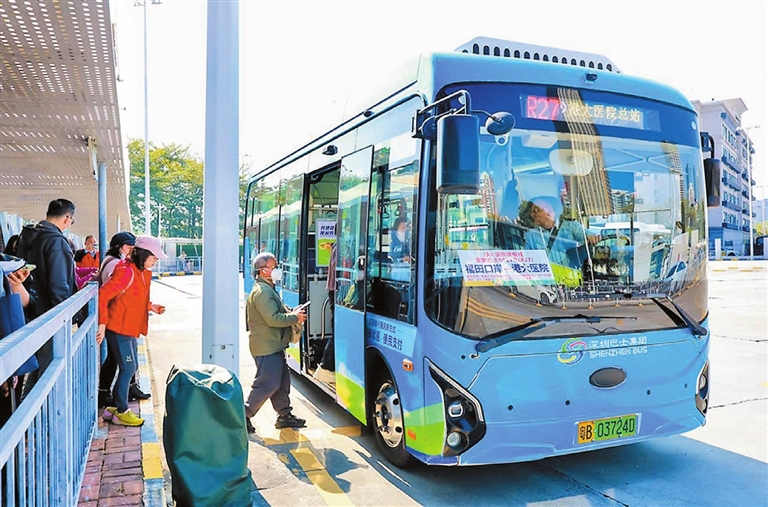
CROSS-BOUNDARY medical integration between Hong Kong and Shenzhen gained further momentum Monday with the launch of a direct shuttle bus linking Futian Checkpoint and the University of Hong Kong‑Shenzhen Hospital, offering patients smoother access to the regional healthcare hub. Amid the growing trend of Hong Kong residents seeking medical care in Shenzhen, the new service is set to make it easier for patients to reach the hospital, which blends medical strengths from both sides. The approximately 30-minute route will run on a three‑month trial basis, operating daily from 8 a.m. to 6 p.m. with departures every half hour. The fare is 2 yuan (US$0.28), and passengers aged 60 and above ride for free. Payment can be made in cash or with a transportation card. Among the first passengers was a Hong Kong patient surnamed Ho, who noted that taxis from the checkpoint cost 20–40 yuan, while the Metro requires two transfers. “The direct bus is affordable and convenient, especially for chronic patients who need to visit frequently,” he said. Huizhou resident Brian Zhong also used the service with his mother, who has osteoporosis and has been visiting the hospital monthly for medication since early last year. Zhong said the shuttle makes it simpler for mainland patients to combine medical appointments with family visits or tourism in Hong Kong. The drug Zhong’s mother uses is approved in Hong Kong but not yet available on the mainland. Currently, only a limited number of institutions on the mainland — including the University of Hong Kong‑Shenzhen Hospital — offer it under a pilot scheme. As a pioneer in cross‑boundary medical integration, the hospital has been the first to pilot several initiatives for Hong Kong patients, such as the cross‑boundary use of Hong Kong‑approved drugs and medical devices and the acceptance of healthcare vouchers for Hong Kong elders. By the end of last year, Hong Kong seniors had used vouchers at the hospital 140,000 times. The program for cross‑boundary drugs and devices has now expanded to 71 medical institutions across Guangdong. According to the hospital, more than 22% of its outpatients are Hong Kong residents. A University of Hong Kong survey released last August revealed a sharp rise in the number of Hong Kong residents seeking medical care across the border — while only 5.9% had used mainland health services before 2011, the proportion climbed to 60% between 2019 and 2023. (SZ News) | 