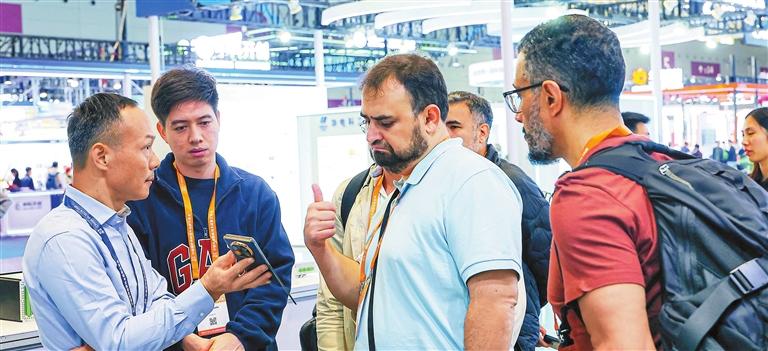
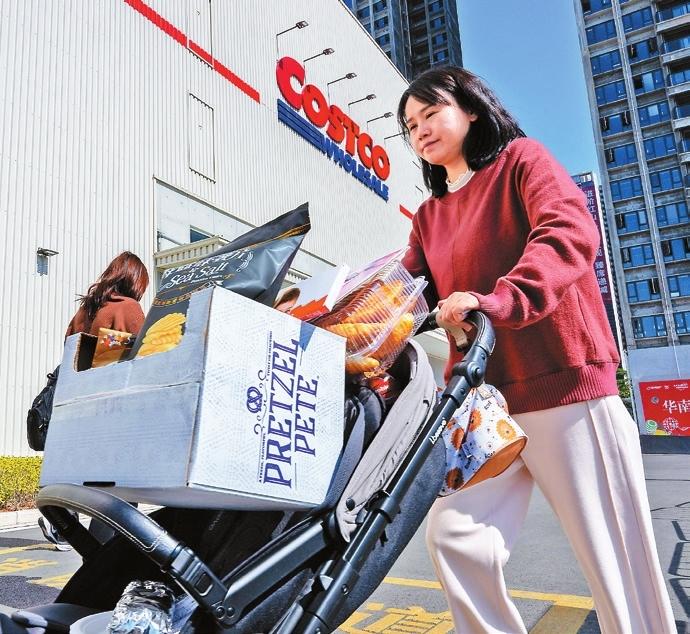
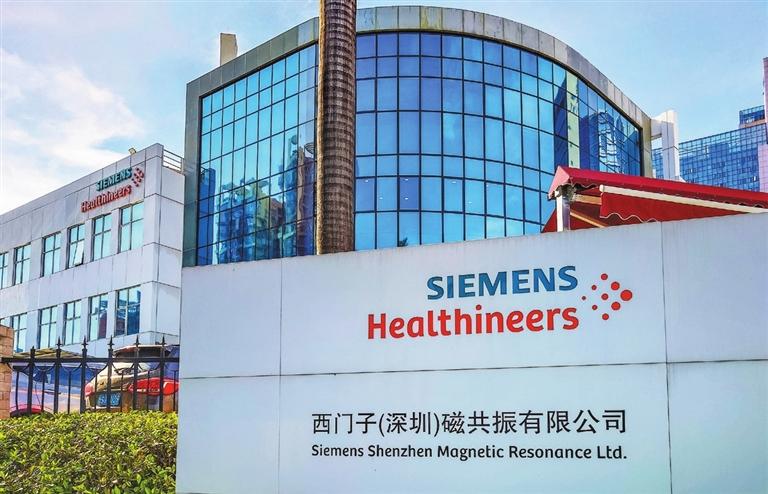
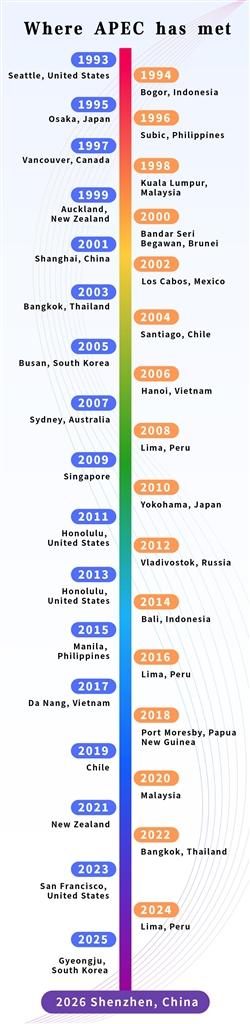
Editor’s Note This November, Shenzhen will follow in the footsteps of Shanghai (2001) and Beijing (2014) to become the third Chinese city to host the APEC Summit. Born out of China’s reform and opening-up, Shenzhen has thrived throughout the country’s economic and social transformation, serving as a testing ground and pioneer for bold new ideas. A miracle of urban development, the city has transformed in just over four decades from a modest border town into a modern international metropolis, showcasing to the world the remarkable achievements of a modernizing China. Starting today, the Shenzhen Daily launches the APEC Shenzhen special edition on a weekly basis. It will provide readers with the latest news, policy updates, and insights from Shenzhen and the Guangdong-Hong Kong-Macao Greater Bay Area. We cordially invite friends from around the world to explore and experience Shenzhen. FINNISH elevator and escalator company Kone recently announced plans to expand its footprint in the Guangdong-Hong Kong-Macao Greater Bay Area (GBA), betting big on the region’s robust economic growth and urban renewal drive to fuel demand for equipment installation and renovation. The company will establish its China Southern Headquarters in Shenzhen’s Qianhai. This new hub, scheduled to begin operations in early 2026, will focus on regional market development, customer service, and resource integration. “The Greater Bay Area is among the most dynamic and innovative regions in China. Qianhai, as a pivotal platform for Shenzhen–Hong Kong collaboration, offers a robust industrial ecosystem, strategic location, excellent connectivity, and strong policy support for cross-border cooperation,” said Joe Bao, executive vice-president of Kone Greater China. “We look forward to leveraging these advantages to optimize resource allocation, accelerate industrial transformation, and support urban renewal across the Greater Bay Area.” Kone’s decision reflects the overall confidence multinationals place in Shenzhen and their commitment to investing here. With its openness, economic vitality, vibrant innovation ecosystem, and favorable business environment, Shenzhen has become an ideal investment destination for foreign firms looking to gain a foothold in the Chinese market. To date, companies from 180 countries and regions have invested in Shenzhen, and more than 340 Fortune Global 500 companies have established operations in the city. A strong magnet for investors In the first 11 months of 2025, Shenzhen’s actual utilized foreign capital amounted to 45.17 billion yuan (US$6.33 billion), representing a year-on-year increase of 6.5%. More than 10,000 new foreign-invested firms were registered, while multinationals like DuPont, JCDecaux, BP, and Hexagon set up new ventures or increased their investments. In April, representatives from 36 foreign firms visited Shenzhen to explore new investment opportunities. “Home to 26 of our hotels — the most among Guangdong cities — Shenzhen has strategic significance for Marriott International in China,” said Jamie Shen, vice president of Greater China at Marriott International, adding that the company would further leverage its brand strength to attract global travelers to China. New opportunities With foreign banks continuously expanding their presence, Shenzhen now ranks among the top three Chinese cities for both the number and business scale of these institutions. Kasikorn Bank, CMB Wing Lung Bank, CITIC Bank International, and OCBC Wing Hang have established fintech subsidiaries in the city; DBS Bank has increased its stake in Shenzhen Rural Commercial Bank three times; and with a new branch in Qianhai, Dah Sing Bank became the first to obtain licenses from both Chinese mainland and Hong Kong authorities. Shenzhen’s complete industrial chains and innovation ecosystem continue to attract a steady inflow of global investors. From January to November 2025, utilized foreign investment in Shenzhen’s manufacturing sector rose sharply by 95.4%, with that in high-tech manufacturing growing by 60%. In 2025, Siemens Shenzhen Magnetic Resonance Ltd. invested over 1 billion yuan in a new R&D and manufacturing facility in Nanshan. Upon completion, it will complement the company’s existing base, established in 2002 in the city’s high-tech industrial park. Embracing global investors In March, Shenzhen released three action plans to optimize its business environment, making it more market-oriented, law-based, and aligned with international practices. The city outlined 26 key tasks across six areas: attracting foreign investment, promoting outbound investment, fostering international trade, nurturing a talent ecosystem, enhancing livability and tourism, and improving the city’s global image. In April, Shenzhen was selected as a national pilot city to further open its service sectors — including telecommunications and medical services — to foreign investment. (Debra Li) Shenzhen offers incentives to boost foreign investment Shenzhen’s government has recently introduced 22 measures aimed at further attracting foreign investment to the city. These measures are designed to promote the opening of key sectors to foreign capital, enhance the local business climate, simplify investment and operational processes, provide fiscal support and tax benefits, and improve the overall framework for facilitating foreign investment. The incentives are particularly targeted at leading niche-market players and major manufacturing enterprises. Under the new measures, manufacturing companies that accumulate new foreign investment of US$50 million or more between 2023 and 2027 will qualify for rewards. Eligible enterprises may receive up to 50 million yuan (US$7.07 million) per year, with a maximum total reward of 150 million yuan. What is APEC? The Asia-Pacific Economic Cooperation (APEC) is the premier forum for facilitating economic growth, cooperation, trade, and investment in the Asia-Pacific region. APEC was officially established in 1989 following a ministerial meeting held from Nov. 5 to 7 in Canberra, Australia, with the goal of fostering greater prosperity and sustainable growth across member economies. The founding participants included Australia, the United States, Japan, South Korea, New Zealand, Canada, and the six member states of ASEAN at the time. Today, APEC comprises 21 member economies: Australia, Brunei, Canada, Chile, China, Hong Kong (China), Indonesia, Japan, South Korea, Mexico, Malaysia, New Zealand, Papua New Guinea, Peru, the Philippines, Russia, Singapore, Chinese Taipei, Thailand, the United States, and Vietnam. Additionally, APEC maintains three official observers: the ASEAN Secretariat, the Pacific Economic Cooperation Council (PECC), and the Pacific Islands Forum Secretariat (PIFS). | 