
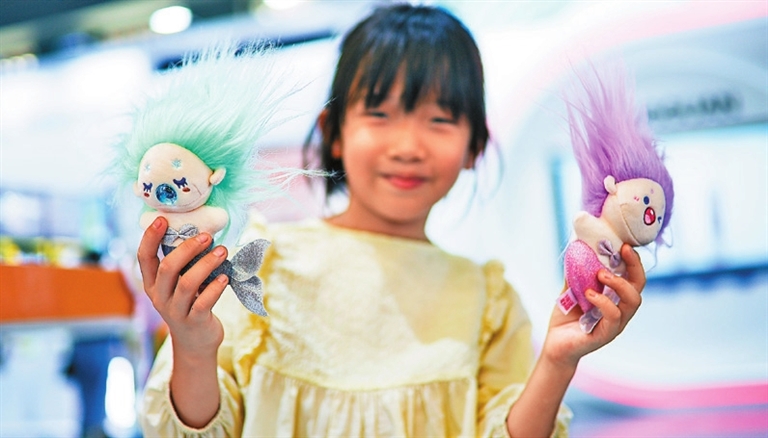
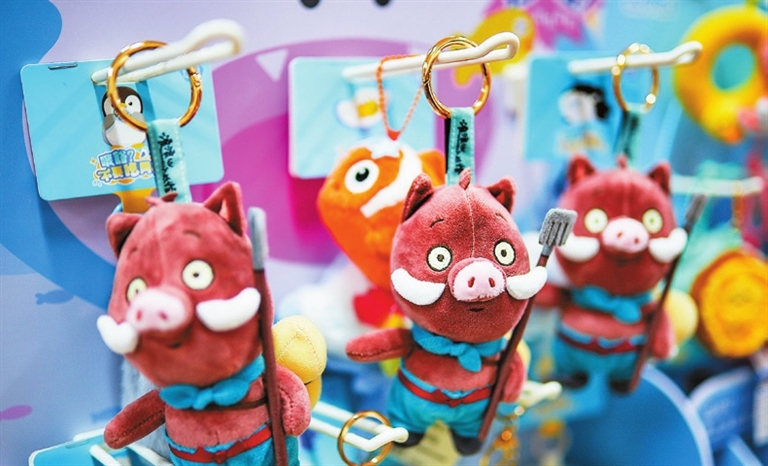
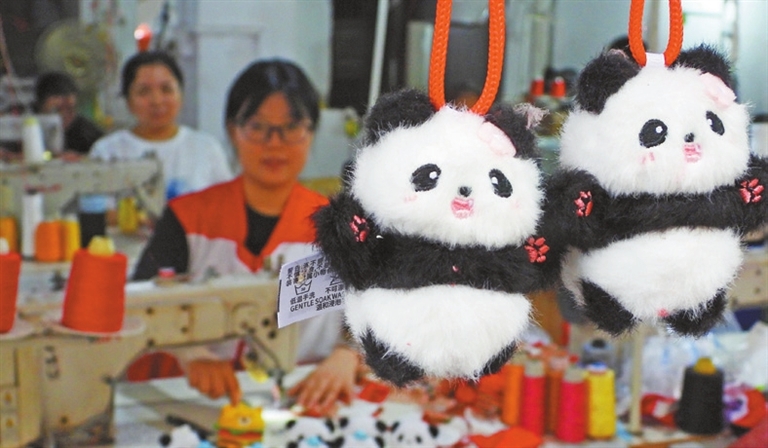
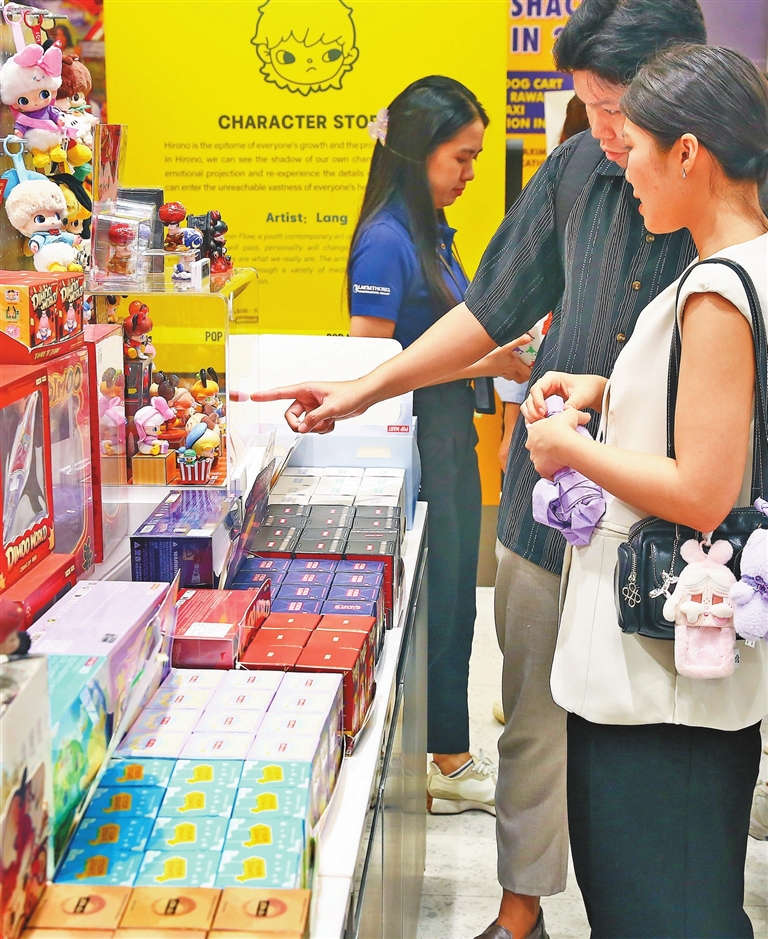
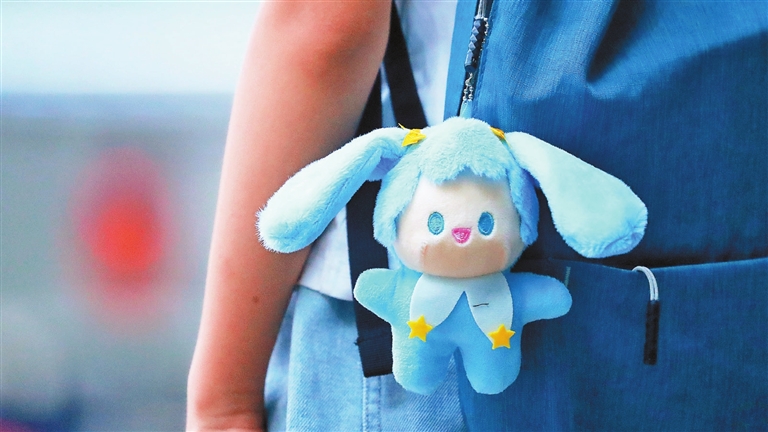
AMID the bustling streets of Chinese modern cities, a subtle yet noticeable shift is taking place: More and more youngsters are adorning their backpacks with an eclectic array of small hanging ornaments. From cuddly plush toys to culturally inspired trinkets, from anime peripherals to cutting-edge smart gadgets, these diverse accessories, collectively known as “bag charms,” are sparking a new wave of fashion consumption. They have become “mobile symbols” for personal expression, swaying with every step and telling silent stories about their owners’ moods and interests. Growing popularity For many young Chinese, the first decision of the day perhaps isn’t just what to wear, but which plush companion to clip onto their bag. At a MINISO LAND store on Beijing Road, a bustling pedestrian street in Guangzhou, the trend is palpable. An entire wall is dedicated to bag charms, featuring everything from classic IPs like Hello Kitty and Harry Potter to trending favorites like Chiikawa and characters from the recent “Zootopia 2.” Shoppers, mostly young people, crowd the aisles, some clutching over a dozen items waiting for checkout. Prices range from tens to hundreds of yuan, but the enthusiasm is uniform. On Shanghai’s neon-lit Nanjing East Road, the flagship MINISO LAND has also turned an entire wall into a dangling rainbow of bag charms. In the Sanrio section, a university student surnamed Lyu and her sister are carefully selecting Hello Kitty charms. “I’ve collected quite a few Sanrio bag charms already. This autumn edition perfectly matches my mood right now,” Lyu explained, as she tries out different placements on her backpack. Zhang Qian, the store’s head, said that bag charms are a standout category within its trendy toys. Certain new releases, like the Wakuku charm, have generated single-store sales of more than 10,000 yuan (US$1,400) on their launch day. Online platforms also mirror this surge. The Dewu App has reported a 140% year-on-year increase in searches for “hangings” and a 127% rise in such orders. On Xiaohongshu, also known as RedNote, a popular Chinese lifestyle-sharing platform, the hashtag “everything can be hung” has amassed over 130 million views, indicating consumers’ sustained and growing interest. Netizens eagerly share their matching strategies and “socialize” through their shared love for specific characters. Xu Xinyue, an associate professor at the Institute for Cultural Industries of Shenzhen University, interprets the trend as a shift in consumption psychology. “Generation Z pays more attention to self-expression,” Xu said. “Bag charms perfectly match their needs for emotional regulation, identity display, and connecting with social circles.” Unlike static figurines kept in display cabinets, bag charms possess a “portable” advantage, offering all-day companionship, which has pushed manufacturers to innovate rapidly to keep up with diverse demands. Analysis from a consulting report released by MobTech research institute highlighted that over 40.1% of young consumers prioritized emotional value and personal interest when making purchases in 2024. “These small objects offer not just visual delight but also tactile comfort, serving as immediate sources of psychological solace,” said Zhang Yi, CEO of iiMedia Research. In an era of prevalent basic fashion, a unique charm can be the defining accent of an outfit, a key tool for individuality, said a fashion vlogger. “Bag charms are not just decorations; they are mobile ‘mood regulators’ and visual carriers of young people’s identity. They are visual carriers for emotional expression and community belonging for the youth. MINISO has seen over 12 million bag charms sold so far this year, accounting for over 35% of the total plush category,” said Liu Xiaobin, vice president and chief marketing officer of MINISO. In response to consumer preferences for texture and craftsmanship, particularly the popularity of vinyl-plush charms for their vibrant colors and soft feel, companies are also upgrading designs and production techniques, Liu added. Thanks to smart manufacturing and digital workshops, even micro-runs of 50 or 100 pieces are now viable. “Flexible production lets us rush small-batch, personalized charms to market quickly,” said Zhang Hua, domestic sales chief at Dongguan Yuhong Electronic Technology Co. Ltd. “Retailers carry less inventory, while shoppers face an ever-widening aisle of choices.” Psychologists see a deeper function. Prof. Wang Yan from the School of Psychology and Cognitive Science at East China Normal University calls bag charms “portable self-affirmation tokens.” They let wearers broadcast identity, signal belonging to micro-communities, and offer micro-doses of comfort during anxious moments. The fact that the bag charms serve no practical purpose is precisely the point — consumers are buying a feeling, not a function, according to industry insiders. Liu also attributes the trend’s sustainability to the powerful support of China’s highly efficient manufacturing and supply chains. “Our supply chains can help deliver products from supplier to store shelf in just three to seven days, constantly fueling the cycle of trendiness,” he said. ‘Emotional economy’ Bag charms have given birth to a booming sector of the “emotional economy.” In Yiwu, the world’s small commodities hub in East China’s Zhejiang Province, manufacturers are racing against time to satisfy the market’s appetite. “We started receiving frequent inquiries about bag charms from domestic and international clients early this year, so we entered the market quickly,” said Lu Yi, general manager of an accessory and decoration company in Yiwu. To stay trendy, Lu’s company develops about 100 new products monthly, averaging three to four new designs daily. “We have also secured IP authorizations for popular characters like B.Duck and Sanrio, which are highly favored by wholesalers,” Lu said. Meanwhile, in the manufacturing hub of Dongguan, companies are adding technological value to the small items. According to Zhang Hua, domestic sales head of an electronic technology company based in Dongguan, the market has expanded from original designs and IP collaborations to include Anime, Comic, and Games (ACG) merchandise and smart companionship products. Zhang’s company recently launched an original brand featuring a smart plush charm equipped with an AI large model. “It sold 20,000 units within just three days of its launch,” Zhang said. The trend is also bolstering other industries. Cultural tourism sites across China are launching distinctive bag charms that serve as “mobile business cards” for regional culture. Hit films and TV dramas are releasing character charms to extend their popularity beyond the screen. At small vendor stalls in scenic areas in Kunming, capital of Yunnan Province, tourists are particularly drawn to locally themed bag charms as souvenirs, according to a stall owner surnamed Li. “With consumption upgrades and the deepening of the emotional economy, these small and beautiful items will continue to be an important part of young people’s lives,” Xu said. (Xinhua) | 