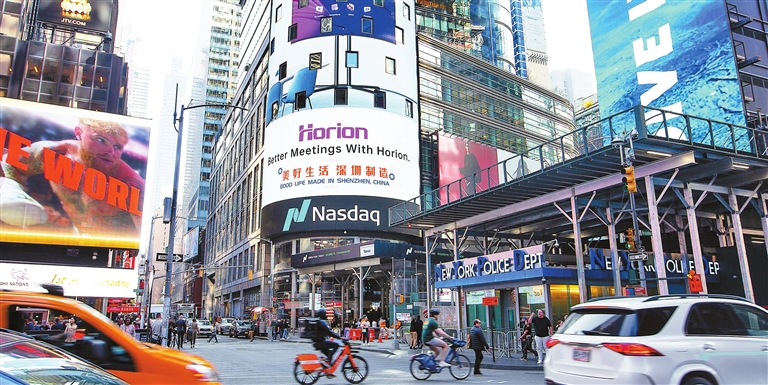
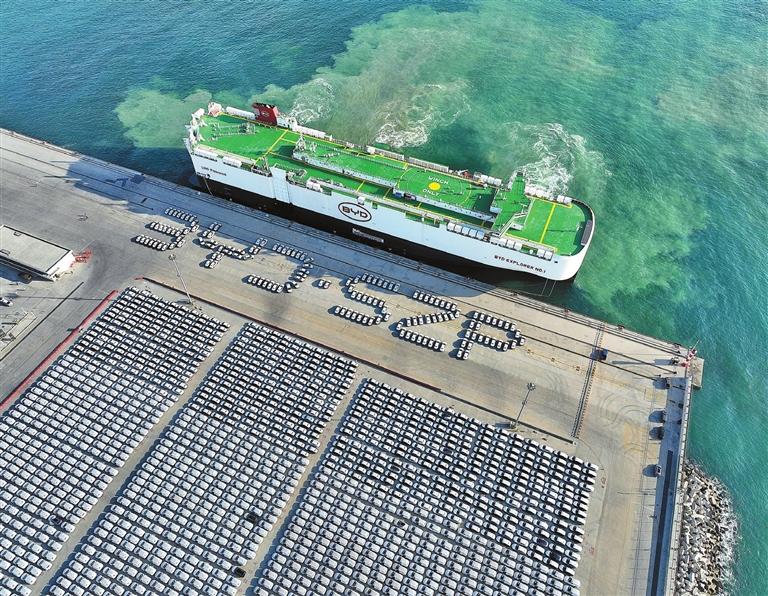
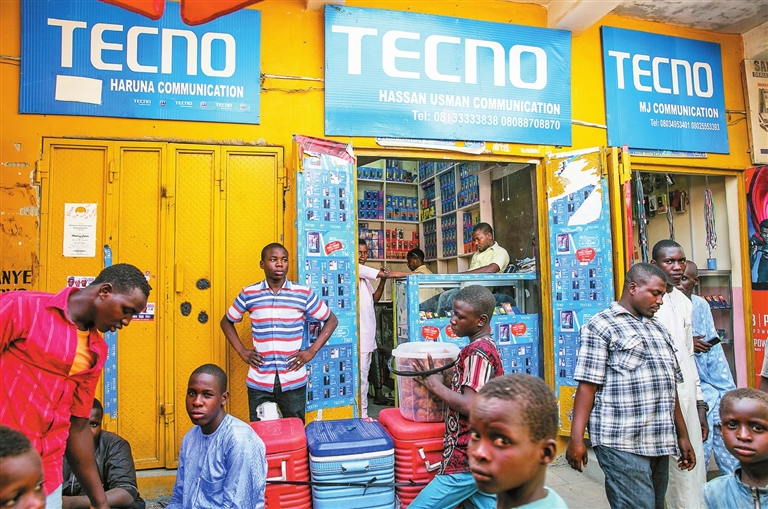
UNDER Dubai’s scorching 50°C heat, the roof of the world’s largest shopping mall is shielded by a remarkably cool “armor.” Infrared imaging reveals its surface is 17.5°C cooler than nearby structures, cutting energy use by 20%. This electricity-free cooling technology, developed by Shenzhen’s i2Cool, is now deployed in over 30 countries and regions. It has already saved more than 6 million kWh of energy and reduced CO2 emissions by millions of kilograms — an impact equivalent to planting nearly 300,000 trees. As a flagship of China’s opening up, Shenzhen has deepened cooperation with Belt and Road partners in recent years. By expanding smart manufacturing and upgrading infrastructure, Shenzhen has built an integrated sea‑land‑air‑rail network that serves the nation, reaches across the Asia‑Pacific, and connects with the world. Shenzhen firms have moved beyond simply exporting products to pioneering the export of standards. Smart manufacturing opens up new markets At Xiaomo International Logistics Port on Oct. 19, 2025, 1,380 BYD new-energy vehicles (NEVs) were loaded onto the company’s ro-ro ship “Changzhou” bound for Brazil. This followed earlier calls by BYD’s seven other vessels, including the “Explorer No. 1,” “Shenzhen,” and “Zhengzhou.” “This is more than a ship — it’s a maritime bridge linking Chinese smart manufacturing to the global market, allowing users worldwide to benefit from Chinese innovation,” said Wang Junbao, general manager of BYD Group’s Public Business Division. In 2025, BYD achieved annual sales of 4.602 million NEVs, with 2.257 million units of pure-electric models — a 27.86% year-on-year increase. Overseas sales surpassed 1 million for the first time, making BYD the global pure-electric sales champion that year. Today, BYD’s NEV business spans 119 countries and regions across six continents. Its globalization has progressed from product exports to industrial chain exports, with plants in Brazil, Thailand, and Hungary now operational. The Thailand facility enables local staff to independently produce vehicles, while the Brazil plant serves the South American market with both pure-electric and plug-in hybrid models. Beyond manufacturing, BYD has moved into technology exports. In May 2025, it established its European headquarters in Hungary, integrating sales, after-sales, certification, testing, and localized design. China–Europe freight trains pave new corridor Recently, a China-Europe Railway Express (Shenzhen) train left the Pinghunan Comprehensive Logistics Hub for Moscow, carrying 565 tons of goods including women’s leather shoes, input devices, and massagers. The Shenzhen express now serves 27 regular routes to 47 countries and regions. In 2025, it made 202 trips — a 49.6% year-on-year increase — exporting goods worth 6.87 billion yuan (US$991 million), up 40% from the previous year. Supporting this growth is the Pinghunan Comprehensive Logistics Hub, China’s largest single logistics park. The project uses an innovative vertical layout that places logistics functions directly above the rail yard, enabling seamless transfers from trains to on-site sorting and distribution. Once fully operational by 2035, the hub is expected to handle 30 million tons of cargo annually, becoming China’s largest single-unit railway logistics hub and Asia’s biggest single-structure road-rail-sea multimodal transport center. “The hub will use regular train services as a strategic pillar, integrating China-Europe Railway Express, domestic freight, and local Shenzhen industries to build a cohesive industrial ecosystem,” said Kang Fuquan, general manager of the Market Operations Department at Shenzhen Shenguo Railway Logistics. “It will support the synergistic development of regional industries and international channels.”(Li Jing) | 