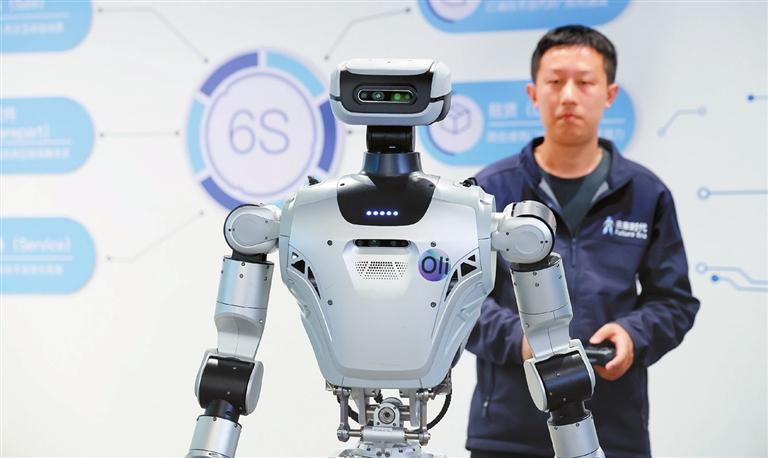
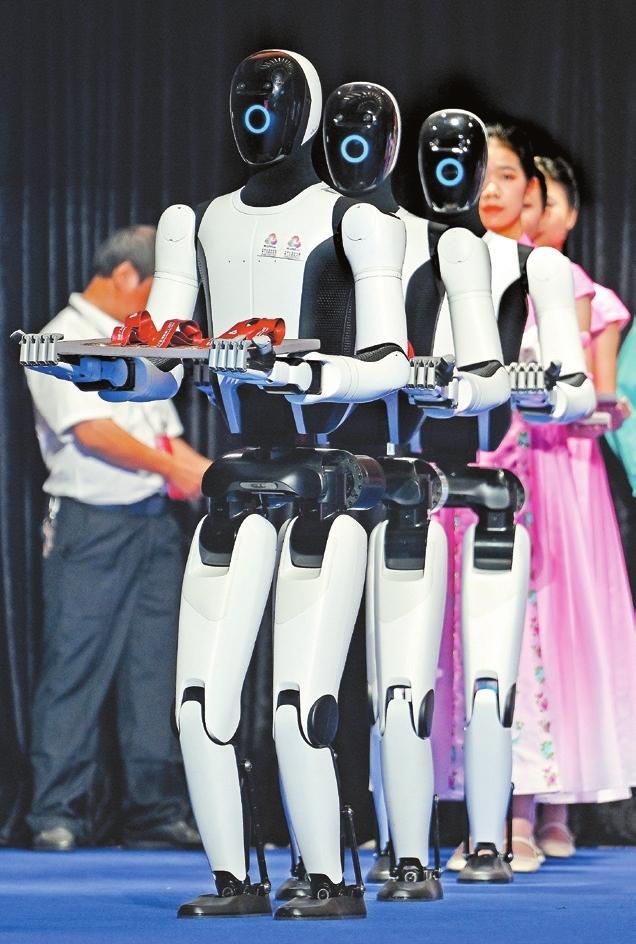

THE next major transformation in artificial intelligence will not arrive as a new app. It will arrive as a new workforce. The first wave of AI lived inside the screen. It wrote, translated, summarized and conversed. It reshaped cognitive work and accelerated digital productivity. But a new phase is now emerging — one that extends intelligence beyond software and into the physical world. Physical AI is artificial intelligence that does not simply generate answers, but perceives real environments and acts within them. It powers robots, autonomous systems, intelligent machines and urban infrastructure. If generative AI transformed information work, Physical AI will redefine how we produce, move, build and care. In this transition, Shenzhen — powered by the scale and dynamism of the Guangdong–Hong Kong–Macao Greater Bay Area — holds important structural advantages. The city brings together hardware innovation, advanced manufacturing, software development, supply chain efficiency and entrepreneurial speed in a single ecosystem. The distance between design and industrialization is short. Iteration cycles are fast. Deployment environments are abundant. These are precisely the conditions Physical AI requires. Unlike purely digital AI defined primarily by algorithms, Physical AI requires deep integration between models, sensors, actuators, chips, manufacturing capability and most importantly real-world deployment. Yet integration alone is not enough. What ultimately determines the success of Physical AI is the economics of real-world application — the cost, reliability and safety of robotic labor in practical settings. When intelligent machines can operate safely and efficiently in factories, logistics centers, public facilities and urban environments, adoption follows. From advanced manufacturing lines to high-throughput logistics hubs, from service robotics to emerging urban applications such as smart infrastructure and the low-altitude economy, Shenzhen provides diverse real-world environments where intelligent systems can learn, adapt and improve. Deployment therefore becomes a learning engine: implementation generates data, data improves performance, and improved performance accelerates wider deployment. This dynamic creates a powerful innovation flywheel — one that rewards ecosystems capable of combining technological research with rapid industrialization. It is within this environment that Shenzhen’s robotics companies and embodied intelligence developers are increasingly moving beyond prototypes toward commercial and industrial use cases. The next key question is how to translate capability into sustainable global leadership in Physical AI. Three strategic dimensions will likely determine success. First, from speed to systemic trust. Rapid deployment is an advantage. In the Physical AI era, however, long-term competitiveness will increasingly depend on whether intelligent systems are trusted at scale. Unlike digital applications, embodied AI operates in environments where malfunction carries physical and economic consequences. Adoption therefore hinges not only on technical performance, but on predictable behavior, transparent accountability and credible risk management. Ecosystems that build robust validation mechanisms, clear responsibility frameworks and transparent performance standards will lower adoption barriers and accelerate industrial scaling. In the next phase of AI industrialization, trust will no longer be a soft factor but a form of strategic infrastructure. Second, from industrial ecosystem to capital leadership in Physical AI. The Physical AI revolution will be capital-intensive. Scaling intelligent machines requires hardware production, infrastructure deployment and longer commercialization cycles than purely digital platforms. To sustain leadership, Shenzhen will need venture and private equity models adapted to robotics and embodied intelligence, combining patient capital with industrial understanding. Ecosystems that allocate capital effectively shape which companies scale and which technological architectures prevail. By strengthening its role as a funding hub for Physical AI innovation, Shenzhen can shape not only manufacturing capacity, but the direction of global development. Third, from domestic testbed to global platform. Physical AI systems will operate across borders. They must meet diverse regulatory requirements and function in multicultural, highly regulated environments. Shenzhen’s dense deployment environment offers a unique opportunity to pioneer structured regulatory sandboxes, enabling controlled experimentation, iterative policy refinement and evidence-based standards formation. Shenzhen can strengthen its position by investing not only in deployment scale, but also in globally compatible standards, testing frameworks and safety governance models. Cities that successfully align technological experimentation with adaptive governance will influence how intelligent systems are integrated globally. For European industry, this evolution presents both opportunity and responsibility. Europe remains strong in industrial automation, precision engineering, safety systems and high-value manufacturing. Physical AI aligns naturally with these strengths. As intelligent machines enter regulated sectors such as advanced manufacturing, healthcare and critical infrastructure, trust, certification, safety and interoperability become decisive factors. Rather than viewing Shenzhen’s rise through the lens of competition alone, European manufacturers and technology leaders can engage through partnership and complementary strengths. Europe can contribute expertise in trusted robotics, safety standards and system certification, while benefiting from Shenzhen’s industrial scale, speed and deployment capacity. Joint pilot projects, shared testing environments, and cooperation on evaluation standards can accelerate learning on both sides. In a world where intelligent systems must operate safely alongside humans, international collaboration will be essential to shaping responsible and effective deployment models. In the era of Physical AI, the future will not be written only in code. It will be built and improved in the real world. Shenzhen is moving decisively in the direction toward becoming a global capital of Physical AI, with the confidence of a city that has repeatedly turned technology into industry, and innovation into real-world impact. | 