

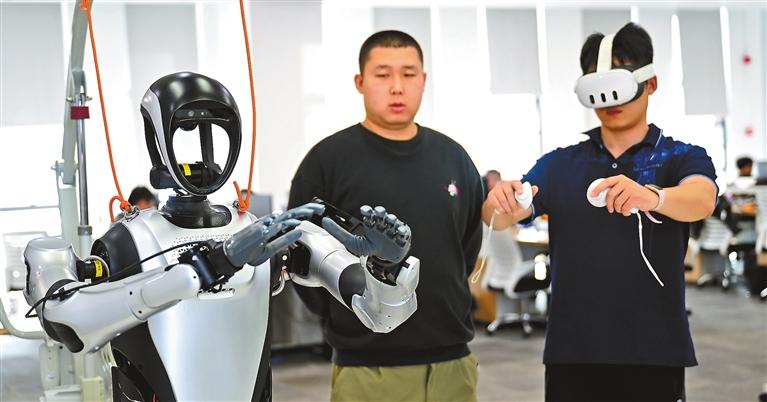

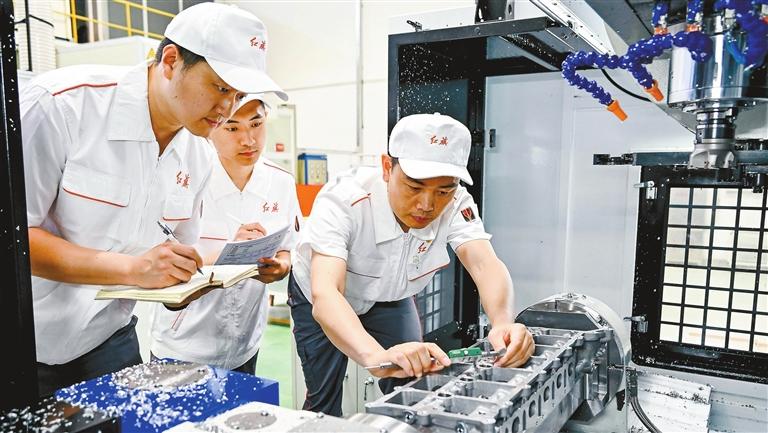
WITH a new development blueprint endorsed at the close of the national legislative session Thursday, China is embracing a critical five-year period in an ambitious drive to basically modernize its vast population by 2035 — on a scale unseen in human history. According to the outline of China’s 15th Five-Year Plan (2026-2030), the country aims to lay a solid foundation for achieving its 2035 goal of doubling its 2020 per capita gross domestic product (GDP) to over US$20,000, a level typical of a moderately developed country. The vision further holds that by 2035, China’s economic strength, scientific and technological ability, national defense capabilities, composite national strength, and international influence will all become markedly stronger, people will live better and happier lives, and socialist modernization will be basically realized. So far, fewer than 30 countries and regions worldwide have achieved modernization, with a combined population not exceeding 1 billion, including Britain’s around 70 million people and the United States’ roughly 340 million, all far less than China’s population of 1.4 billion. The sheer size of China’s population presents formidable challenges. Yet the country is resolved to ensure development gains are shared by all its people. Ambitious goals While the annual government work report targets 2026 growth at 4.5% to 5%, the broader five-year plan proposes keeping economic expansion within an “appropriate range,“ calibrating subsequent annual rates to shifting realities. This pragmatic approach anchors a far grander ambition: doubling the 2020 per capita GDP by 2035 to reach the level of a moderately developed country. Beyond top-line growth, the outline of the 15th Five-Year Plan identifies emerging strategic industries China will nurture, including new-generation information technology, new energy, robotics, and aviation and aerospace. It also maps frontiers to reach, from quantum technology and embodied artificial intelligence (AI) to nuclear fusion power and 6G. For the next five years, China plans to raise average life expectancy to 80 years, increase the number of practicing physicians to 3.7 per 1,000 people, and improve the permanent urbanization rate to 71%, among other goals, according to the outline. In the policy document of more than 100 pages, three visuals sketch this vision: a landscape of lucid waters and lush mountains, a tapestry of cultural heritage, and a panorama of clean energy. Together, they offer a vivid window into the ethos of Chinese modernization. It is unprecedented in scale, yet committed to shared prosperity over polarization, to combining material wealth with cultural depth over lopsided growth, and to humanity-nature harmony and peaceful development over pollution and external expansion that scarred earlier chapters of global development. Experts believe that meeting these targets will be far from easy, particularly given the country’s stringent resource constraints. Due to the massive population base, China’s per capita holdings of arable land, water resources and crude oil all lag significantly behind global averages. Also, the demographic challenges of declining birth rates and rapid population aging are placing additional strain on the country’s modernization push. China’s distinctive realities mean there is little historical precedent to follow. Rather than transplanting modernization paradigms developed by Western economies, China must pursue its own path, addressing challenges with policies and practices tailored to its unique conditions, said Fu Zheng, a scholar with the Chinese Academy of Social Sciences. Focus on high quality At the core of this path is the pursuit of high-quality development, guided by a new development philosophy that emphasizes innovation, coordination, green development, openness and shared growth, which is among a set of guiding principles laid out in the outline of the plan. Over the next five years, China will increase its total research and development spending by an average of more than 7% annually and raise the value added of core digital economy industries to 12.5% of GDP, according to the outline. The green transition will also pick up pace in the 2026-2030 period, with the goals of cutting carbon dioxide emissions per unit of GDP by 17% from the 2025 level and lifting the share of non-fossil fuels in total energy consumption to 25% by the end of this period. “Chinese modernization will turn to higher efficiency, technological innovation and eco-friendly growth,” said Jiang Haoran, chairman of Cashway Fintech Co. “It means fundamentally reshaping the drivers of growth, moving away from the old model of resource-intensive expansion and toward a more sustainable path,” said Wang Pu, a professor at Beijing University of Technology. China’s pursuit of high-quality development is aimed at comprehensively improving daily living standards, a challenging task for any country with a population of this size. The outline listed specific targets including reaching total grain production capacity of 725 million tons by 2030, and implementing urban renewal programs aimed at improving housing conditions. Infrastructure such as power supply, high-speed rail and telecom networks is also set to be further upgraded in this period, in the quest to provide adequate electricity, more convenient transport and faster communication. China’s vast population could be a powerful source of momentum, providing an enormous talent pool and abundant application scenarios for technology innovation while cultivating a vibrant domestic market to foster balanced trade and coordinated development. In line with the new development philosophy, these will help the economy build greater resilience in a volatile world. The outline proposes a series of measures to fully tap this demographic advantage, particularly against the backdrop of an aging and declining population. Big bets on innovation The five-year plan calls on China to seize the historic opportunities presented by the latest technological revolution and industrial transformation wave, continuously creating new quality productive forces. The country is now poised to place big bets on technology. In late February, Beijing’s Haidian District — known as “China’s Silicon Valley” — pledged over 9 billion yuan (US$1.3 billion) for industrial innovation this year. Leading AI model firm Zhipu AI and chip designer Moore Threads have been early bets for the district government — prime examples of China’s strategy to back up hard tech for the long haul. This massive funding drive is part of China’s sweeping long-horizon tech investment. A national venture guidance fund established last December is geared toward attracting trillion-yuan-level capital. This month, authorities followed up with plans for a national mergers and acquisitions pool to unlock another trillion-plus-yuan market. “The government is not just talking about research and development; it is backing it with cash,” said Shirley Yinghua Shen from Ernst & Young (China) Advisory Ltd. China’s regional economic policymakers are also encouraged to carve out distinct niches based on their unique strengths. The brain-computer interface (BCI) sector, which has been designated a future industry in this year’s government work report, is a priority for Shanghai. Pairing hospitals with firms is the city’s go-to move for tech translation, given its access to top-tier medical resources nationwide. Boon for the world Once China succeeds in modernizing its vast population, the proportion of humanity that has achieved modernization will more than double, from about one-seventh to roughly one-third of the global population, providing a major boost to the world’s development. Notably, its super-large domestic market is expected to generate sustained impetus for the global economy. China is already the world’s second-largest import market, and its growing middle-income group means demand still has considerable room to expand, Minister of Commerce Wang Wentao said, noting that China is proactively opening its vast market and will promote balanced trade through expanding imports while stabilizing exports. Foreign companies particularly welcome the enormous opportunities offered by the Chinese market. Toy giant LEGO Group said it is doubling down on the Chinese market with a long-term investment strategy, while aircraft manufacturer Airbus also expressed strong commitment, saying China’s aviation market holds immense potential. For developing countries seeking prosperity and development, China’s experience offers a practical reference point, showing that modernization does not have to follow a single template. Instead, countries can pursue development paths determined by their own conditions, priorities and stages of development. “With a people-centered approach, it balances the inclusivity and sustainability of population modernization, reflecting unique value orientations and governance wisdom, and contributing Chinese solutions to the global modernization process,” said Darren Smith, a professor at Loughborough University in Britain and a fellow of the British Academy of Social Sciences. (Xinhua) | 