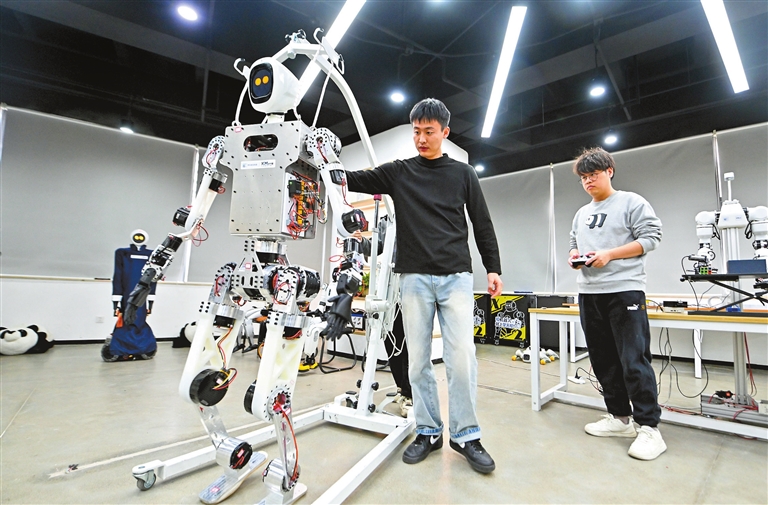
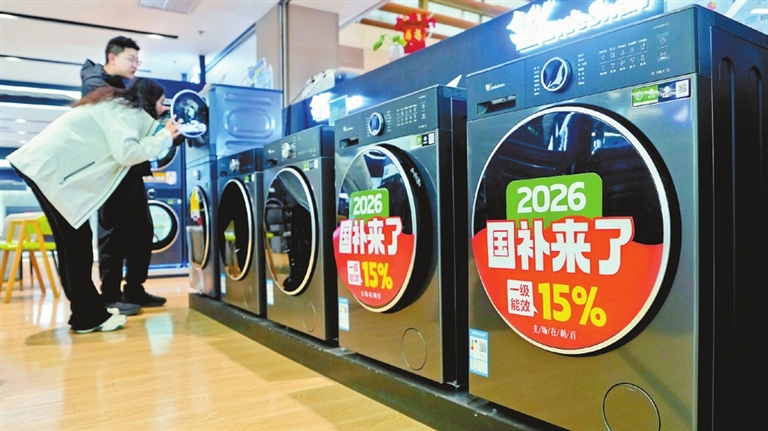
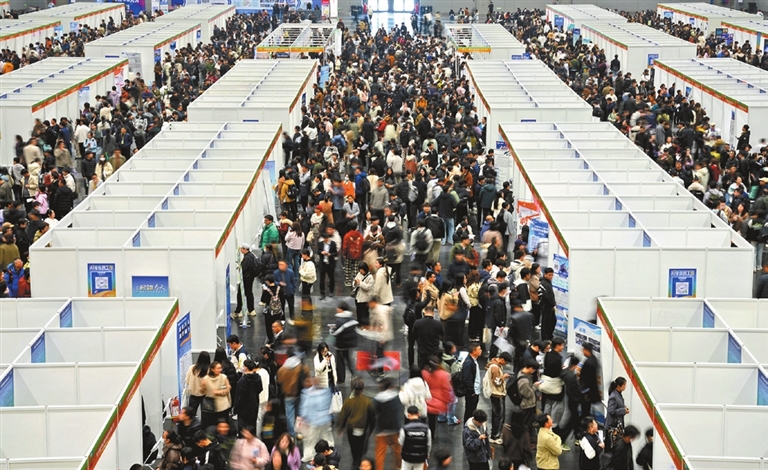
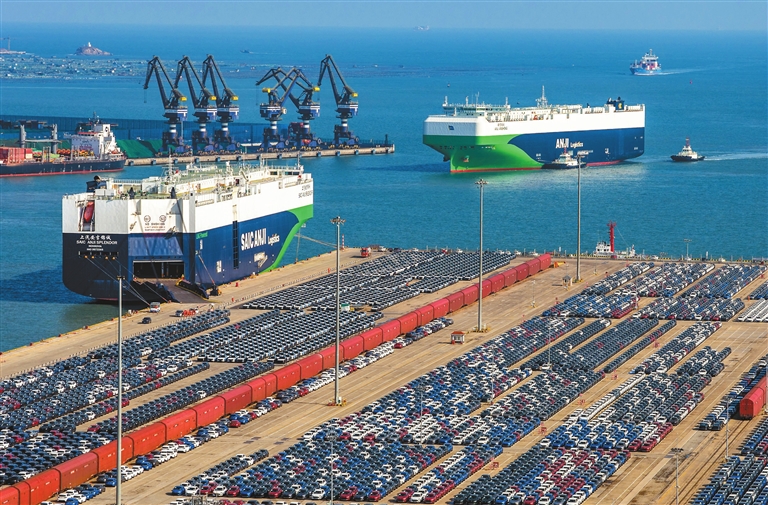
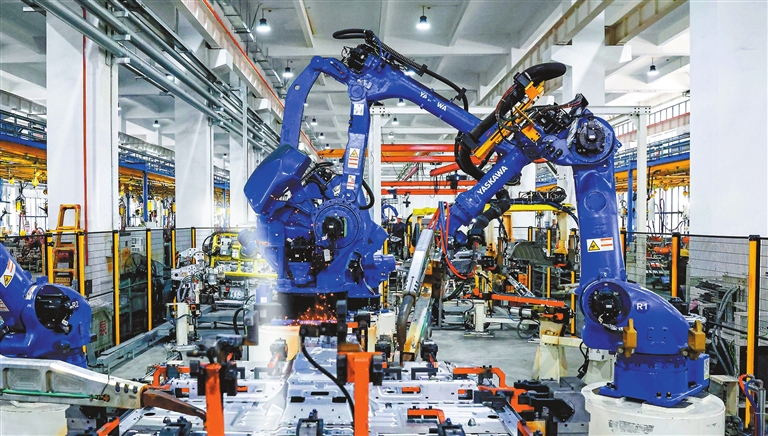
CHINA’S economy got off to a solid start in the first two months of 2026, with major indicators rebounding and new growth drivers gaining momentum as the country stepped up policy support to stabilize growth. During the January-February period, production and supply growth accelerated while market demand continued to recover. Employment and prices remained generally stable, according to data released by the National Bureau of Statistics (NBS) on Monday. Noting that 2026 marks the first year of the 15th Five-Year Plan period (2026-2030), NBS spokesperson Fu Linghui told a press briefing that the January-February performance pointed to a “robust and favorable start” for the national economy. Stronger momentum China’s value-added industrial output, an important economic indicator, rose 6.3% year on year in the first two months of 2026, up 1.1 percentage points from December last year. The service sector also expanded at a relatively fast pace, supported by the Spring Festival holiday and policy measures aimed at boosting consumption. In the first two months, the service production index grew 5.2% year on year, 0.2 percentage points faster than the pace in December 2025, according to the data. Consumption showed clear signs of recovery. The extended Spring Festival holiday, the continued implementation of the consumer goods trade-in program, and vibrant activities in the cultural tourism, leisure, and entertainment sectors all helped lift spending. Retail sales of consumer goods, a major gauge of consumption strength, rose 2.8% year on year in the January-February period, 1.9 percentage points faster than the pace recorded in December. Fixed-asset investment increased 1.8% year on year in the first two months, compared with a 3.8% decline for the whole of last year. Infrastructure investment grew 11.4% year on year during the period, markedly faster than the pace in 2025. Monday’s data also showed the surveyed urban unemployment rate averaged 5.3% in the first two months, unchanged from the same period last year, indicating that the country’s employment situation has remained generally stable. Wen Bin, chief economist at China Minsheng Banking Corp., said the improvement is partly due to policy effects taking hold, with the issuance of special bonds boosting infrastructure investment and the property market showing signs of recovery. It is also supported by a rebound in domestic momentum, as stronger-than-expected exports and steady price recovery helped revive manufacturing investment, while the extended holiday period provided additional support for household spending, especially on services. Favorable conditions China has set a GDP growth target of around 4.5% to 5% for 2026, aiming to secure a good start to the new five-year plan that charts the course for high-quality development. The target is aligned with the country’s long-term development goals through 2035 and broadly consistent with the economy’s growth potential, according to this year’s government work report. Fu said the better-than-expected economic performance in the first two months highlighted the strong vitality and resilience of the Chinese economy. “We have every reason to remain confident about China’s economic prospects,” Fu said. Despite mounting uncertainties at home and abroad, the fundamentals underpinning China’s long-term growth remain unchanged, he said, citing momentum from new quality productive forces, the accelerated building of the new development paradigm, and the effects of macroeconomic policies. Fu outlined several supporting factors. Expanding demand continued to provide momentum for growth, with China’s trade with the Association of Southeast Asian Nations, the European Union, and countries participating in the Belt and Road Initiative all rising around 20% in the first two months. At the same time, investment in new infrastructure and livelihood projects is accelerating. Government measures to raise household incomes and upgrade consumption of goods and services are helping boost residents’ spending power and confidence. In February, the consumer confidence index rose one point from the previous month, marking a second consecutive month of recovery, Fu said. Industrial upgrading also contributed to the positive momentum. High-tech manufacturing and digital products grew significantly faster than overall industrial output, reflecting strong momentum from innovation-driven industries. AI and other new technologies supported both traditional and emerging industries, Fu said. At the same time, green energy sectors, including wind power and lithium-ion batteries, expanded rapidly. New blueprint to fast-track tech adoption The new five-year blueprint places the integration of technological and industrial innovation in a prominent position, aiming to move lab-born technologies onto factory floors to unlock trillion-yuan opportunities across its real economy sectors. These high-value opportunities stem from the plan's designation of new-generation information technology, new energy, new materials, intelligent connected new energy vehicles, robotics, biomedicine, high-end equipment and aerospace as strategic emerging industries for priority development. The plan also spotlights quantum technology, biomanufacturing, hydrogen and nuclear fusion energy, brain-computer interfaces, embodied AI and 6G as future industries to be nurtured. China's emerging pillar industries are expected to break the 10-trillion-yuan benchmark by 2030, while frontier technologies are poised to mushroom into an entirely new high-tech sector over the next decade. Tech firms are rapidly striving to harness the tremendous growth potential of this new wave propelled by innovation. Chinese-made smart robots are also training on multiple automotive factory floors, showcasing the vast potential of deploying such intelligent machines for real-world efficiency gains. In January, UBTECH, a humanoid robot developer based in Shenzhen, struck a deal to supply robots to aviation giant Airbus for use in its manufacturing facilities. Fu noted that the economy still faces challenges, as geopolitical risks rise and the domestic economy grapples with both longstanding problems and new ones. China will continue to implement more proactive and effective macro policies, foster new quality productive forces in line with local conditions, and provide greater support to stabilize employment, enterprises, markets and expectations, Fu said. China’s economy is expected to maintain steady growth in the coming period, laying a solid foundation for achieving the country’s full-year targets, Fu said. (Xinhua) | 