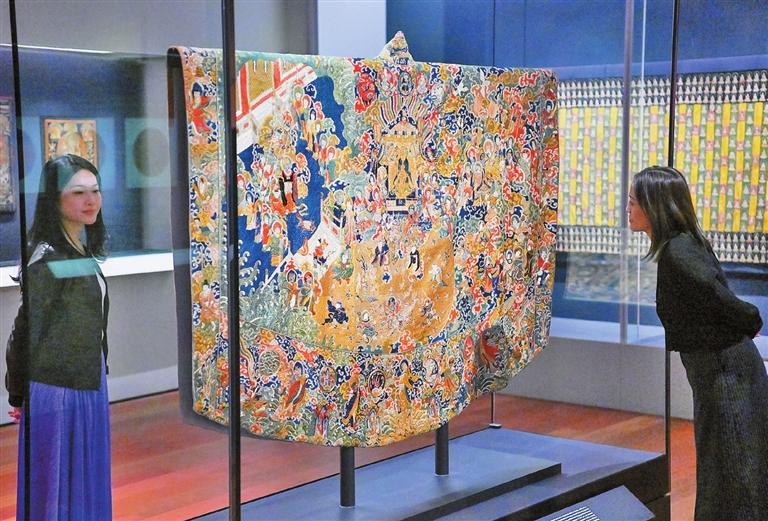
A LANDMARK exhibition at the Hong Kong Palace Museum is telling the story of China’s past not through scrolls or stone but through silk — one of the country’s most enduring and far‑reaching cultural threads. “A History of China in Silk: The Chris Hall Collection at the Hong Kong Palace Museum” presents more than 100 textiles spanning the Neolithic era to the early 20th century, offering a nearly 3,000‑year panorama of technical innovation, artistic achievement and international exchange. The exhibition is drawn from an extensive promised gift by collector Chris Hall — some 3,000 pieces that now form the Hong Kong Palace Museum Chris Hall Collection. Born in Sudan, educated in history at Cambridge University and based in Hong Kong since 1978, Hall built his collection over nearly 50 years out of a deep fascination with Chinese textile art. The donation has created one of the most comprehensive holdings of Chinese textiles outside mainland institutions. Organized into five chronological sections, the exhibition traces silk’s development from early sericulture and weaving techniques in the late Neolithic through successive dynasties. The opening section covers silk production up to the Northern and Southern Dynasties (420-589) and highlights the formative trading and cultural links that later became the Silk Road. Subsequent galleries spotlight the cosmopolitan splendor of the Sui–Tang (581-907) era, the regional weaving innovations of the Song (960-1279) and Yuan (1206-1368) dynasties, and the ornate religious and court silks of the Ming Dynasty (1368-1644). The final section examines Qing Dynasty (1644-1911) systems of manufacture, court dress regulations and the global trade networks that carried Chinese silk to markets around the world. Visitors can engage with the textiles through interactive multimedia: A high‑resolution camera and display allow close study of a crimson Daoist ritual robe attributed to the Jiajing period (1522-1566), revealing stitch‑by‑stitch detail and the garment’s embedded cosmology. Another station invites guests to design a virtual mandarin square, learning how bird and animal motifs encoded official rank in Qing bureaucracy. Dates: Until April 6 Venue: Hong Kong Palace Museum, West Kowloon, Hong Kong(SD News) | 