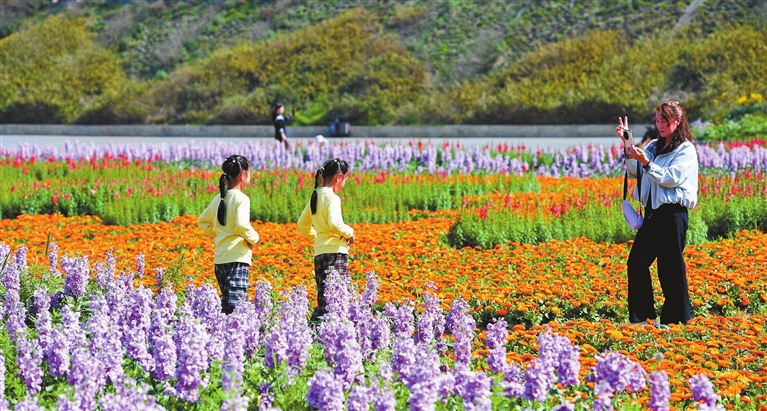
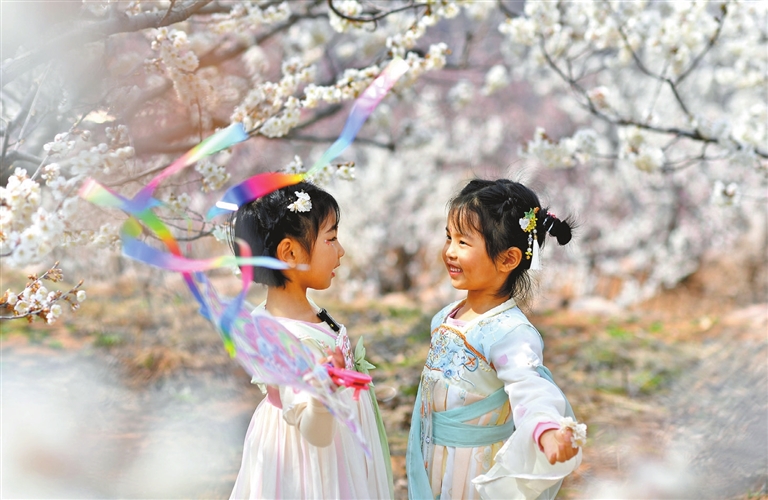
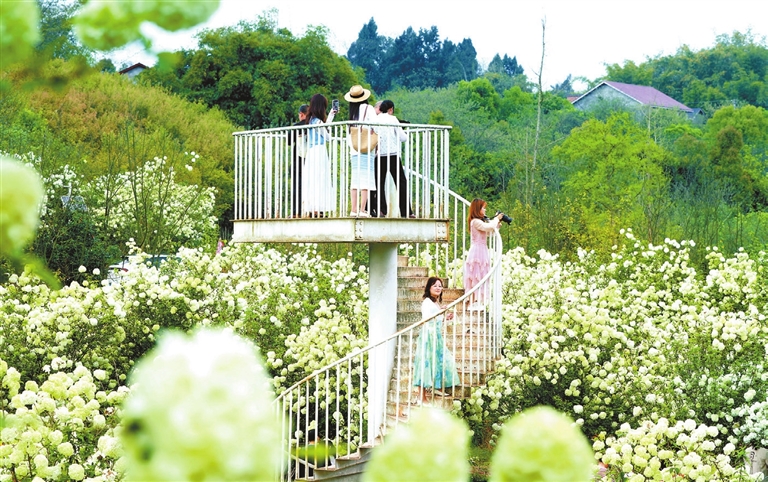
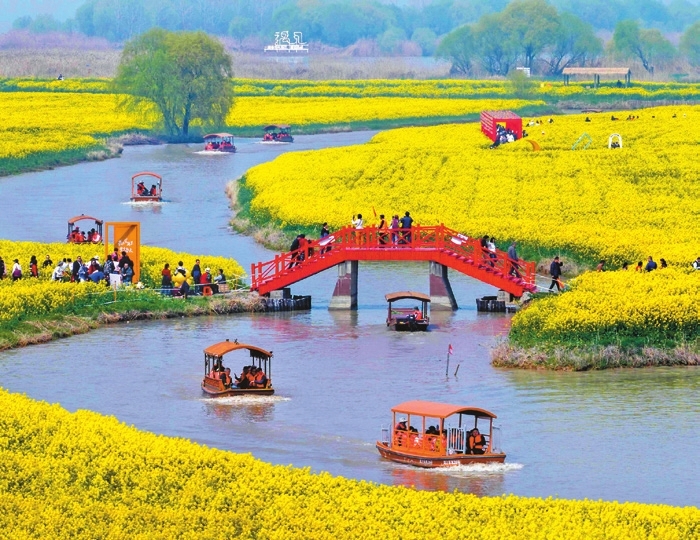
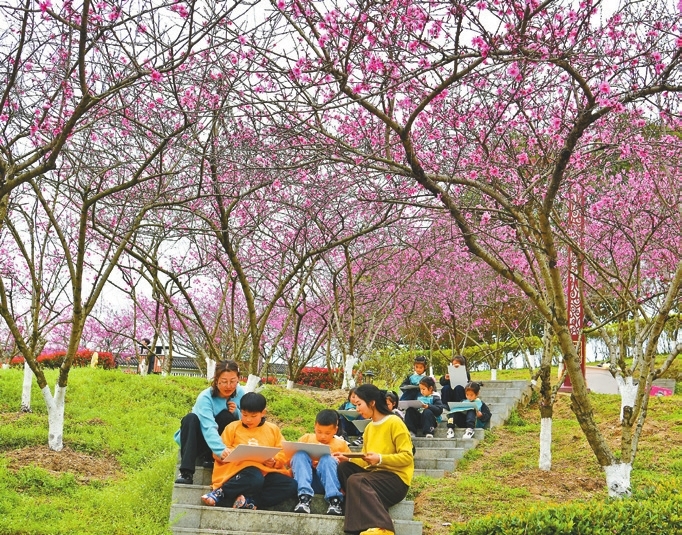
AS spring blossoms across China, primary and secondary school students in several regions are stepping out of the classroom and into the season — enjoying their first-ever spring break with travel, exploration, and hands-on learning. In some areas, the spring break will take place just before the three-day Qingming Festival in early April, while in others it extends into the five-day May Day holiday, allowing students to combine leave into six- to eight-day breaks. Localities across the country are introducing rich educational and cultural experiences, giving students hands-on opportunities beyond the classroom and helping turn a simple calendar change into a practical opportunity for broader learning. From local trial to national policy The idea of spring and autumn breaks for primary and secondary schools first emerged in Hangzhou, capital of eastern China’s Zhejiang Province. As early as 2004, the city took the lead in piloting the system, which was later expanded across the province. At the outset, the policy sparked debate. Supporters argued that such breaks allow students to gain hands-on knowledge beyond textbooks, promote physical and mental well-being, and stimulate consumption. Critics, however, voiced concerns over reduced classroom time and increased childcare pressure, especially for dual-income families. In recent years, with the implementation of the “double reduction” policy aimed at easing academic burdens, calls for more flexible school schedules have grown louder. Cities including Beijing, Guangzhou, Foshan and Enshi have since introduced similar arrangements, accumulating experience such as staggered holiday schedules. This year, the government work report for the first time called for introducing spring and autumn holidays for primary and secondary school students in localities where conditions permit, thus elevating this policy from local trials to a national guideline. “Continuous study can lead to fatigue. Short breaks help relieve stress and create room for exploration and practical learning,” said Wu Jinsong, a professor at South China Normal University who has long studied this issue, noting that expanding such breaks supports students’ “well-rounded development.” Parents and students embrace the change On social media, the upcoming spring break has become a hot topic, with users sharing ideas for camping trips, seaside getaways, study tours and theme park visits. For many parents, the holiday also means a chance to spend more time with their children. “Spring break is the perfect opportunity to go on outings, enjoy nature, and spend meaningful time together instead of staying at home,” said Zhao Yan, a parent in Deyang, southwestern China’s Sichuan Province. Similarly, Ms. Weng, a parent in Wenzhou, Zhejiang Province, is planning a family trip. “My daughters’ spring break falls around the May Day holiday. I’m planning to take them to the seaside in Fujian or Zhejiang to play in the sand, enjoy the waves and get close to nature,” she said. Across different regions, local authorities are putting these policies into action. In Nanjing, capital of eastern China’s Jiangsu Province, authorities have integrated tourism, sports and cultural resources to organize interactive learning activities tailored to different age groups. An online platform will also be launched to allow students to choose projects that match their interests and learning needs. In Sichuan, a total of 136 scenic spots have introduced incentives such as free admission for primary and secondary school students during the spring break, including top-rated destinations such as Mount Qingcheng and Dujiangyan Irrigation System scenic area, a UNESCO World Heritage Site. In addition, more than 100 curated study-tour routes have been launched, covering themes like the Party’s heritage, humanities, nature and science. Tourism sector gears up for spring surge With strong enthusiasm for spring break travel, the country’s tourism market is gaining momentum. Many tourist destinations are approaching the upcoming spring break with strong confidence, with some expecting visitor numbers to rival those seen during the Chinese New Year holiday. Liang Yun, manager of a resort in Guangyuan, Sichuan, said that the resort’s all 66 rooms are expected to be fully booked from today to Sunday, following a surge in inquiries and reservations recently. Platform data shows travel will be picking up in early April, while momentum is expected to build further around the May Day holiday. Between today and next Monday, flight bookings from Chengdu in southwestern China and Nanjing have risen by 72% and 84% year on year, respectively. Flight bookings from Hangzhou around the May Day holiday have surged 254%, with popular destinations ranging from major hubs like Beijing, Guangzhou and Shenzhen to farther-flung locations such as Urumqi and Lanzhou in northwestern China and southern China’s Haikou. “Spring break is more than just a few extra days off, with market feedback already pointing to rising travel demand,” said Lin Shanshan, an associate professor at Zhejiang University, explaining that when combined with holidays such as Qingming or May Day, it can turn previously tentative plans into actual trips, boosting consumption and injecting new vitality into the spring tourism market. Support systems take shape To support the newly introduced spring and autumn school holidays, a series of coordinated measures has also been implemented. In Suzhou in eastern China, one company has announced a three-day paid spring break for all employees, separate from annual leave, allowing families to better align their schedules. In Hefei, capital of Anhui Province, also in eastern China, authorities have encouraged employers to offer flexible arrangements such as staggered leave or compensatory time off, prioritizing workers with school-age children. Schools and communities are also stepping in to support families, providing childcare for children from dual-income families or vulnerable groups, alongside supervised programs and themed study camps that combine recreation, learning and skills-building. “The key is that schools and education authorities must ensure support systems are in place and strengthen services such as holiday childcare,” said Zhang Junlin, a primary school principal in Hangzhou, summarizing the city’s experience. (Xinhua) | 