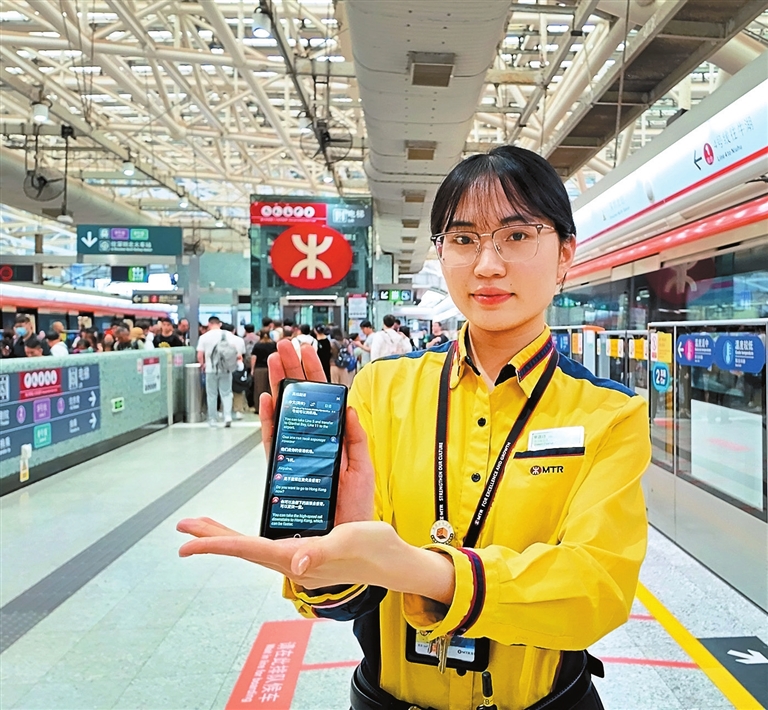
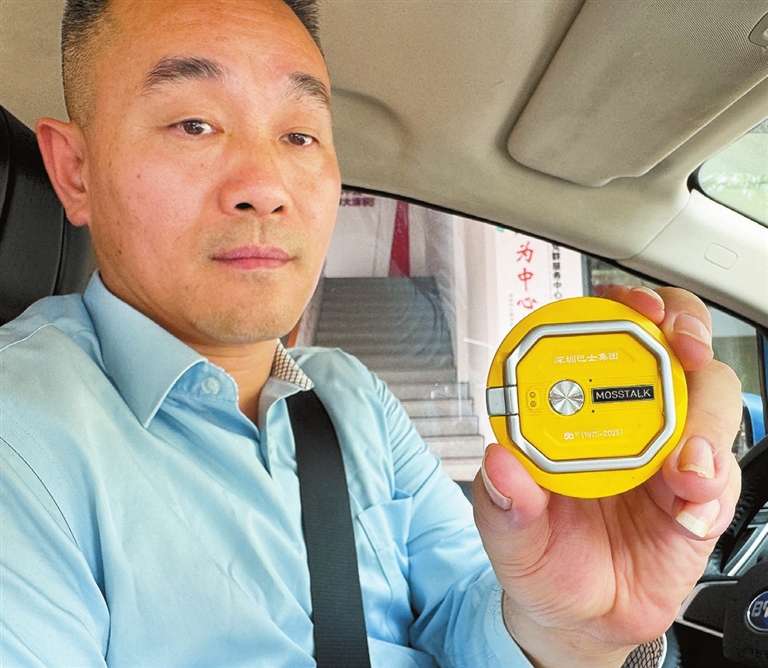
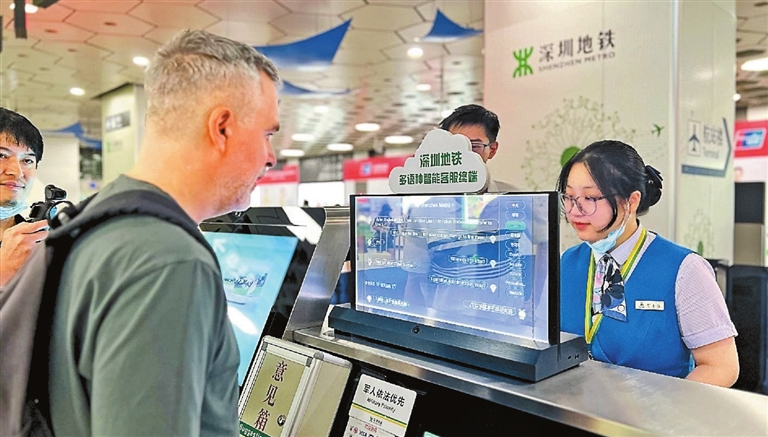
LEO, an international tourist, was left deeply impressed after a recent taxi ride in Shenzhen. “This city is so advanced!” he exclaimed, pointing to a palm-sized AI translator in the cab that bridged the language gap instantly. “It accurately translated my English into Chinese, explained the route, and even introduced local landmarks. The language barrier has simply vanished — the experience is fantastic!” Leo’s experience is becoming the new standard in Shenzhen. According to the Shenzhen Municipal Transport Bureau, the city is upgrading its foreign-language services to ensure international residents and travelers can navigate the metropolis with ease. Visitors will now notice eye-catching bilingual decals on the passenger doors of Shenzhen’s iconic blue electric taxis, bearing welcoming messages like “I speak your language” and “I support 140+ languages.” The upgrade isn’t just visual; it’s auditory. The fleet’s voice announcement system has been fully overhauled to include standardized English greetings, safety reminders, and payment prompts. While 100% of the city’s cruising taxis now feature Chinese-English terminal announcements, the Shenzhen Bus Group has gone a step further. Over 5,000 of its yellow-topped taxis are now equipped with MossTalk, a cutting-edge multi-language AI translator. Powered by a deep neural network engine, MossTalk features millisecond-level translation across 146 languages. It is designed to handle over 200 specific travel scenarios and maintains an impressive 86% accuracy rate even when offline. “I used to rely on hand gestures to communicate with foreign passengers,” said Mr. Sun, a local taxi driver. “Now, we both speak our native languages and understand each other instantly. It’s seamless and, most importantly, it’s hands-free, so it doesn’t distract me from driving.” The digital transformation extends to the city’s bus network. All 11,000 bus stops across Shenzhen now feature bilingual names. Beyond signage, authorities have integrated QR codes at stops that allow international passengers to access real-time route information and arrival times in English. Meanwhile, transport authorities are deploying English-language maps at key transit hubs to help international travelers navigate nearby landmarks more easily. Aboard the city’s 13,600 operational buses, the experience is equally accessible. Every vehicle now provides bilingual voice announcements, and all safety signage — from “No Smoking” to emergency exit instructions — has been fully translated. “These small details show how international the city has become,” one netizen commented online. At major transit hubs such as Shenzhen Bao’an International Airport and the Shenzhen–Zhongshan cross-city bus terminals, intelligent translation devices are being deployed to assist international travelers with ticketing and complex directions. High-traffic Metro stations — Shenzhen North and Futian Checkpoint on Line 4, and Shenzhen Bay Checkpoint on Line 13 — have deployed a smart multi-language translator. “Resembling a smartphone in appearance, it’s lightweight and easy to operate,” said a staff member at Shenzhen Bay Checkpoint Station. The device supports major global languages including English, French, German, Russian, Japanese, Korean, and Arabic, as well as several less commonly spoken languages. Featuring real-time voice and text translation, it streamlines various services, such as ticketing, route guidance, emergency response, and general inquiries. The impact is already being felt on the ground. “A few days ago, an Arabic-speaking passenger was stuck at the turnstiles due to an insufficient balance,” recalled the staff member. “He didn’t speak Chinese or English. We used the smart translator to communicate in Arabic, helped him top up his card, and guided him to his high-speed rail transfer. It turned a stressful situation into a smooth one.” From the streets to the Metro, and across land, sea, and air, Shenzhen is weaving a multilingual service network that connects the Guangdong-Hong Kong-Macao Greater Bay Area. By integrating high-tech into daily travel, the city is sending a clear and warm message to the world: “Welcome to Shenzhen.” (Li Jing) | 