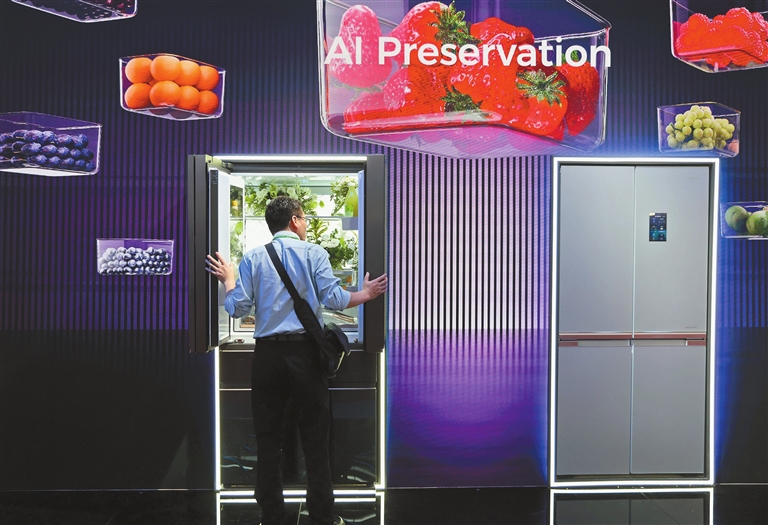
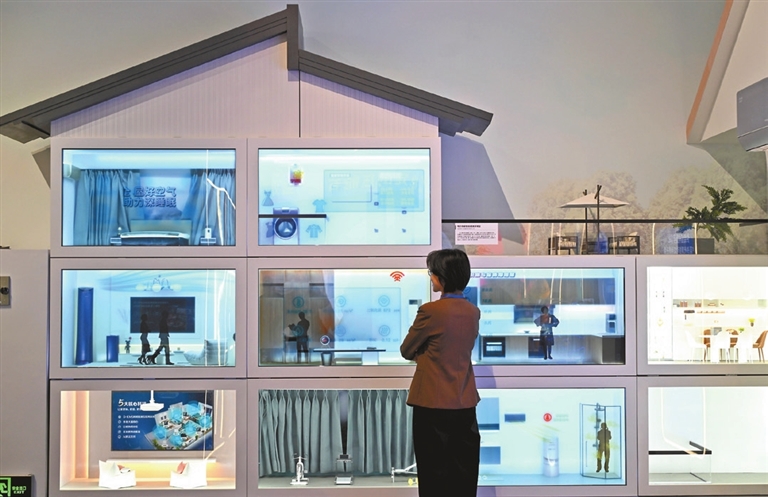
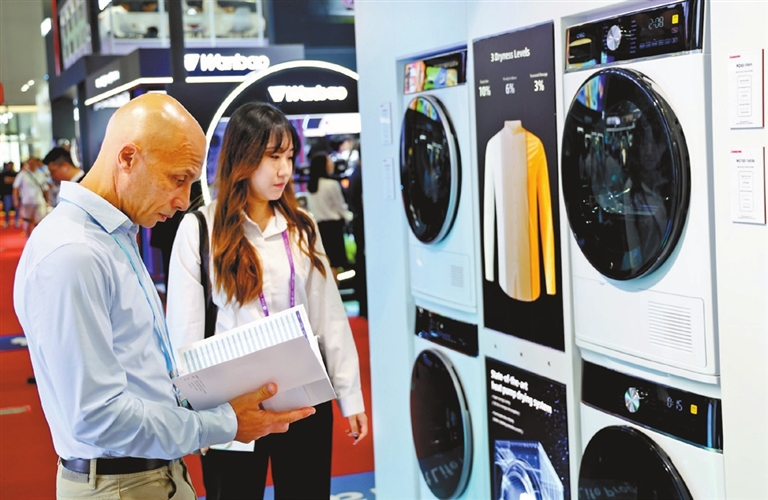
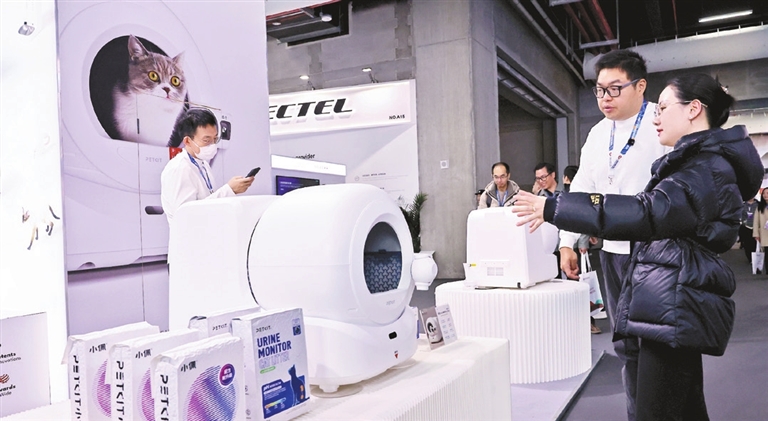
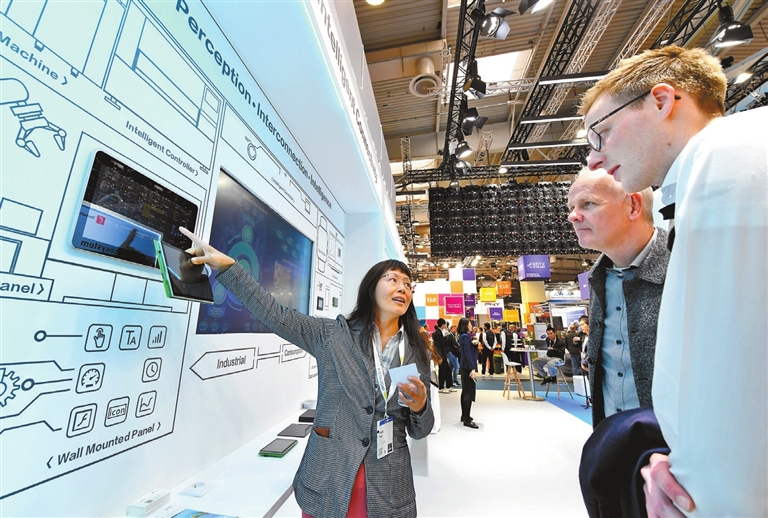
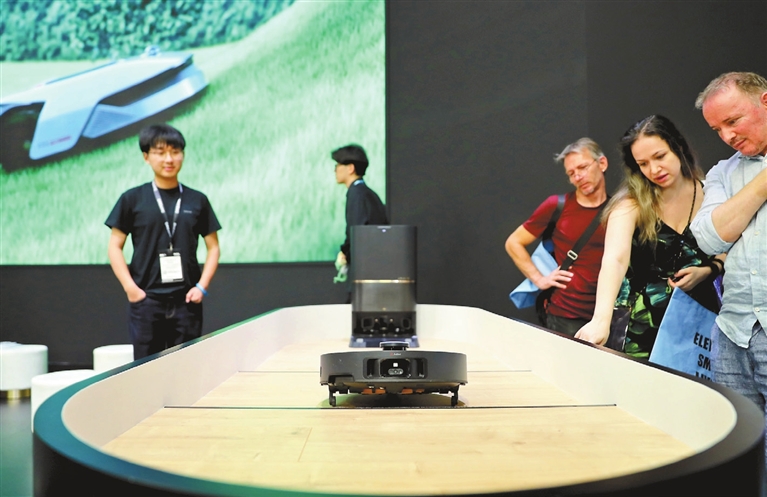
BEFORE a family gets home, their car has already informed the house. This means that when they arrive, the air-conditioner and the air purifier are already on. Once in the kitchen, AI glasses identify ingredients, read the heat of the stove and tell the cook when to add salt or turn over the food. Meanwhile, a robot vacuum cleaner clears away clutter before cleaning the floor. In China, such scenes are no longer science fiction. They are becoming ordinary. From sci-fi to daily routine Smart homes are now more than just a consumer-tech novelty in China. They are increasingly becoming a commercial proving ground for AI, as manufacturers employ this technology in high-frequency domestic tasks such as cooking, cleaning and home management. The point is not merely to make appliances smarter, but to turn intelligence into a stronger selling point and a new source of momentum for the industry. The most commercially promising uses of AI are often the most routine. Since cooking and cleaning are daily tasks, even small improvements in convenience are easy to notice, and easier to sell. Robam, a kitchen appliance industry leader in China, has launched what it calls the Culinary Master AI Mega Model, which is tailored to cooking. Tell it what you have in your fridge, and it will recommend recipes while linking with digital kitchen appliances, including automatic stove adjustment. Its AI cooking glasses can recognize ingredients, sense the heat of the stove, and prompt the user in real time. As He Yadong, vice president of the company, put it, cooking is both high-frequency and essential, giving it particular promise for human-machine interaction and vertical large-model applications. Cleaning robots are moving in the same direction. Roborock, for example, has tried to solve one of this category’s oldest frustrations, namely obstacle avoidance, doing so by giving its machines “hands and feet.” One model uses a five-axis foldable bionic mechanical arm to move obstacles and tidy clutter, while another adopts a dual-wheel leg structure to tackle more complex terrain. This helps explain why “smart” has become such a strong sales pitch. Data have shown that the penetration rate of AI home appliances in China had exceeded 50% in 2025. In televisions, it passed 70%, and in cleaning appliances and washing machines it rose above 50%. Intelligence is no longer a niche embellishment but has become part of the industry’s mainstream commercial language. From standalone gadgets to connected brains The bigger shift is from single products to connected systems. China’s home appliance giant Haier Group’s smart home brain combines AI, the Internet of Things and large-model technology to make home services less reactive and more proactive. An air-conditioner can switch on fresh-air functions according to indoor conditions. A washing machine can identify fabric types and choose the right program. These machines no longer wait to be told. They begin to read the room. The same logic is spilling into cars. According to a white paper from Dongchedi, an automobile information, trading and services platform also known as DCar, 81.2% of fuel-car consumers replacing their vehicles say their first choice is a new energy model, as they are drawn by advances in autonomous driving and intelligent cockpits. Demand drives growth Chinese firms are also trying to explore wider market opportunities overseas. In Berlin appliance stores, brands such as Roborock and Dreame occupy prominent positions in the robot vacuum section. Market researcher International Data Corp. said global shipments of home cleaning robots had reached 32.72 million in 2025, up 20.1% from a year earlier, while shipments of robot vacuums rose 17.1% to 24.12 million. The world’s top five cleaning-robot manufacturers by sales were all Chinese: Roborock, Ecovacs, Dreame, Xiaomi and Narwal. Their edge, as industry insiders observed, lies not only in price but in rapid iteration and increasingly localized design. Companies are adapting products to different markets and moving into niches such as lawn-mowing and pool robots. Dreame, for example, is localizing not just products but design, marketing, sales and after-sales service. A recent white paper on China home appliance consumption trends, released by the China Household Electrical Appliances Association, said AI and green development have emerged as engines driving high-quality growth in China’s home appliance sector. Chinese consumers are shifting from meeting basic needs to pursuing quality experiences and from simple product replacement to holistic lifestyle upgrades, according to the white paper. The report outlines seven major consumption trends for 2026, including an AI-empowered paradigm shift from passive response to proactive intelligence, deep integration of health scenarios, new innovations in energy-efficient technologies, and the robotization of home appliances. China’s government-backed consumer goods trade-in programs are effectively guiding consumption upgrades, accelerating the phase-out of outdated and inefficient appliances while promoting the adoption of green and intelligent products, according to the report. Data showed that the number of home appliances with top-tier energy or water efficiency ratings purchased by Chinese consumers in 2025 increased by 20% year on year. Challenges remain Yet this success is not evenly distributed. Outside a handful of strong niches, CCID Consulting under China’s Ministry of Industry and Information Technology said that many Chinese smart-home firms going abroad still rely on Original Equipment Manufacturer arrangements and have yet to build much brand recognition. Shi Lingzhi, head of the AI innovation center at Beijing Winicssec Technology Co. Ltd., warns that some smart home products carry risks of data leakage, privacy breaches and weak software stability. Yet such risks may ease as safety standards are rolled out, and the market becomes more regulated, Shi noted. For consumers, this makes trusted brands and formal sales channels more important. The sector’s future will depend less on flashy features than on whether companies can ground innovation in real demand. More broadly, the integration of AI and smart homes is not about replacing people, but about enabling them to do more. “AI’s mission is to fulfill your every act of creation, not to replace you,” He Yadong said. (Xinhua) | 