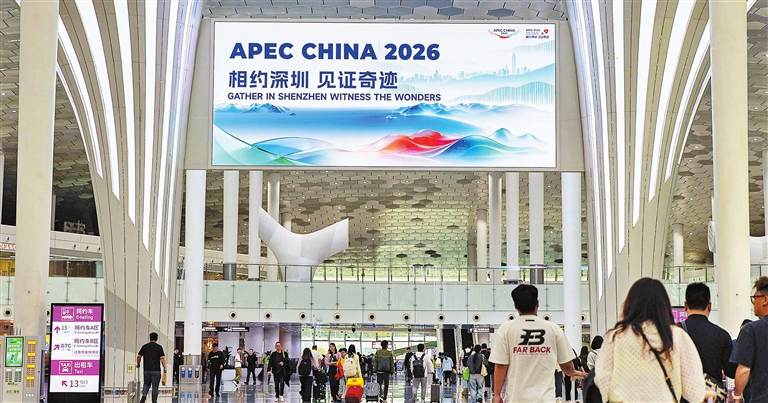
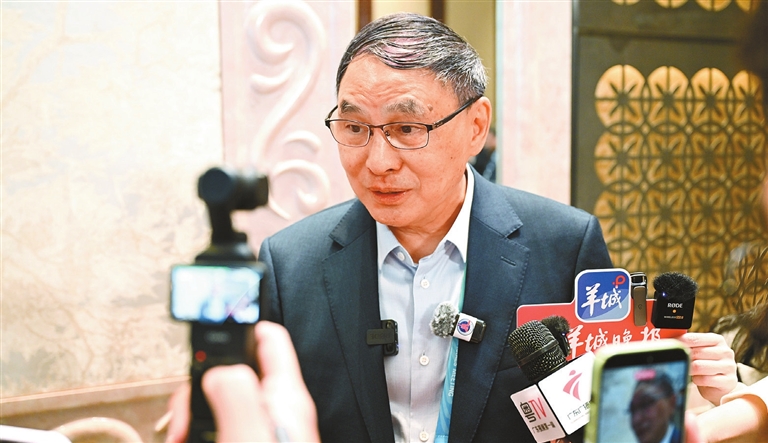
SHENZHEN is in a race against time to prepare for November’s APEC meeting, united behind a single mission: “Excellence in Hosting, Warmth in Welcome.” In a recent interview with Shenzhen Special Zone Daily, Prof. Zheng Yongnian, dean of the School of Public Policy at The Chinese University of Hong Kong, Shenzhen, and president of the Institute for International Affairs, Qianhai, hailed the event as a source of limitless opportunities for the city’s future. Zheng emphasized that amidst a volatile international landscape, China’s commitment to opening-up remains paramount. Reflecting on decades of growth driven by globalization — particularly in the Guangdong-Hong Kong-Macao Greater Bay Area and the Yangtze River Delta — Zheng noted that China’s economy is now inextricably linked with the global market. “Chinese modernization is impossible under a closed-door policy; it demands an even higher level of openness,” he stated. As a “new Shenzhener,” Zheng expressed pride in the city being chosen as the host of the APEC gathering. He pointed out that the Asia-Pacific has been the world’s most dynamic and stable economic region for four decades and is poised to remain the global economic center in the years to come. Zheng identified Shenzhen’s strategic role as the bridge between Hong Kong and Guangzhou as a key factor in its selection as the host. Moreover, the theme of this year’s APEC — openness, innovation, and cooperation — is the very DNA of Shenzhen. The city is a living testament to how reform and innovation can transform a small fishing village into a modern metropolis. “APEC will empower high-level opening-up across Shenzhen and China,” Zheng stressed. He defined this “high-level” approach through three pillars: inclusive multilateralism, institutional alignment of rules, regulations, management, and standards, and unilateral opening-up. He urged Shenzhen to evolve from the internationalization of goods to the internationalization of talent, institutions, and governance. Zheng envisions a symbiotic relationship between APEC and Shenzhen. While APEC accelerates Shenzhen’s internationalization, the city’s development model offers a blueprint for other emerging APEC economies. By sharing its success story, Shenzhen can provide both practical lessons and confidence to developing nations. To sustain this momentum, Zheng argued that Shenzhen must continue to drive globalization by further opening its markets while expanding its global footprint with high-standard, high-quality enterprises. When asked about preparations, Zheng emphasized the need for professionalism and meticulous execution, translating national macro-level opening-up policies into concrete local actions. He also issued a call to the city’s 20 million residents. “Hosting APEC is not just the responsibility of organizers; it is a collective endeavor,” Zheng said. He encouraged citizens to embrace the spirit of the event, enhance their international awareness, and foster a welcoming atmosphere. “Everyone should get involved with a positive attitude to show the world the best of Shenzhen.”(Li Jing) | 