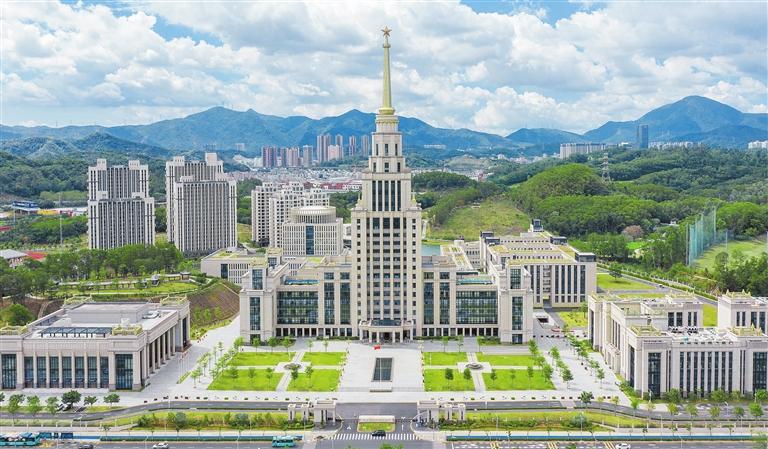
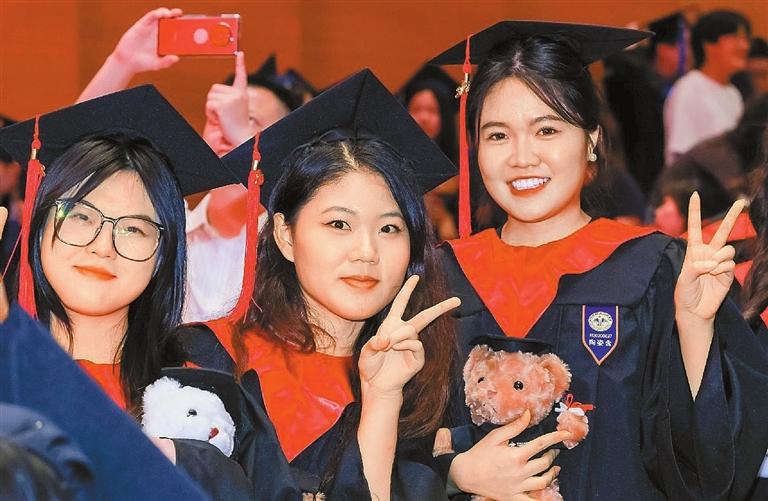
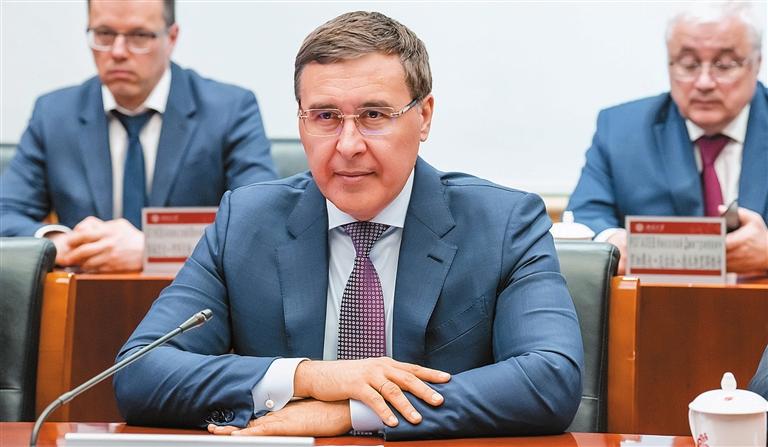
RETURNING to Shenzhen just eight months after his initial visit, Valery Falkov, minister of Science and Higher Education of Russia, hailed the metropolis as a young, energetic city shaping the future. Speaking to Shenzhen Special Zone Daily, Falkov noted that Shenzhen has evolved into a high-tech and innovation hub in less than half a century. He specifically lauded Shenzhen MSU-BIT University as a hallmark of success, describing it as a cornerstone of China-Russia scientific and educational collaboration. This year marks the 30th anniversary of the China-Russia strategic partnership of coordination and the 25th anniversary of the signing of the China-Russia Treaty of Good-Neighborliness and Friendly Cooperation. Late last year, the two heads of state announced that 2026-2027 would be the China-Russia Years of Education. Falkov noted that Russian President Vladimir Putin views Russia-China ties as being at a historic peak. As economic and cultural bonds strengthen, language interest is surging. “The Years of Education program testifies to our growing academic cooperation,” he said, expressing hope for deeper academic dialogue, increased student exchanges, and mutual degree recognition. Student exchanges are flourishing, with 56,000 Chinese students in Russia and 20,000 Russians in China. Enrollment in Russian courses in China grew 7% over five years, while 51,000 Russian students studied Chinese last year — a trend Falkov credits to expanding trade and cultural ties. Falkov hailed Shenzhen MSU-BIT University — the first joint Sino-Russian university — as an “outstanding example of cooperation.” Having toured the campus last year, he noted that its upcoming 10th anniversary is a centerpiece of the China-Russia Years of Education program. According to Falkov, the university’s key performance indicators have met the expected targets. Its student body is expected to grow from just over 1,000 in 2021 to more than 5,000 this year. The university hosts two national-level joint labs — one for nanomaterials and one for AI — along with a joint research center for applied mathematics and a joint lab for bioinformatics and engineering biology. It also houses a Russian Language Center and a Russian Language Proficiency Testing Center. Falkov believes that the 33rd APEC Economic Leaders’ Meeting in Shenzhen will offer more opportunities for cooperation in biomedicine, the green economy, and innovation. He noted that APEC’s 21 members represent a combined population of over 3 billion people and account for 60% of global GDP, making it one of the world’s most influential platforms.(Li Jing) | 