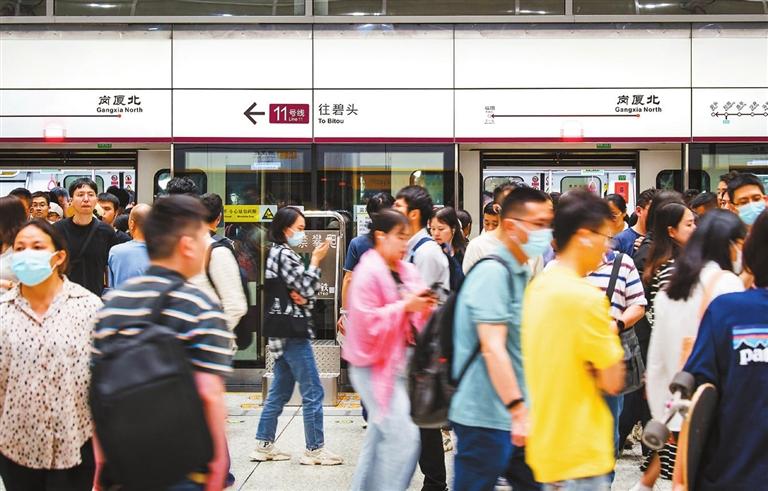
SHENZHEN’S permanent resident population reached a historic milestone of 18.24 million by the end of 2025, according to the city’s latest economic and social development bulletin released Monday. The city added 259,000 new residents last year — a 1.44% increase — marking the highest growth rate among all major Chinese cities reported to date. Over the past three years, the city has maintained an aggressive growth trajectory, adding over 586,000 people at an average annual rate of 196,000. For a city, population growth is more than just a statistic. It is a vital barometer of urban vitality and future potential. In modern urban economics, a rising population — particularly a young and skilled one — acts as a “demographic dividend.” It provides a steady supply of labor, drives domestic consumption, and fosters an environment for innovation, according to analysts. As one of China’s youngest first-tier cities, Shenzhen’s appeal is inextricably linked to its economic performance. During the 14th Five-Year Plan period (2021–2025), Shenzhen’s GDP surged from 2.83 trillion yuan (US$417 billion) to 3.87 trillion yuan. Its 5.5% average annual growth rate was the highest among China’s first-tier cities. In 2025 alone, the city’s high-end services — including finance, technology, and advanced logistics — generated over 62,000 new jobs, attracting highly educated professionals. By year-end, Shenzhen’s total talent pool exceeded 7.19 million, including 28,000 recognized high-level professionals. To sustain this growth, Shenzhen has invested heavily in livability to ensure that urban density does not lead to a decrease in quality of life. Last year, the city recorded the lowest average PM2.5 concentration among Chinese cities with over 5 million people, and added over 900,000 new seats in basic education, 30,000 hospital beds, and 600,000 units of affordable housing to accommodate the influx of new arrivals. The city’s transportation capacity has also scaled to new heights. With its Metro network reaching 634.5 kilometers in 2025 and daily passenger flows exceeding 9 million, Shenzhen now boasts the highest Metro network density and transit intensity among China’s top-tier cities. (SD News) | 