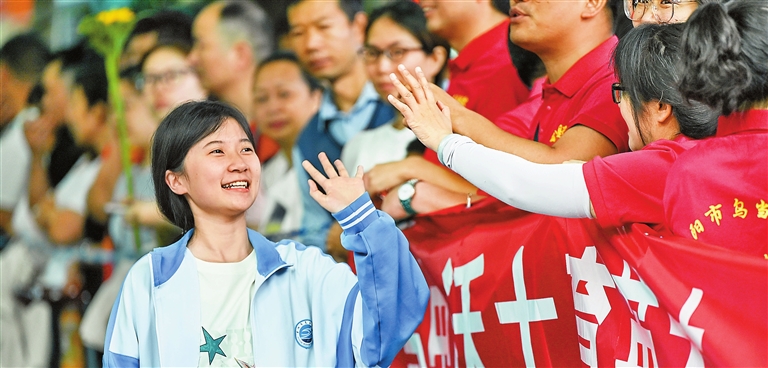
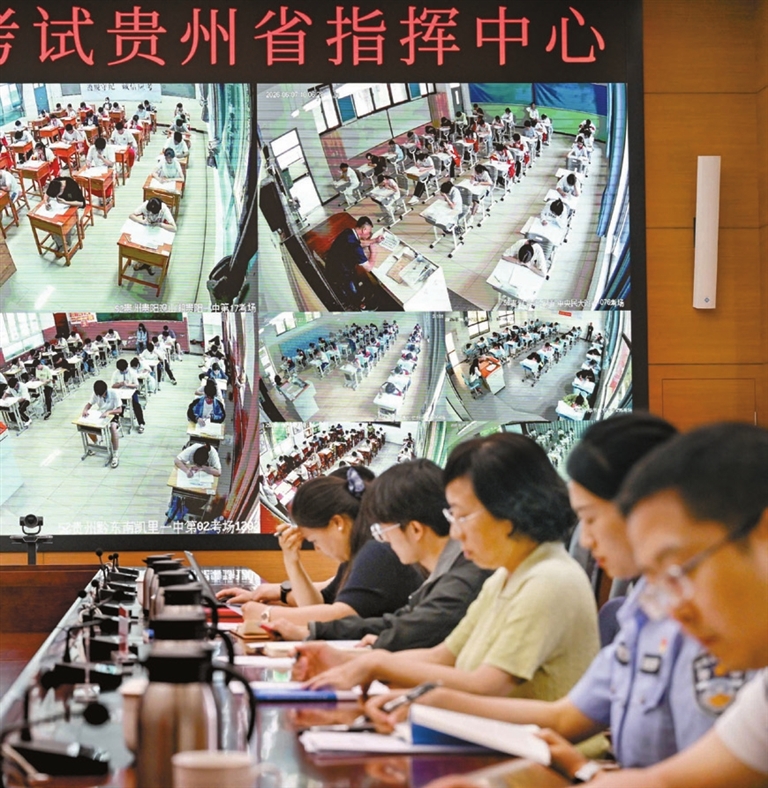
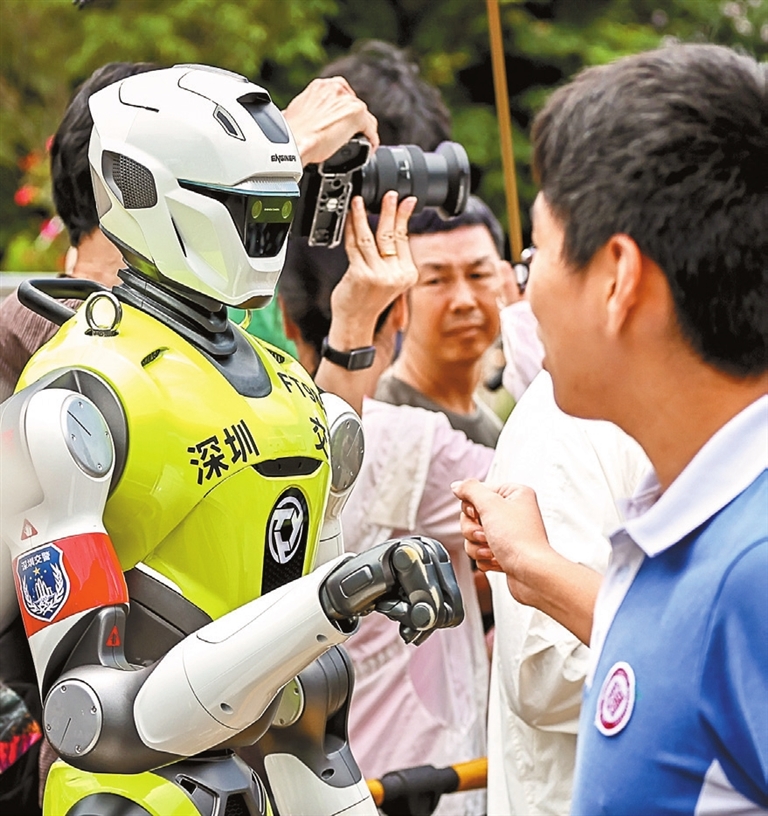
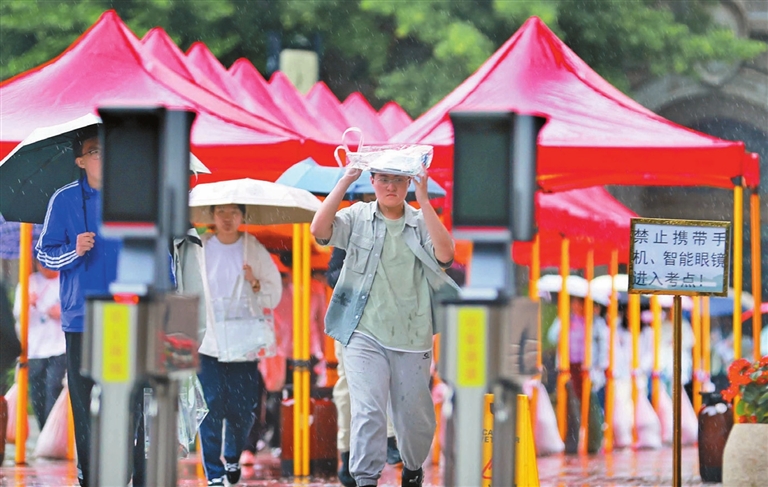
AFTER correcting test papers, Wang Yuxin, a senior student at Tianjin No. 1 High School in northern China, uploads photos of wrong answers to an artificial intelligence (AI) tool, asking it to break down the knowledge points, identify common traps and generate similar questions. Wang is one of millions of senior high school students who are sitting for China’s 2026 national college entrance examination, or gaokao, and AI has become both a novel learning aid and a fresh source of concern. China’s gaokao remains one of the world’s largest and most consequential national examinations. In 2026, 12.9 million people registered for the exam, according to the Chinese Ministry of Education (MOE). The ministry last week issued a warning ahead of the 2026 gaokao, urging students and parents to beware of false advertising — particularly claims that “AI predicts exam questions.” This alert offers a timely glimpse into a broader change: AI is entering almost every stage of China’s gaokao ecosystem, from personalized revision and psychological support to exam security, monitoring and university application consulting. Yet authorities and educators stress that AI cannot replace hard work, independent judgment, or the fundamental principle of exam fairness. The helpful features of AI, though, are not enough to make Wang fully trust the tool. She said that for some less common physics questions or adapted gaokao questions, AI sometimes gives wrong steps. A similar view was shared by Wang Wei, a teacher at Tianjin No. 1 High School, who said AI can indeed improve efficiency if used properly — especially by self-disciplined students who attempt problems on their own before using AI for correction. However, the teacher warned that students who merely copy AI answers may finish homework faster, but will only end up allowing knowledge gaps to accumulate. For many families, AI becomes even more visible after the exam, when students begin choosing universities and majors. According to media reports, after gaokao scores were released in 2025, more than 10 million users used Baidu’s AI application assistant June 25 alone. Major internet platforms, including Quark, Baidu, and Douyin, have also launched AI-powered gaokao application assistants, allowing users to input scores, provincial rankings, subject combinations and personal preferences to receive university and major recommendations. In recent years, private consultants and education institutions have built a booming business around gaokao application guidance, with some one-on-one services charging thousands or even tens of thousands of yuan. AI-powered application tools are now emerging as a cheaper and faster alternative. The rise of these services reflects a real need. For students from families with limited access to professional counseling, especially those in rural or less developed areas, AI tools can help reduce information gaps. Wang Yuxin said she will use AI applications after the exam, but only as a way to collect information. She plans to use AI to screen universities matching her ranking, organize previous admission lines and check major subject requirements. But if AI recommendations differ from those of teachers or parents, she said she would trust human advice first. “AI can never replace human application consulting,” she said. “It mechanically matches scores and rankings based on historical data, but it does not understand my personality, interests, family employment plans or regional backgrounds.” Wang Wei also cautioned that AI tools may fail to update the latest application guidance in real time, misunderstand application rules and cannot make personalized recommendations. While AI is becoming a helper before and after the exam, its role inside the exam room is strictly controlled. The MOE has called for stricter full-chain exam security, covering prevention, command, response and follow-up handling. It has also guided local authorities to strengthen safety and confidentiality. Across China, AI and security technologies are playing a bigger role in safeguarding the full examination chain — from exam paper transportation and storage to candidate verification and in-room monitoring. (Xinhua) | 