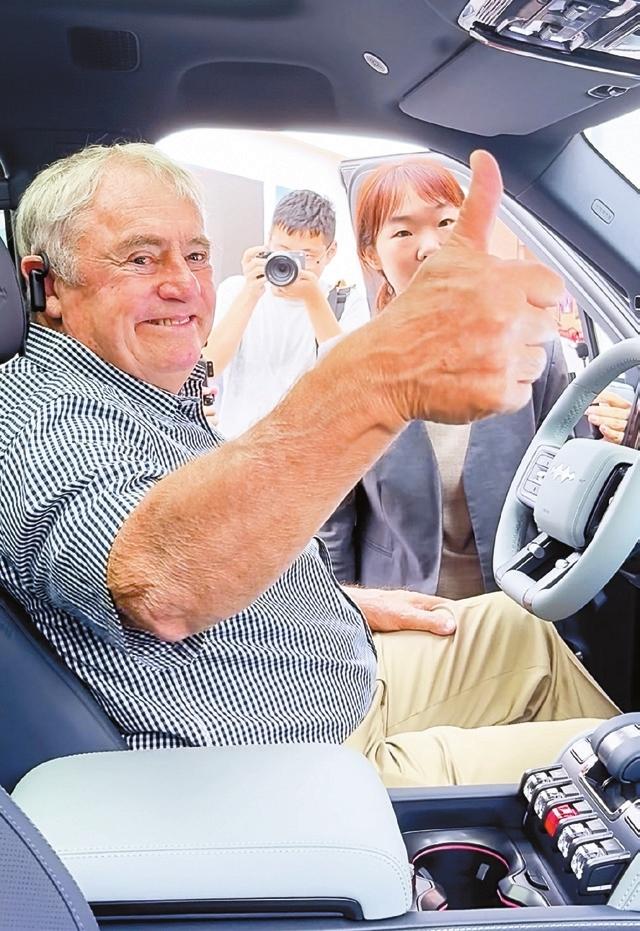
Zhang Yu JeniZhang13@163.com WHEN Christchurch Mayor Phil Mauger first visited Shenzhen in 2024, he pulled out his phone and took photos of BYD minibuses. “We need some of those in our city,” he said at the time during an interview with Shenzhen Daily. Two years later, he’s back. And this time, he’s not just taking pictures. Mauger returned to Shenzhen this week to sign an upgraded sister-city agreement, moving the relationship from a friendly exchange established in 2015 to a formal sister-city partnership. But the upgrade, signed Wednesday, is only part of the story. The mayor spent two days touring Shenzhen’s tech companies and green infrastructure — from a robotics company to a waste-to-energy plant, and from BYD’s headquarters to a water purification facility. At the Nanshan Energy Ecological Park, a waste-to-energy facility, Mauger compared it to Christchurch’s landfill-dependent system. “At home we put everything into a landfill. It has over a hundred years of room, but one day it will be full,” he told Shenzhen Daily. “But this is better.” He also expressed interest in hydrogen technology, which Shenzhen Energy Group is developing. “I like hydrogen,” he said. “Zero greenhouse gas from a hydrogen fuel cell.” On Thursday morning, Mauger visited BYD, China’s largest electric vehicle manufacturer based in Shenzhen. He test-drove luxury SUV Yangwang U8 and experienced the high-performance acceleration of the Yangwang U9 luxury sports car. Asked about the BYD minibuses he admired in 2024, Mauger acknowledged the hurdles. “I went and talked to my cousin — he’s the only BYD seller in the South Island,” Mauger said. “He came across a few problems, not from the BYD side, from our government side. I’ve got to chase up what the hold-up was. I’m on it.” Mauger also toured the Honghu Water Purification Plant, a facility that treats wastewater before it enters local waterways. The original friendly exchange agreement, signed in April 2015, focused on mutual understanding and cultural visits. The new sister-city status elevates that relationship to a formal partnership. Mauger explained the difference. “It was just a sort of friendly city relationship,” he said. “But now it’s proper sister-city relationship – which brings it up to the next level.” That next level, he said, includes student exchanges, technology sharing, and easier coordination on infrastructure projects. “It’s going to be a lot easier to coordinate things,” Mauger said. Mauger singled out two areas for potential collaboration: waste-to-energy and trackless trams, a transit technology he observed during an earlier stop in Qingdao in east China’s Shandong Province. | 