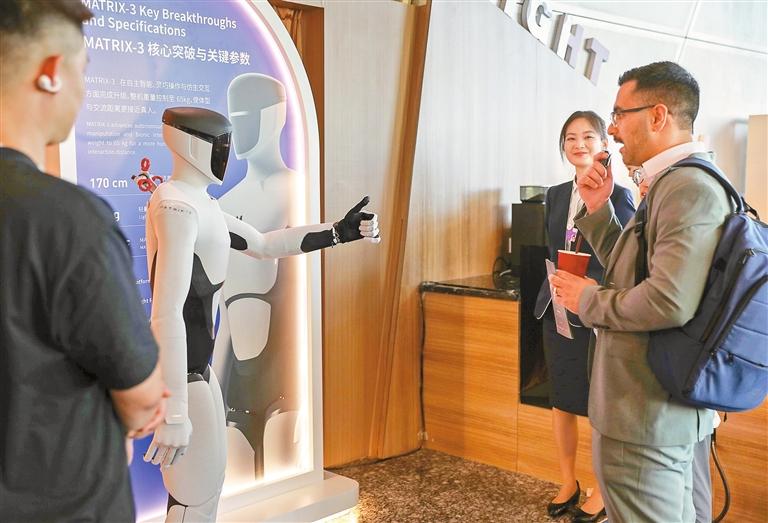
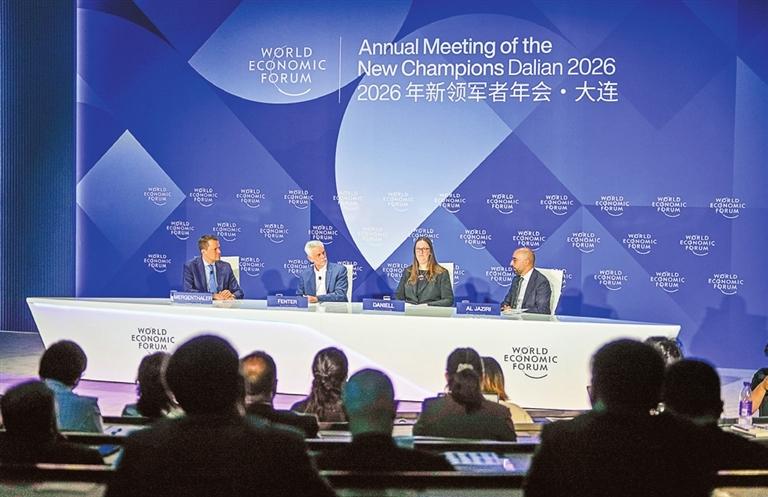

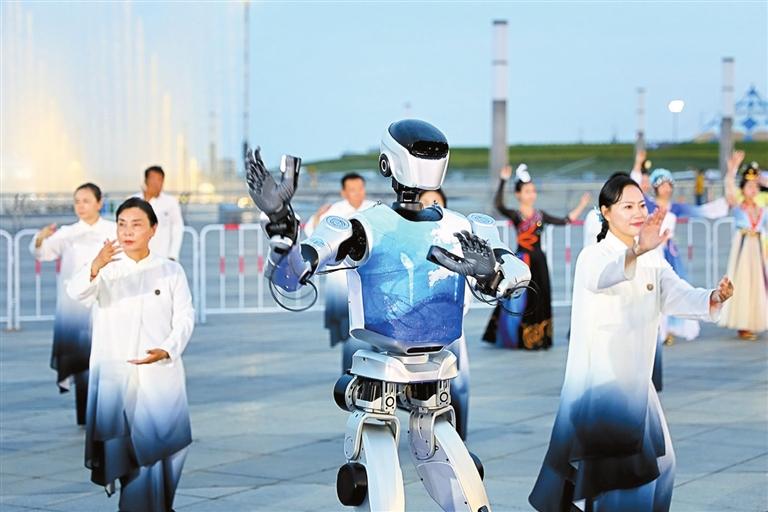
IN an era defined by rapid technological advancement and mounting uncertainties, the question facing policymakers and executives is shifting: it is less about simply fostering innovation but more about how to ensure that it translates into tangible economic gains. Against this backdrop, the World Economic Forum (WEF)’s 17th Annual Meeting of the New Champions in the northeastern Chinese city of Dalian has become a key platform for such discussions. China, with its ongoing efforts to integrate innovation into the real economy, is providing important insights into this transition. “We are living through an age of exponential innovation,” said Mirek Dusek, managing director of the WEF, highlighting the urgency to deploy tech advances at scale to benefit as many people, economies and societies as possible. The event, also known as the Summer Davos, is being held under the theme of “Innovating at Scale” from June 23 to 25, bringing together over 1,700 participants from more than 90 countries and regions to discuss ways to scale innovation into better jobs, stronger economies and new growth opportunities. The growth concern is reflected in the WEF’s latest survey of chief economists, of whom nearly nine in 10 expect global growth to weaken over the next 12 months, noting that escalating geopolitical risks have significantly increased uncertainty and volatility. Productivity gains, however, are expected to arrive more slowly. Although over 90% of the WEF surveyed economists expect AI adoption to accelerate, many believe productivity gains will take longer to materialize than previously anticipated. As the host country, China itself has emerged as a closely watched case of innovating at scale, with high-tech manufacturing contributing up to 26% of the nation’s overall industrial growth last year. Innovation-driven development is the key to China’s long-term economic resilience and steady growth, said Chinese Premier Li Qiang when addressing the opening plenary of the forum Wednesday in Dalian, a coastal city in Liaoning Province. “Over the course of long-term innovation, China has forged a path where technological innovation leads industrial upgrading, which in turn drives further technological iteration,” the premier said. Innovating at scale “In many cases, the biggest hurdle to innovation is not invention in the laboratory, but crossing the ‘Darwinian Sea’ between the laboratory and the marketplace,” Li told the forum, echoing this year’s theme. While China’s tech advances provide the wellspring for industrial development, its massive application scenarios are able to support the development of new technologies, he said. For instance, the swift growth of China’s new energy and intelligent connected vehicle industries has been underpinned by breakthroughs in areas such as new materials, power batteries and communications technologies. “This is what gives Chinese products their competitive edge, not government subsidies as some have speculated,” the premier explained. The country’s innovation prowess is earned through years of strengthening its own capabilities and relentless hard work, and cultivated via a robust ecosystem, he added. Just ahead of this year’s Summer Davos, the WEF announced 16 new additions to its Global Lighthouse Network, which recognizes manufacturers that excel in deploying advanced technologies. Over half of them are located in China, spanning sectors from shipbuilding to smart logistics. In the outline of its 15th Five-Year Plan (2026-2030) adopted earlier this year, China has placed emphasis not only on developing frontier technologies but also on creating the industrial ecosystems and application scenarios needed to turn them into tangible output. China is particularly moving to boost six emerging pillar industries with ambitious targets, including integrated circuits, the low-altitude economy and intelligent robots. These sectors, approaching 6 trillion yuan (US$879.8 billion) in total value in 2025, are expected to surpass 10 trillion yuan in 2030, according to Chinese authorities. For Jonas Prising, CEO of workforce solutions company Manpower Group, the tech advancement and innovation environments are highly impressive in China. “Attitudes to AI are much more positive in China. Chinese people are very used to applying applications like WeChat and Alipay, and all kinds of technologies, for the benefit of their daily life, and you are now seeing that translate into professional lives as well,” said the senior executive. “Innovators are developing the technologies and ideas that will shape the future, while businesses play a critical role in bringing them into the real economy,” said Dusek. “Together, they can create jobs, strengthen competitiveness and unlock new sources of growth. It is these conversations and partnerships that the meeting in Dalian is designed to accelerate.” A solid start Amid global uncertainties and geopolitical conflicts, the Chinese economy has maintained strong resilience and positive momentum in kicking off the new five-year plan period. China’s gross domestic product grew 5% year on year in the first quarter of 2026, and has maintained stable growth momentum in the second quarter with increasing enterprise profits and a moderate recovery in consumer prices. The country’s stable growth is particularly significant given the sheer size of its 140-trillion-yuan economy and amid global energy shortages and severe supply chain disruptions, providing much-needed certainty and serving as a “safe harbor” in an increasingly uncertain world, Premier Li said. “While the world is marked by turbulence and uncertainty, China stands out as one of the few places characterized by a unified domestic market and a high degree of stability,” said Yu Feng, president of Honeywell China. “We see clear opportunities across several sectors from the 15th Five-Year Plan,” he said, pointing to domains that have already demonstrated strong growth momentum, including semiconductors, data centers, shipbuilding and energy transition. Years of sustained investment in innovation have fueled the rapid emergence of new technologies, products and business models in China. The country’s artificial intelligence (AI) sector has experienced “explosive growth,” the premier said, noting that daily token consumption of Chinese large language models had surpassed 100 trillion by the end of May this year, ranking among the highest in the world. “There are strong advantages in hardware experimentation and innovation in China,” said Andrew D. Maynard, professor at Arizona State University, while adding that innovation in China is advancing at a much faster pace than in Europe and North America. ‘China opportunity 2.0’ Amid the rapid rise in China’s innovation capabilities, some observers have voiced concerns over China’s technological and industrial progress, even promoting the narrative of a so-called “China Shock 2.0” that frames China’s development as a shock to the global economy. Yet a growing number of voices instead point to a “China Opportunity 2.0,” aptly used to summarize China’s more open, inclusive and tech-powered economic interaction with the rest of the world, which comes after its integration into the global economy following 40-plus years of reform and opening up. For enterprises worldwide, “China Opportunity 2.0” represents comprehensive innovation-driven empowerment and high-return investment prospects, Premier Li stressed. Official data showed that in 2025, a total of 14,000 new foreign-invested enterprises were established in China’s technology research and technical services sector, up 27.2% year on year. “What China’s technologies and products in emerging areas bring to the world are not shocks or threats, but opportunities and empowerment,” Li added. The premier also pledged deeper international collaboration on AI governance, voicing concern over the swift advance of AI that has significantly improved the efficiency of innovation but at the same time amplified risks ranging from technological runaway to ethical lapses. “China will continue to participate in global governance of AI and other sectors responsibly and constructively, work with all parties to improve institutional rules, strengthen oversight and effectively manage potential risks,” he added. In a similar vein, Gao Weiqi, an official with the National Development and Reform Commission, the country’s top economic planner, said: “We expect the forum to showcase China’s achievements in high-quality economic development to the international community, convey its firm confidence in opening up and cooperation, and share the broad opportunities brought by Chinese modernization.”(Xinhua) | 