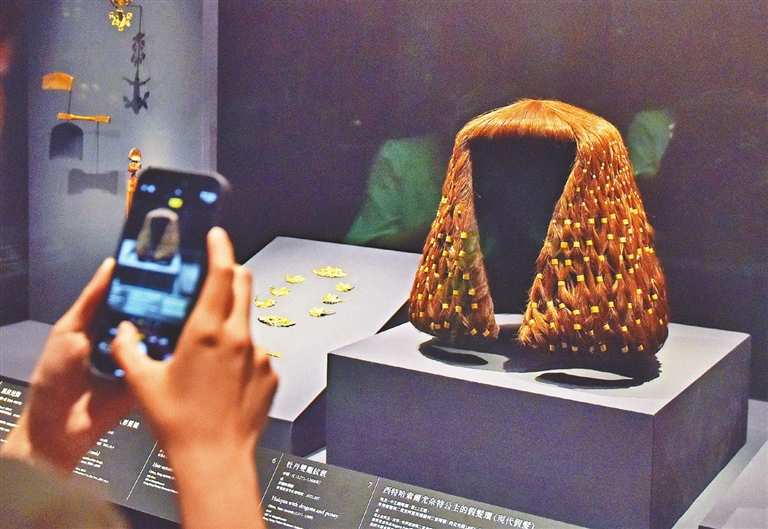
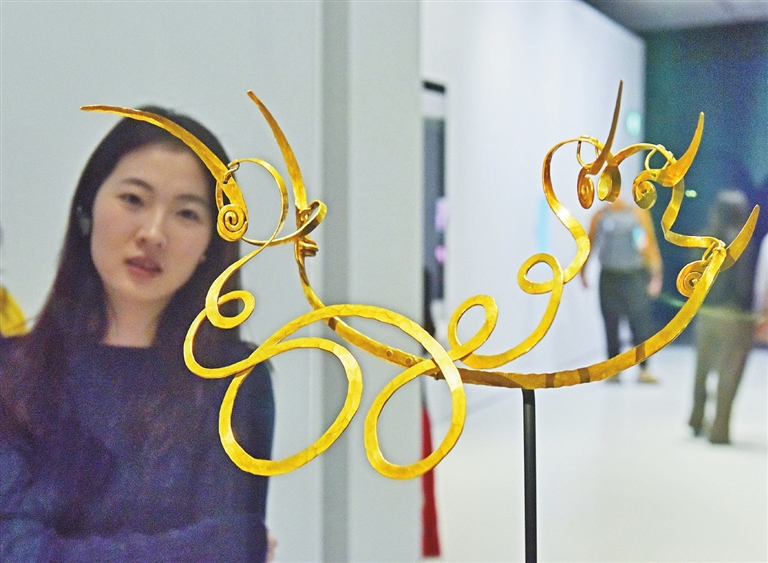
A SPECIAL exhibition showcasing stories of world jewellery from different eras, regions, and curatorial perspectives is now on view at the Hong Kong Palace Museum (HKPM). Jointly organized by The Metropolitan Museum of Art (The Met) in New York and the HKPM, “Treasures of Global Jewellery” marks The Met’s first major traveling exhibition of its global jewellery collection. Featuring around 200 masterpieces, the event is the first major exhibition in Hong Kong dedicated to the narratives of jewellery and human adornment, spanning five continents and 4,000 years — from the second millennium BCE to the 21st century. “Treasures of Global Jewellery” is presented in five thematic sections: “The Divine Body,” “The Regal Body,” “The Transcendent Body,” “The Alluring Body,” and “The Resplendent Body.” Each section illuminates a distinct dimension of adornment, inviting visitors to marvel at the manifold ways humans have embellished themselves from head to toe as an expression of belief, status, and aesthetic ideals across cultures and geographies. Exhibition highlights Necklaces: The gold marriage necklace from late 19th-century India depicts Hindu deities Shiva and Parvati as a couple, signifying divine blessing on their union. Another highlight is the opulent necklace of diamonds and pearls (about 1905) by American jeweller Dreicer & Co., which brought the luxurious style of 18th-century European court jewellery to the Gilded Age elite. Pins and brooches: The emerald-and-diamond brooch (about 1900), likely crafted by Tiffany & Co., features a large, square emerald framed by pear-shaped brilliant-cut diamonds, set in platinum — a newly accessible material at the turn of the 20th century. Headpieces: Excavated from the tomb of the Egyptian princess Sithathoryunet, daughter of Pharaoh Senwosret II, the 1,251 gold rings (about 1887–1813 BCE) that once adorned the princess’ ceremonial wigs reveal the importance of head ornamentation as a marker of royal identity in ancient Egypt. Also on display is a Calima gold headdress ornament from ancient Colombia (1st–7th century), worn as a symbol of wealth and status. Facial jewellery: Alexander McQueen’s “Male Jaw Piece” — a cast-aluminium sculpture of a male jaw with broken teeth — was designed with British jeweller Shaun Leane in 1998 as part of an experimental skeletal series. An example of avant-garde jewellery, it addresses profound themes of violence and masculinity through radical forms. Dates: Through Oct. 19 Venue: Gallery 8, Hong Kong Palace Museum, West Kowloon, Hong Kong(SD News) | 