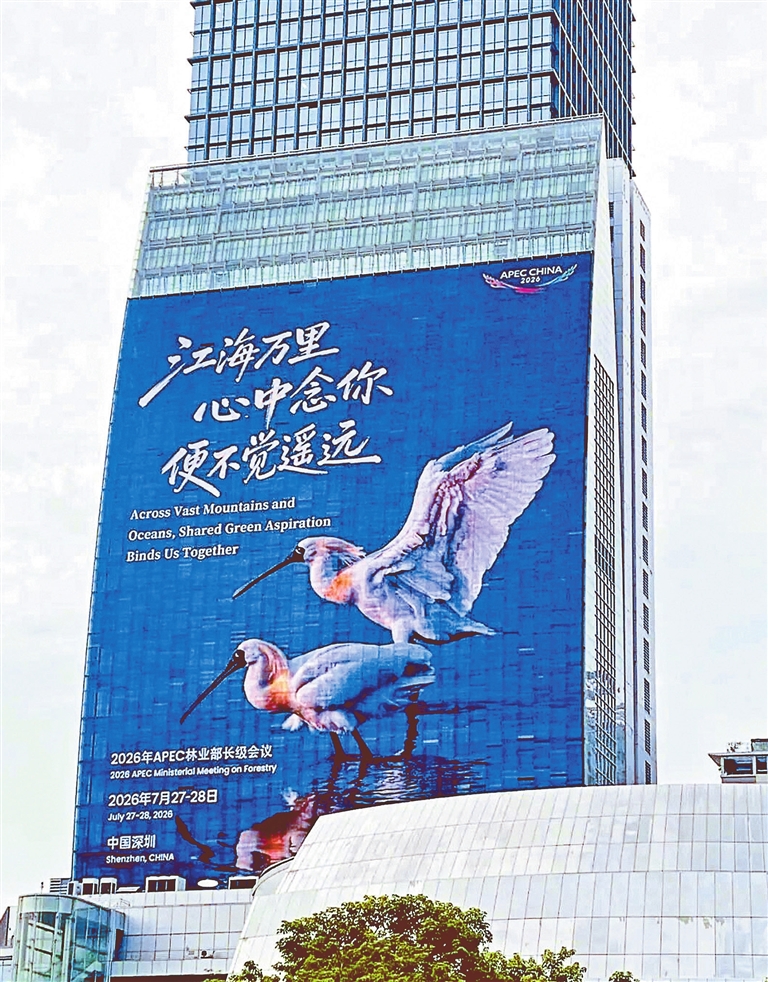
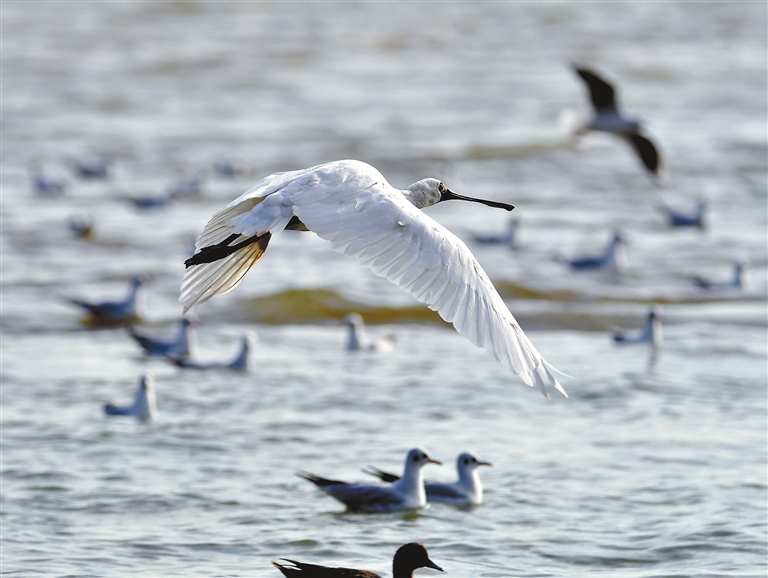
LONG celebrated as a “city of miracles” for its economic prowess, Shenzhen is carving out a new reputation as a global model for urban ecology. In 2025, Shenzhen’s GDP exceeded 3.873 trillion yuan (US$570 billion), ranking third among Chinese cities and fourth in Asia. As China’s leading industrial and export hub, the city serves as a key barometer of the nation’s economic vitality. Yet alongside this economic drive is a thriving natural ecosystem. The 200-kilometer Kunpeng Trail winds along mountain ridges, while over 1,350 parks offer residents nature just beyond their doorstep. A city’s green welcome The 33rd APEC Economic Leaders’ Meeting will be held in Shenzhen this November. Promotional posters featuring local mountains, seas, mangroves, and migratory birds are already on display across the city — at the airport, railway stations, border checkpoints, and Metro stops. To offer guests an immersive experience, Shenzhen is weaving “green, technology, and humanity” into the event. Visitors will explore the Futian Mangrove National Nature Reserve — the world’s only urban-core national reserve — where migratory birds fly against a backdrop of towering skyscrapers. At the main venue’s technology exhibition zone, delegates will visit a “smart forestry theater” to see demonstrations of robots used for forest patrols, ecological monitoring, and disaster response. The exhibition will showcase how digital twin technology models forest ecosystems and how AI optimizes mangrove restoration. From mangrove conservation to global governance Given that Shenzhen is hardly a conventional forestry hub, one might wonder how it came to host this meeting and emerge as a global benchmark for ecological governance among megacities — an achievement rooted in decades of dedicated practice in ecological civilization. In the 1990s, the city rerouted the planned Binhai Boulevard 260 meters northward to protect its mangrove wetlands. In 2005, Shenzhen became the first Chinese city to establish an ecological protection red line, restricting development on nearly half of its land. More recently, its “Mountain-Sea Vista” initiative has connected the city’s natural landscapes through over 4,000 kilometers of hiking paths and more than 1,350 parks. Shenzhen has also emerged as a key player in global ecological governance. Following a proposal by Chinese President Xi Jinping in 2022, the International Mangrove Center was established in Shenzhen in November 2024. Now boasting 21 member countries, the center makes Shenzhen the third Chinese city, after Beijing and Shanghai, to host the headquarters of an intergovernmental organization. SZ’s innovation-driven green practice The Asia-Pacific region is home to over half of the world’s forests, accounting for 60% of global forest product production and 40% of the trade. However, economies across the region face shared challenges from climate change. China’s planted forest area stands at 1.3 billion mu (86.7 million hectares), ranking first in the world and contributing 25% of the global increase in green leaf area. Shenzhen’s success in balancing rapid urbanization with conservation offers a blueprint for the region. Innovation fuels Shenzhen’s green vitality. The city’s research and development spending accounts for 6.67% of its GDP and its PCT international patent applications have ranked first in China for 22 consecutive years. The Shenzhen-Hong Kong-Guangzhou innovation cluster ranks first worldwide. Shenzhen is applying this technological capacity to green development, using AI, digital twins, and synthetic biology for forest management, wetland restoration, and biodiversity conservation. To share these practices globally, the city has developed the Urban Index of Shenzhen (UIS). Recognized by UN-Habitat, the index evaluates cities across six dimensions — innovation, livability, beauty, resilience, civilization, and intelligence — providing a new benchmark for global urban governance. As the APEC meeting gets under way, Shenzhen is seizing the opportunity to showcase its local initiatives as part of the broader Asia-Pacific push for sustainable development. (Li Jing) | 