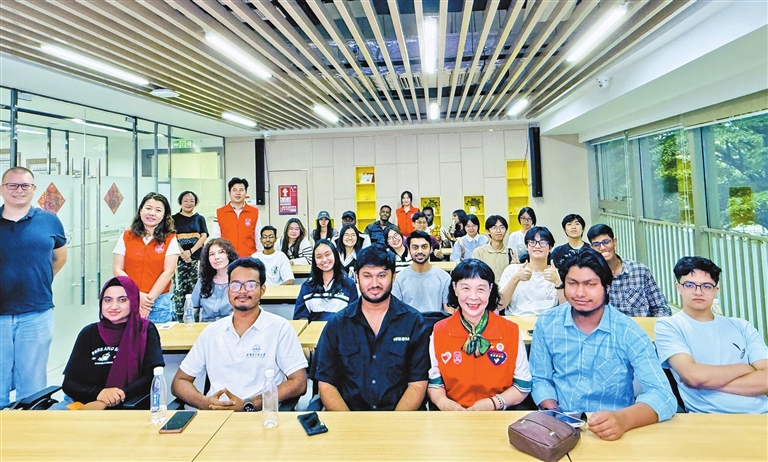
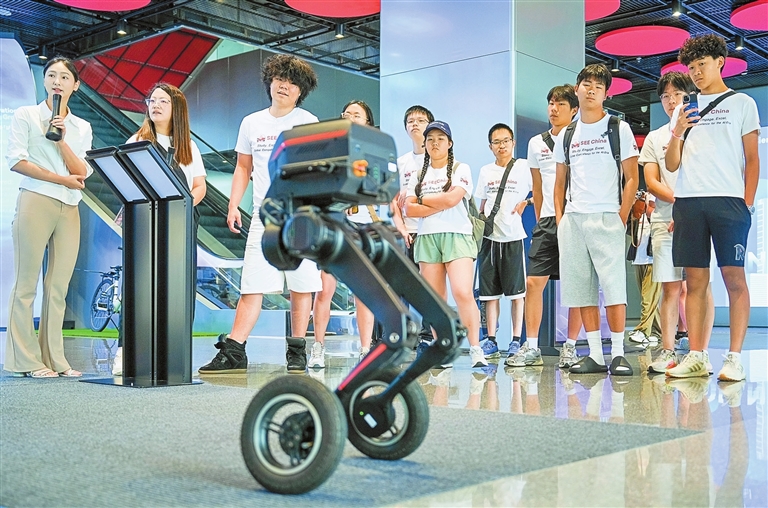
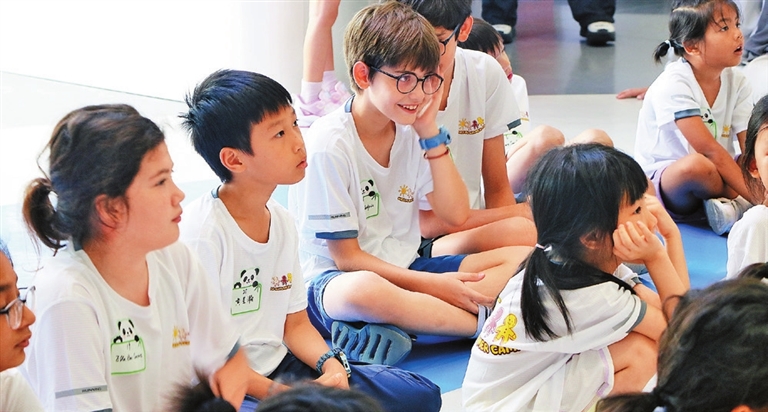
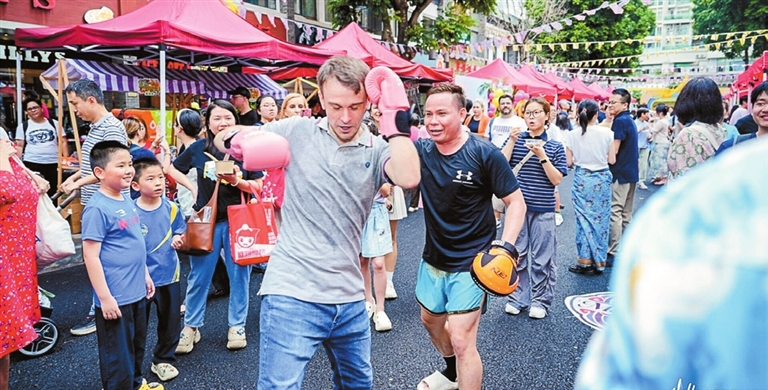
AS the 2026 APEC Economic Leaders’ Meeting approaches, Shenzhen is cultivating a citywide spirit of engagement. From government officials and business owners to gig workers and residents, the city is rolling out innovative, scenario-based training programs designed to hone communication skills, foster warmth, and ensure a polished and hospitable environment for international guests. “The two-day training was intensive and highly rewarding,” said Zhang Xinhui, a Shenzhen Customs officer and member of the newly established Shenzhen APEC Civil Servant Multilingual Service Team. “Our goal is to convey not just information, but the warmth and unique narrative of Shenzhen.” To strengthen service readiness among public servants, the city has assembled a 455-member multilingual emergency service team, including 90 specialists proficient in lesser-spoken languages such as Japanese, French, and Russian. Building on this, the city established the dedicated APEC Civil Servant Multilingual Service Team, which recently completed a two-day intensive training program. The curriculum combined lectures, seminars and hands-on practice, covering APEC fundamentals, diplomatic etiquette, global macro trends, Shenzhen’s development opportunities, foreign-language signage standards and public service best practices. Government outreach also includes the APEC Lecture Series for government officials, which was launched Feb. 5 in Qianhai. Prof. Zheng Yongnian, dean of the School of Public Policy at The Chinese University of Hong Kong, Shenzhen, and president of the Institute for International Affairs, Qianhai, led the inaugural session, offering insights into geopolitical trends and Shenzhen’s strategic role in the summit. The series focuses on three core pillars: understanding, engaging and leveraging the APEC framework. Community participation is equally robust. On June 7, nearly 50 residents at an AI-themed night school in Shuibei Community of Luohu District completed crash courses in APEC-focused English and digital content creation. Participant Wang Daxin said the practical, scenario-based approach built his confidence in speaking English, and he hopes to volunteer during the APEC summit. Chen Baiyu, executive head of the night school, noted that the curriculum integrated communication skills with the district’s signature gold and jewelry industry, offering hands-on training for local merchants. Across the city, Shenzhen is rolling out immersive, tiered APEC learning initiatives that reach residential compounds, office buildings, commercial districts and transport hubs. With more than 1,500 training sessions held for the public to date, the initiative carries a unified theme: “Everyone knows APEC, everyone joins APEC, everyone serves APEC.” Districts are tailoring programs to meet specific needs. Futian District offers specialized training ranging from diplomatic protocol in Fubao Subdistrict and business English in the Huaqiangbei electronics hub to fun English classes in Lianhua Subdistrict. Xiangmihu Subdistrict has established a 300-member international volunteer service team and organized 69 training sessions, benefiting 15,000 people. Meanwhile, Nanshan, Yantian, Longhua and Pingshan districts are providing customized training for delivery workers and residents. To ensure the training is both practical and engaging, Shenzhen has adopted a multifaceted approach — combining cultural markets, on-site drills and hands-on workshops — to bridge the gap between classroom theory and real-world application. In Nanshan’s Shekou Subdistrict, the “Hello APEC” cultural market series blends language learning with immersive cross-cultural experiences, including music, crafts and cuisine. The market offers free language classes where residents use games, pair activities and scenario drills to master phrases for greetings, directions and self-introductions. In Xiangmihu, officials have adopted a dual-track model that pairs expert lectures with scenario-based drills. Professional instructors guide volunteers through the nuances of diplomatic reception, including seating arrangements, dress codes and proper etiquette for handshakes and business card exchanges. Through this comprehensive training framework, Shenzhen aims to prepare its citizens to welcome global guests with professional courtesy and warmth, showcasing the city’s vibrant spirit as it prepares to host the APEC 2026 summit. (Li Jing) | 