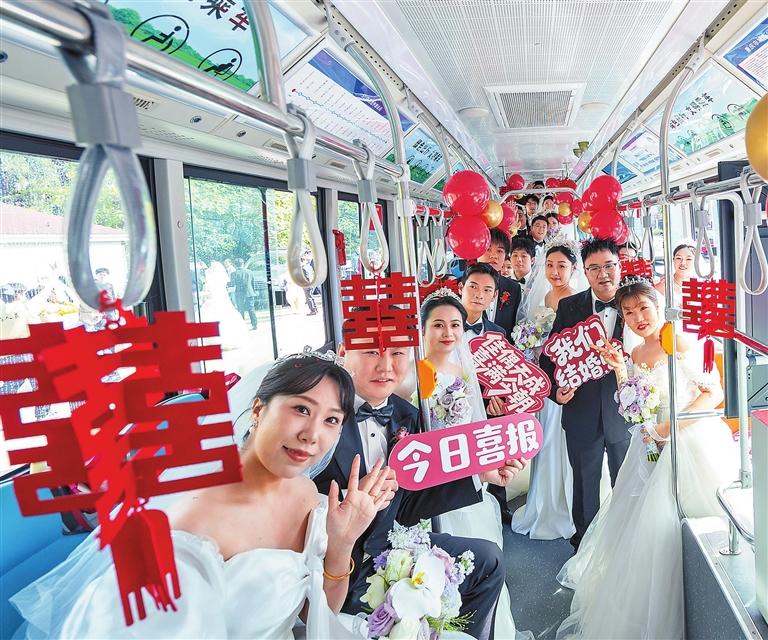
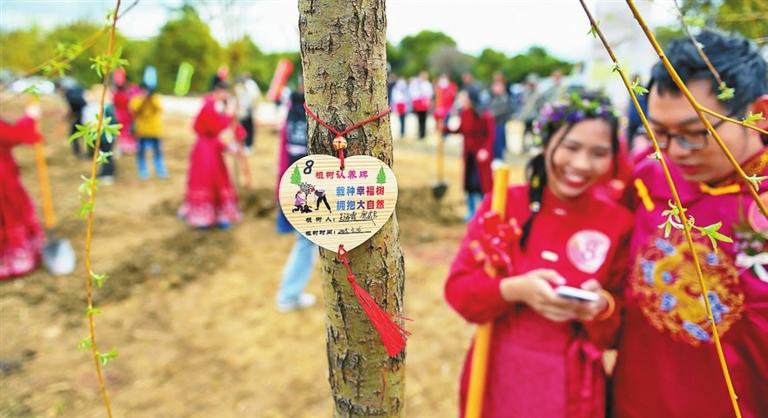
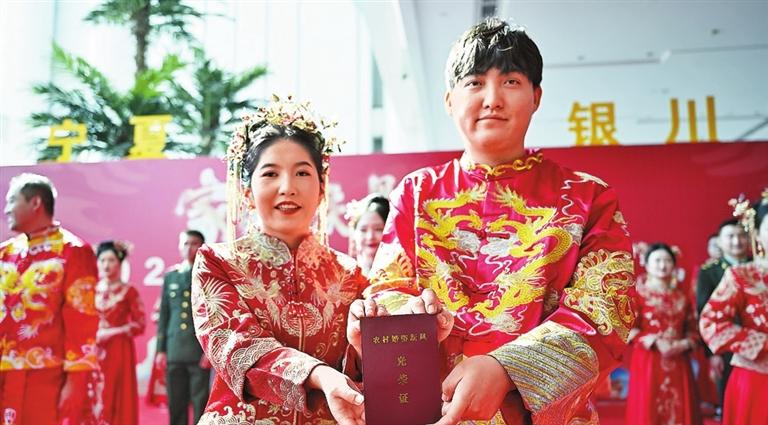
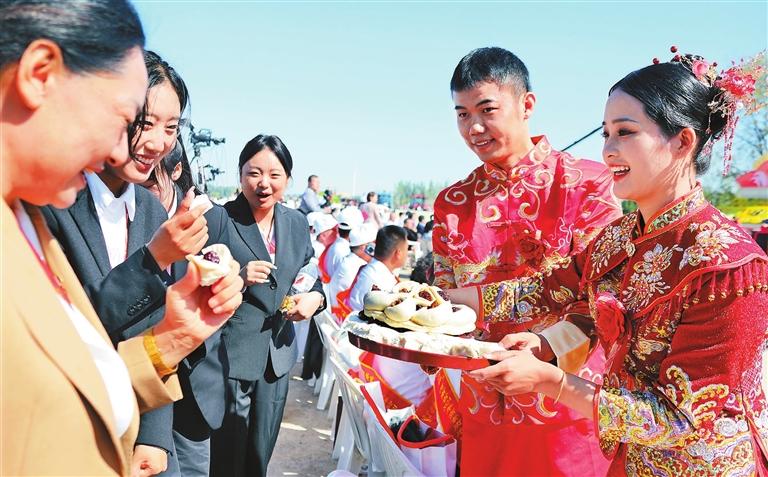

WHEN post-2000s couple Li Zhenghong and Sima Miaomiao in the city of Linyi, eastern China’s Shandong Province, were planning their wedding, they opted for a “lightweight” package at just over 10,000 yuan (US$1,473). No lavish spending and no one-upmanship could be detected, just the warm blessings of family and friends. “A simpler ceremony doesn’t mean less happiness,” Sima said. “Marriage is the start of a life together. A wedding that feels comfortable and sincere matters more than one that’s all about show,” Li added. A contest of ‘face’ In many parts of rural China, weddings were once a contest of “face.” Everything, from bride prices and banquets to luxury cars for the procession and cash gifts, was measured against that managed by other couples. Some families drained their savings, or borrowed heavily, just for a single day. In some cases, crude rituals and lavish waste turned celebration into a debt trap. In Julu County, once classified as a poverty-stricken area in North China’s Hebei Province, the typical bride price still ranges from 100,000 yuan to 200,000 yuan — a sum that can take a rural family years to save. For decades, hefty bride prices have been one of the heaviest burdens on rural households, with the cost often exceeding a family’s annual income multiple times over. China has taken aim at wedding-related excesses through a sustained policy push. In 2019, the government included the issue of wedding customs in its annual “No. 1 central document” for the first time, a move that marked the beginning of a top-down effort to deepen wedding-related reforms. The country’s “No. 1 central document” has repeatedly highlighted the problem of high bride prices in subsequent years. The 2026 document calls for continued efforts to transform outdated rural customs, rein in exorbitant bride prices, and strengthen coordinated governance among neighboring provincial regions. In August 2022, central authorities issued a proposal to launch a targeted campaign against high bride prices and lavish weddings. A judicial interpretation on handling bride price-related disputes, issued by the Supreme People’s Court, came into effect in February 2024, prohibiting the demand for money or other possessions in the name of marriage. A coordinated push In Daicun Village of Lanling County in Linyi, hosting weddings in a new, frugal way has become a shared consensus among villagers. The village has set up a local committee to oversee weddings and funerals, known locally as a “red-and-white council,” and revised its village rules and regulations to promote alternatives such as destination weddings, lawn weddings and collective weddings. Specific restrictions have been put in place, including no ceremonial arches, no hired bands, no fireworks, no luxury vehicles and no upscale banquet dishes. The village has also built a public dining hall, providing free kitchenware, as well as tables and chairs, to help residents hold dignified yet cost-effective celebrations. “The goal of transforming outdated customs is not to do away with social bonds, but to prevent them from becoming a burden of debt,” said Wang Chuanxi, head of the Daicun community. Over the past two decades, the village has helped residents save more than 20 million yuan in wedding-related expenses, with bride prices gradually dropping to around 20,000 to 30,000 yuan. The shift is not limited to this village. In Yishui County, also in Shandong Province, the local government launched a reform to reshape marriage customs and prevent villagers from engaging in costly “keeping up with the Joneses” practices. The government-issued non-mandatory guidance on simplifying weddings set the bride price at a maximum of 10,000 yuan, limited wedding cars to no more than six, and suggested cash gifts of no more than 200 yuan. “In the past, hosting weddings often involved face-saving comparisons, with expenses for bride price, wedding cars, and banquets totaling tens of thousands of yuan. The guidelines for simplifying weddings have allowed couples to save a significant amount of money,” said Liu Yangqing, a local villager who held a wedding last year. Beyond Shandong, other localities have developed their own approaches to promoting new marriage customs. In northwestern China’s Ningxia Hui Autonomous Region, where hefty bride prices once prevailed, a targeted campaign has been launched since April 2024 to tackle high bride prices in rural areas, using innovative outreach, a reward-and-punishment system, among other measures to drive reform in marriage customs. In Haiyuan County, Li Jinyun became the first to marry without paying a bride price in Zhengqi Township, thanks to local officials’ mediation efforts between the groom’s and bride’s families. “The in-laws didn’t ask for a penny, which has truly relieved us of a huge financial burden,” said Li Chengxiao, Li Jinyun’s father. “I have a daughter as well, and when it’s her turn to marry, I will also support a zero or low bride price.” In Dingtang Township, located in Tongxin County in Ningxia, heads of local women’s federations from 19 villages were mobilized to act as volunteer matchmakers, while also promoting a new approach to marriage. “We only facilitate matchmaking for those who forego hefty bride prices,” said Ma Xiaoyan, head of the women’s federation in Ganwangou Village. Ma has successfully facilitated the marriages of three couples, one of whom married without a bride price, while the others paid a reasonable amount. The trend toward civilized weddings is also spreading from townships in eastern China to more rural areas in the west. In Gongjiaquan Village, northwestern China’s Shaanxi Province, an old opera stage with over 50 years of history has been transformed into a village-level community events venue, equipped with a 20-square-meter LED screen, kitchenware, tables, chairs and other facilities. “With its full range of functions and user-friendly setup, it has become the venue of choice for young couples in the village to hold their wedding banquets,” said Li Junping, director of the village’s supervisory committee for routine affairs. It was right here that villagers Lu Qiao and Pan Yanzi held their wedding banquet. They hosted a feast for relatives and friends from both families, following a set standard of no more than 30 tables and a budget of no more than 200 yuan per table. In the end, their actual expenses came in 50,000 yuan below their original budget. “It feels very meaningful to hold our wedding on the old opera stage that carries so many childhood memories,” Lu said. In Jiangxi Province, volunteers have composed and performed folk songs advocating for a zero bride price, spreading the message through local performances. “Searching round and round, for a good lad; what matters is integrity, and with that, we could say no to bride price and dowry” — such lyrics have resonated with villagers and helped shift attitudes toward simpler weddings. For those who opt for zero or low bride prices, some areas are providing tangible incentives, including free wedding banquet venues, priority in job recruitment, and pension subsidies. In Yanggu County, Shandong, and its neighboring counties of Taiqian and Fanxian in Henan Province, regular matchmaker exchanges are now held, with agreed-upon caps on bride prices and wedding banquet costs. They also jointly host group certificate-presentation ceremonies for newlyweds. Yanggu has brought skits about bride-price issues to village stages, helping local residents understand new wedding customs through humor. “My parents didn’t ask for a bride price. The 88,000 yuan was what my fiance and I agreed upon — just for good luck,” said Shang Lina, a local villager. “But on the very day of our engagement, my parents gave the money back to us, hoping it would not only help support our new family, but also give our marriage the best possible start,” she added. The efforts appear to be yielding results beyond individual villages. According to official data, the number of marriage registrations in China, which had dropped for nine consecutive years, rose again. While multiple factors contribute to this trend, reduced financial pressure from weddings is seen as one of them. A quiet shift takes hold As one of the world’s most populous countries, China faces profound demographic challenges posed by its rapidly aging population. Official statistics show that nearly 297 million Chinese people were aged 60 or above in 2023, accounting for 21.1% of the total population. Easing the financial burden of marriage is increasingly viewed as one of the ways to support a more newlywed-friendly society and, in the longer term, to address demographic concerns. The transformation of rural wedding customs is neither quick nor uniform across the country. In some regions, the practice of hefty bride prices remains deeply entrenched, and changing attitudes takes time. Yet the direction is clear: from Shandong’s village-level “red-and-white councils” to Ningxia’s volunteer matchmakers, from Jiangxi’s folk songs to Shaanxi’s repurposed opera stages, a quiet but steady shift is underway. What was once a contest of “face” is slowly giving way to something simpler: a celebration of two people starting a life together, free from the weight of debt and comparison.(Xinhua) | 