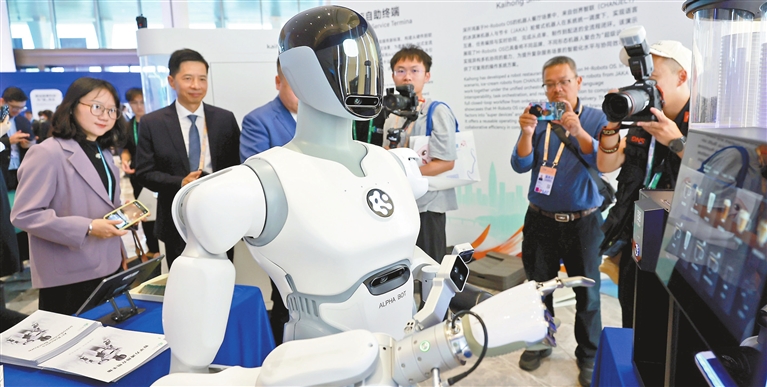
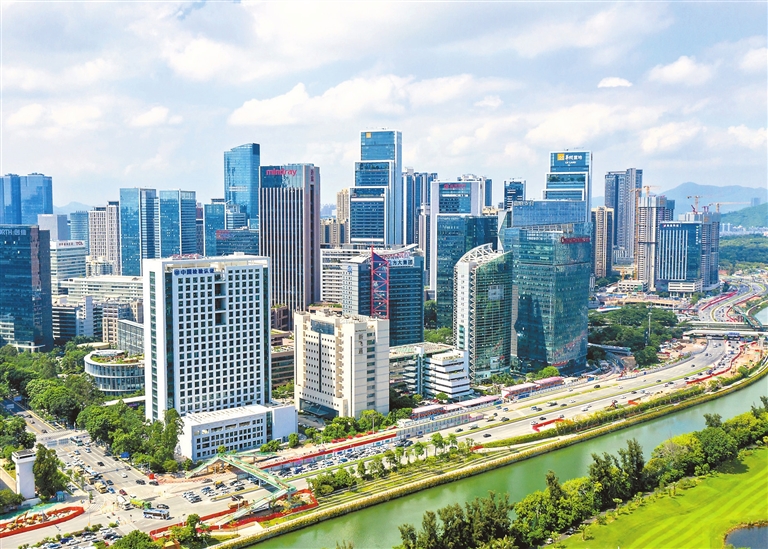
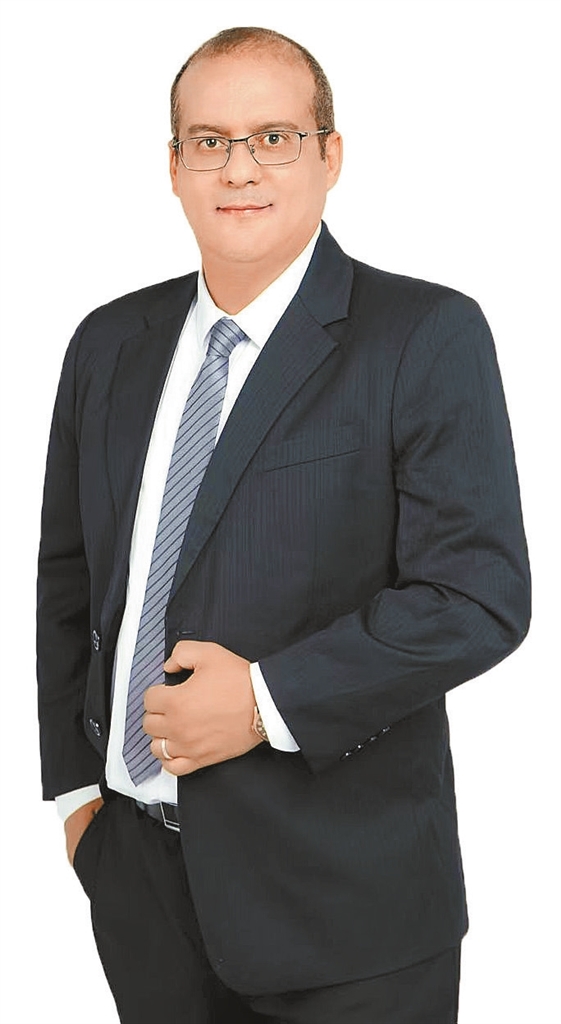
CHINA’S decision to host APEC in Shenzhen carries profound significance, said David Bassir, president of the Sino-French Association for Science and Technology and professor at Dongguan University of Technology (DGUT). “I have lived and worked in the Guangdong-Hong Kong-Macao Greater Bay Area for more than 16 years and have witnessed Shenzhen become one of the world’s most dynamic centers for innovation, technology and international collaboration,” Bassir said. The choice, he said, recognizes Shenzhen’s economic achievements and sends a message that the city can quickly turn cutting-edge ideas into practical solutions. Shenzhen has developed an ecosystem in which universities, research institutions, startups and multinational companies work closely together, creating a self-reinforcing cycle that accelerates scientific discovery, technological breakthroughs and industrial upgrading, he said. “As a researcher, I see another layer of significance. Shenzhen is an open platform where researchers, entrepreneurs and innovators from around the world can collaborate efficiently,” he said. “I believe the APEC meeting will further strengthen the Greater Bay Area’s role as a bridge linking Asia-Pacific economies with the global innovation network.” Bassir’s research focuses on digital twins and AI-based structural monitoring — using sensors and AI to assess infrastructure and predict potential problems. He said Shenzhen offers an ideal environment for developing and testing technologies in smart manufacturing, intelligent infrastructure, robotics and the low-altitude economy. “What impresses me most is the city’s ability to translate innovation into real-world value,” he said. Bassir cited infrastructure safety as an example. Technologies for early damage detection and predictive maintenance developed by the DGUT-CNAM Institute are designed for bridges and major engineering projects nationwide. “Although these technologies can be used nationwide, Shenzhen provides an ideal testing ground,” he said, citing its smart-city infrastructure, advanced industries and open innovation ecosystem. AI-based monitoring, digital twins and smart inspections can be deployed here quickly. Bassir said Shenzhen’s strengths extend beyond technology to its collaborative spirit, efficiency and drive for innovation. He first came to China in 2007 on the recommendation of Northwestern Polytechnical University. In 2010, he became science and technology consul at the Consulate General of France in Guangzhou. He now leads the Sino-French Association for Science and Technology and teaches at DGUT. “Upon arriving in Guangdong, I immediately sensed the region’s potential,” Bassir said, recalling the strong impression made by Shenzhen, Guangzhou and Zhuhai. Two memories stand out. One was the Zhuhai Airshow, which brought together aerospace professionals from around the world, including French firms involved in China’s C919 passenger jet program. The other was his first visit to the Changan-PSA Shenzhen facility. Its engineering team initially numbered only about a dozen people but grew to several hundred over the following decade. Based in Shekou, the Sino-French Association for Science and Technology promotes links between innovative companies and research institutions in China and France. Bassir said he had remained in the Greater Bay Area because it offered “a rare combination of industrial opportunities, a strong research environment and a vibrant urban character.” He said the region now has world-class infrastructure and growing opportunities for international talent. The greater challenge, he said, is retaining talent by providing professionals and their families with a stable and supportive environment in which they can build their futures. For first-time visitors to Shenzhen, Bassir recommends the city’s science and technology parks, Shenzhen University Town and Shenzhen Talent Park. Together, he said, these sites offer a snapshot of Shenzhen’s innovation ecosystem, research infrastructure and quality of life. (Li Jing) | 