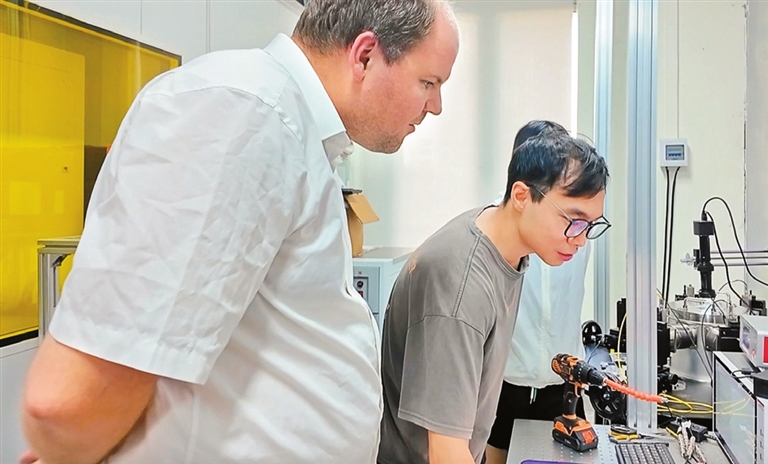
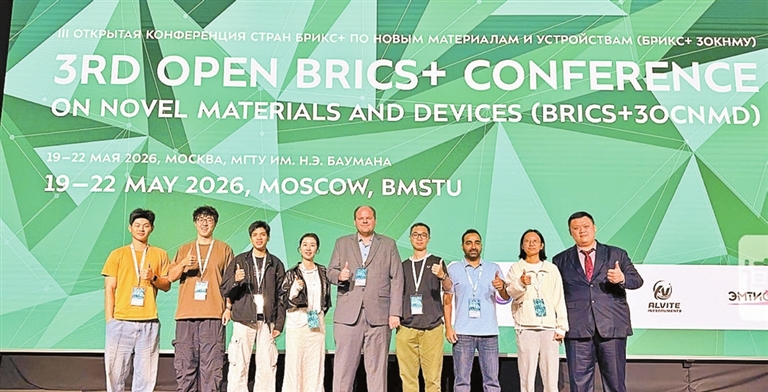
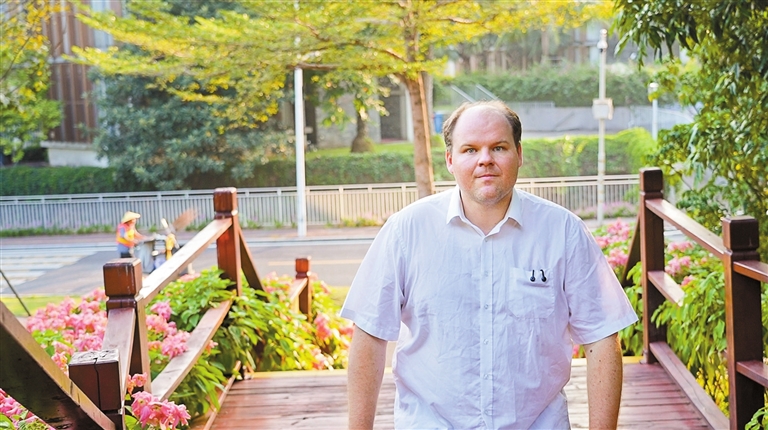
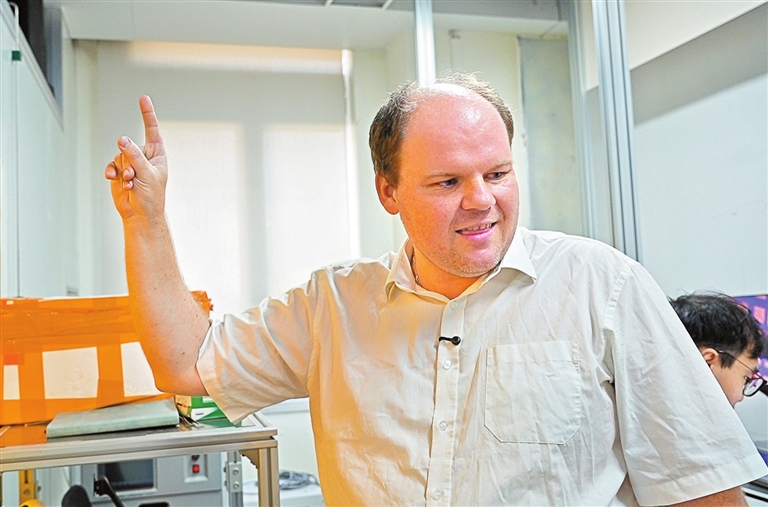

Editor’s note: “Once you arrive, you are a Shenzhener.” Many expats from fellow APEC economies have already settled down, built their careers, and found a sense of belonging in Shenzhen. They are both pioneers of a new era and familiar faces in local neighborhoods. In transitioning from “foreign visitors” to “fellow Shenzheners,” they have fully unleashed their potential and forged a mutually rewarding journey alongside this vibrant city. Beginning today, Shenzhen Special Zone Daily, Dute News and Shenzhen Daily under Shenzhen News Group, together with the Shenzhen Municipal Talent Affairs Bureau, are jointly launching a special series: Right Here in Shenzhen: Stories of International Residents from APEC Economies. Through candid lenses and heartfelt narratives, we will chronicle their Shenzhen stories and preserve the warmth of this remarkable city. We invite you to stay tuned. Ni Yongping, Xu Song and Fang Mubing 978413794@qq.com A BOUQUET of flowers sits on a low cabinet beside Yury Illarionov’s desk. The petals have dried, but the message on the card remains clear: “Happy Teachers’ Day.” Two months after receiving the gift from his students, Illarionov still tends to it, straightening the bouquet and brushing off any dust that settles on it each morning. It is a small ritual, but one that captures something of his life in Shenzhen. More than three years ago, the Russian scientist left Austria and moved halfway around the world to join the Southern University of Science and Technology (SUSTech). Today, as an associate professor in the Department of Materials Science and Engineering and a scholar listed among the world’s top 2% scientists, he has found a place where his scientific ambitions can take shape — and where he has gradually come to feel at home. Building skyscrapers on a chip To explain his work, Illarionov often turns to one of Shenzhen’s most familiar sights: its skyscrapers. For decades, the semiconductor industry has advanced by shrinking transistors and packing more of them onto a chip. But as conventional silicon technology approaches its physical limits, the next step may be to build upward. “Initially, you know, the chips, they have been made with many transistors put together next to each other, just like old Shenzhen villages, right?” he explained. “We need to go vertically, put transistors not next to each other but on top of each other, just like skyscrapers in Shenzhen.” His research explores how atomically thin, two-dimensional materials could help make that transition possible. But stacking transistors is only part of the challenge. A single transistor may perform beautifully in a laboratory, yet producing millions of reliable devices at industrial scale is another matter. Even a microscopic flaw can compromise a device, and closing that gap is at the heart of his team’s work. “My goal is to test the reliability of this device, to make sure that these devices will work forever,” Illarionov said. His group studies the mechanisms behind defects and degradation, looking for ways to make next-generation electronics reliable enough for real-world use. They also explore whether imperfect devices might still serve another purpose. “Even if the device is not working, even if it’s drifting, we would like to try to find how to use it for some other applications — for example, memories,” he notes. From afar to the center of opportunity Before joining SUSTech in 2023, Illarionov had visited Shenzhen four times. Each trip made the prospect of building a future here more compelling. When he eventually left his laboratory in Austria for China, some former colleagues were surprised. “To be honest, about Europe, there are many stereotypes that everything is good there,” he said. “But in fact, China offers much better facilities now.” For Illarionov, Shenzhen offered the essentials for building a research career: advanced infrastructure, room to develop independently and a platform connected to a wider scientific community. At SUSTech, his own laboratory and access to advanced facilities have given his team the freedom to pursue ambitious work. “In Europe they don’t have any opportunities to give a separate lab with clean room facilities to every professor,” he said. “This is possible only in China now.” He also sees China as offering international researchers greater opportunities to build their own teams. Shenzhen’s academic ecosystem, and its close links between research and industry, were another draw. “Even a usual lab just like my lab can organize a big conference,” he said. “In Europe, I don’t think it’s possible.” But facilities and professional opportunities alone could not turn a career move into a sense of belonging. A home away from home What has impressed Illarionov most, however, is the energy and solidarity of Chinese research teams, including his own. In his own lab, students push one another to do better while supporting each other through the setbacks that come with research — a dynamic he describes as more like a family of siblings than a conventional workplace. Every team member gets a birthday celebration. When he returns from St. Petersburg, his suitcase is filled with Russian chocolates for his students; when he travels home, he brings Chinese tea for his family. His students say he brings the same attentiveness to their futures, helping those interested in industry make connections while encouraging aspiring academics to aim higher in their research. “He constantly gives us affirmation; he is a typical encouraging mentor,” said Lyu Yezhu, a senior student in the team. “He not only tries his best to help us complete our studies but also cares deeply about our future development. For those who want to enter the industry, he helps connect resources; for those who want to pursue an academic path, he urges them to publish more high-quality papers.” Most mornings, Illarionov meets with students before they head to lunch. His own meal often comes much later, sometimes around 3 or 3:30 in the afternoon, before he turns to his own work during the quieter hours of the day. Outside the laboratory, he has found his own rhythm in Shenzhen. He enjoys walking through the city at night, watching it change around him. A research building behind his department's offices was just beginning construction when he arrived, now it is in use. “The infrastructure in Shenzhen is also developing very fast,” he said. “So it’s a very good city.” After a long day, he unwinds with traditional Chinese massage, usually twice a week. He has also come to appreciate the city’s everyday conveniences — from being able to manage nearly everything on his phone to the sense of safety that allows him to walk late at night. A fan of Western cuisine, he can dine out or order cheese and seafood online for delivery. More than three years on, Illarionov no longer moves through Shenzhen like a visitor. His life here now stretches well beyond the laboratory — from the students he mentors and the research he pursues to the ordinary routines that make a city feel familiar. “Shenzhen is a modern city, and very cool. Come to Shenzhen and you will never regret it,” Illarionov told reporters, extending a warm invitation to his compatriots in Russian. He also believes that the 2026 APEC Economic Leaders' Week will help more people discover this dynamic city. The bouquet remains on the cabinet beside his desk. Every morning, he gently dusts it off and sets it straight. For a scientist devoted to making technology last, it is a fitting ritual — a quiet act of care for something that has endured, and for a life that has slowly taken root. | 