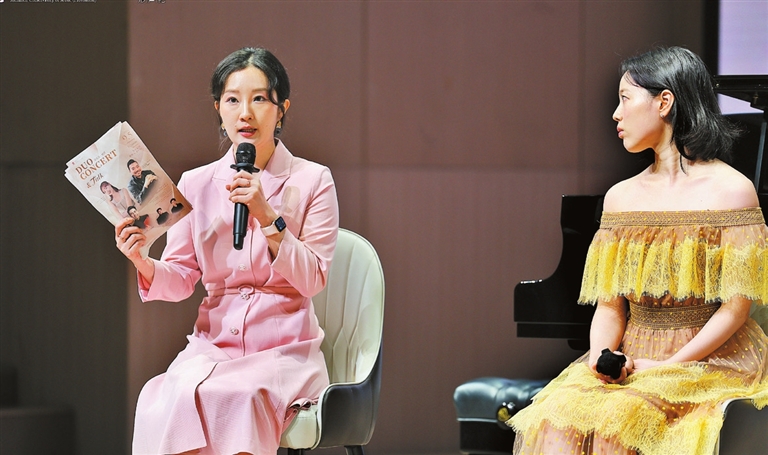
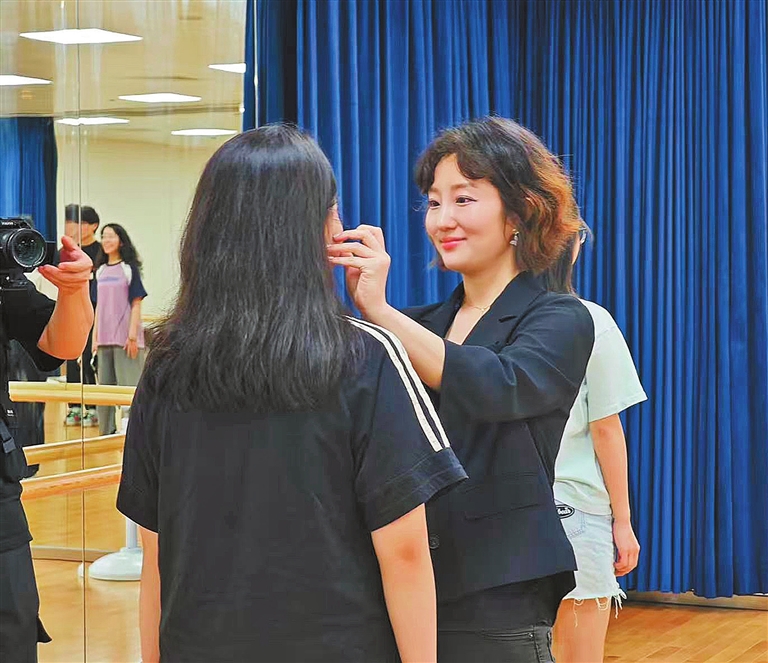
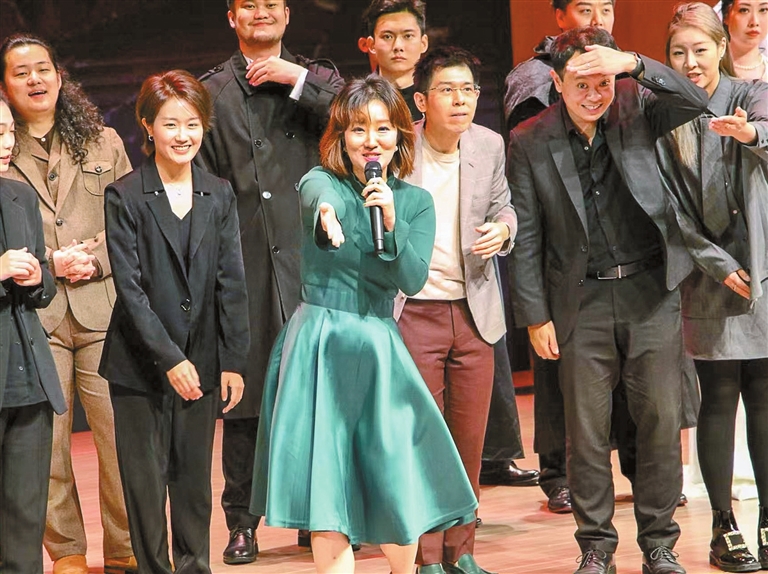
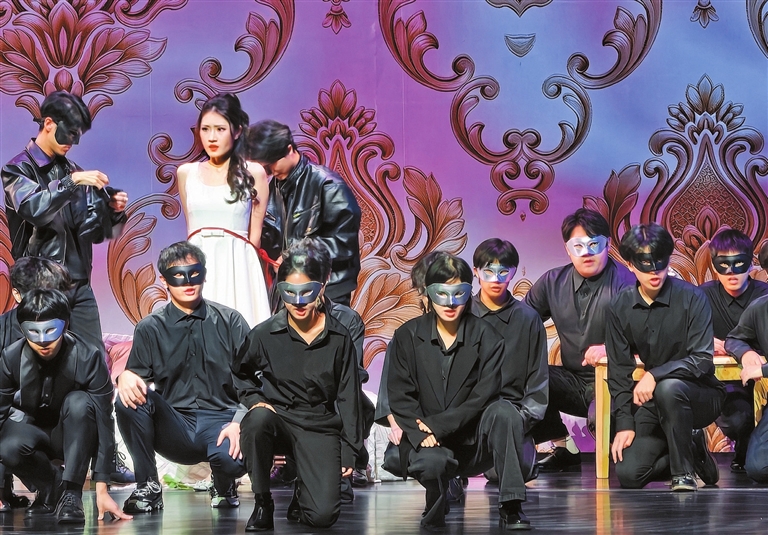
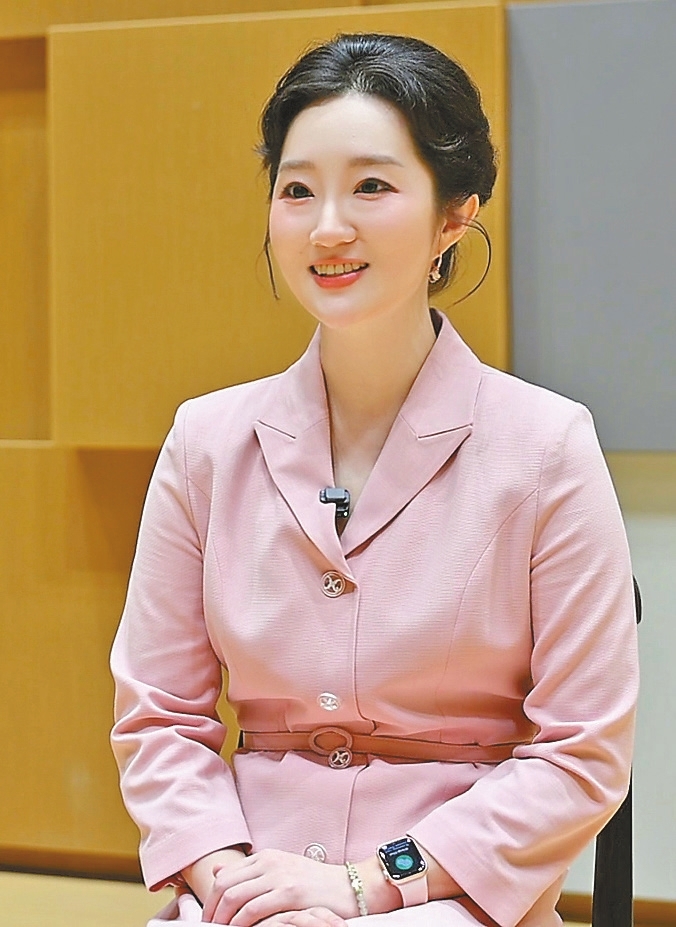
Editor’s note: “Once you arrive, you are a Shenzhener.” Many expats from fellow APEC economies have already settled down, built their careers, and found a sense of belonging in Shenzhen. They are both pioneers of a new era and familiar faces in local neighborhoods. In transitioning from “foreign visitors” to “fellow Shenzheners,” they have fully unleashed their potential and forged a mutually rewarding journey alongside this vibrant city. Beginning today, Shenzhen Special Zone Daily, Dute News and Shenzhen Daily under Shenzhen News Group, together with the Shenzhen Municipal Talent Affairs Bureau, are jointly launching a special series: Right Here in Shenzhen: Stories of International Residents from APEC Economies. Through candid lenses and heartfelt narratives, we will chronicle their Shenzhen stories and preserve the warmth of this remarkable city. We invite you to stay tuned. Xu Song, Zou Yuan, Wu Dequn and Chen Siqi vankochensq@163.com THE finale of an opera recital echoed through the Run Run Shaw International Conference Centre at The Chinese University of Hong Kong, Shenzhen (CUHK-Shenzhen) on Oct. 29. “Sta ’nfronte a te! Sta ’nfronte a te!” As the last note of the classic Neapolitan ballad “’O sole mio” (“My Sun”) faded, Park So-hyun stood before the stage, her hands held steady in mid-air — as if holding up one last beam of light for that sun. The applause chased the final note into the air. Park knew the performance had resonated. It was Park’s third year in Shenzhen. From Seoul’s opera stages to the halls of the University of Texas at Austin, and to a lectern by Shenzhen Bay, Park — a South Korean opera director and assistant professor at the School of Music, The Chinese University of Hong Kong, Shenzhen — now calls the city her home away from home. In a city famed for its speed and youth, she has raised the curtain on a new chapter for classical opera. Light behind the clouds Park was supposed to be the light onstage. She once dreamed big and bright: of becoming a soprano at New York’s Metropolitan Opera, while studying at Seoul National University’s Department of Vocal Music. But fate rewrote her script. Vocal nodules clouded the light inside her. She could no longer sing those high notes. “At the time, I thought my sun had gone out,” Park said. She could not leave opera behind. Her mentor’s suggestion lit a new flame: “Become a director.” If she could not sing under the spotlight, she would become the person who lights up the stage. Park accepted another way of chasing the light. She went to the University of Texas at Austin to study opera directing, earning a master’s degree and a doctorate in musical arts. In Chicago and Saratoga, and at the Seoul Metropolitan Opera, she worked as an assistant director, stage manager, surtitle operator and opera director — learning every role, front and back. “I was once a singer onstage, so I know exactly what performers need,” Park said. Having stood in the light, she also knows every step outside it. In 2023, a Chinese tenor friend she had met while studying in the U.S. told her that CUHK-Shenzhen was hiring an opera director. She did not speak Chinese at the time and had misgivings. Her friend urged her on: “It is an international university. You can teach in English.” So she came. That autumn, she came to Shenzhen on a three-year contract. She felt half hope, half worry: Could a city that prizes innovation and speed make room for arias? Could it make room for a foreign light-chaser? A stage before sunrise Shenzhen’s first surprise was the light in her students’ eyes. On the first day of class, she asked: “Who has performed onstage?” Twenty-six students raised their hands — then quietly lowered them again. No experience, no opportunities, only longing. She decided to replace the traditional midterm and final requirement of “singing two arias” with “exam concerts.” She designed the posters herself and arranged professional lighting. The school provided funds for props and stage furniture. Students chose costumes from their own wardrobes. The female students did their own makeup and helped the male students with theirs. More than a dozen opera excerpts were performed in sequence, each student getting several minutes in the spotlight. The venue was the university concert hall, open to the public. She was determined to give every student starting from zero a spotlight — the very light she had once been denied. Park calls the model “performance-led teaching.” Unlike traditional conservatories, which keep opera locked in the score, she lets acting, movement, and blocking speak first. Even if the audience cannot follow Italian, French or German, they can grasp the joy and sorrow through a performer’s body, eyes and expression. She cited Shenzhen’s original dance drama “Wing Chun”: “It tells a story without lines, through the body and the visual. Opera can do the same.” “Students get stage experience and the public gets closer to opera. It is a win-win,” Park said. The first time they went onstage, the students were so nervous that their voices shook, “adorably so,” she recalled. By the second year, she could see each of them becoming more relaxed and confident onstage. “Many students sent me private messages thanking me for fighting for stage practice. That gives me real joy and satisfaction.” So when the applause rose after the recital, Park did not turn around. She wanted to give the light to those onstage. Her arms held the light — while her students, on stage, raised a sun of their own. New light, rain or shine Shenzhen’s booming AI industry has also cast a new beam of light on opera. “Youth is the greatest gift Shenzhen gives to art. Some older cities are bent on guarding the classics. Shenzhen is not trapped by convention; it paints its own sunrise for the future,” she said. She does not rush to prove “how noble Western opera is.” She would rather ask: Can opera conjure another, unseen sun here? Before coming to Shenzhen, Park had barely touched AI. After settling here, the city’s tech scene and the university’s push for interdisciplinary innovation kept inspiring her. If she needed costume ideas, she described a character to AI and asked it to generate reference images. If a movement concept was hard to explain, she had AI render it in plain Chinese for her students. She would also hash out lighting composition and character emotions with an AI algorithm. She even has a romantic idea: bring Shenzhen’s signature drone light show onto the opera stage, using flowing light across the sky to create a “sun” unique to Pengcheng, Shenzhen’s moniker meaning “Roc City.” Beyond tech, this foreign light-chaser has warmly embraced Shenzhen’s everyday life. Cantonese food, hotpot, and small bars have gradually turned a Seoul palate into a Shenzhen one. One-tap phone orders, late-night shopping, and clean, bright streets — convenience is no small matter for a creator in a foreign city. It takes away the anxiety of drifting and leaves energy for the stage. “In Shenzhen, I feel more at ease than I did in Seoul,” Park said. At first, she had planned to return to South Korea when her contract expired. Now she has not only signed a renewal but is also looking further ahead: staging an opera based on a Chinese story at the Guangzhou Opera House, and weaving Chinese, South Korean, and other Eastern and global voices into a single production at the Shanghai Opera House. The rehearsal room lights went out one by one. The hand-drawn poster she made was still on the bulletin board, previewing the next “exam.” Park hopes that more young people who love art will come to the city and hold up a light of their own. | 