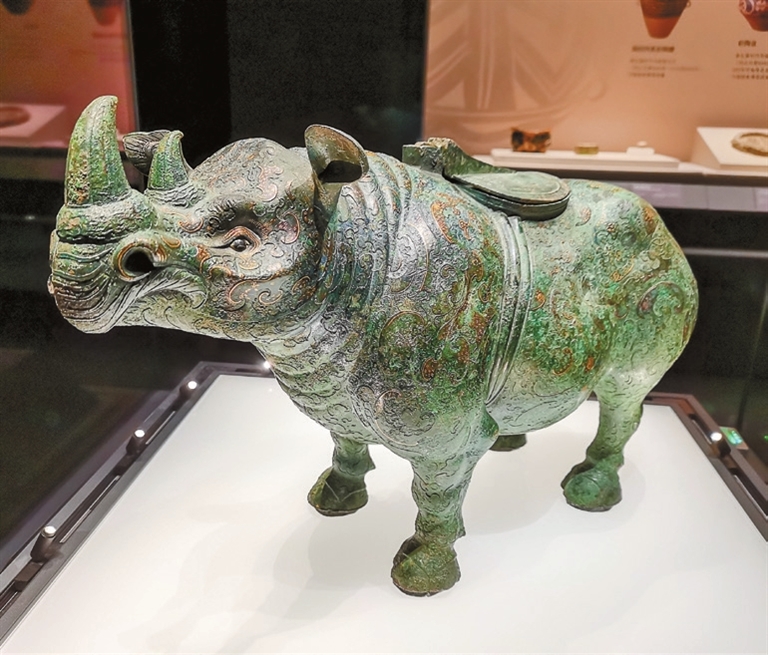
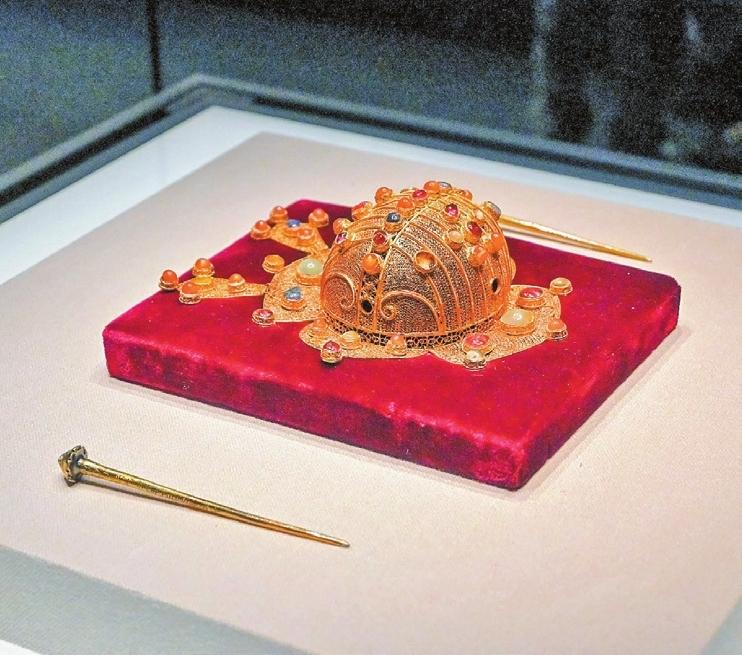
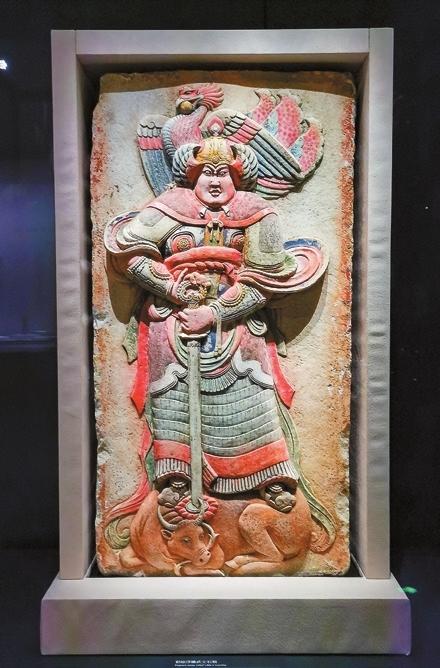
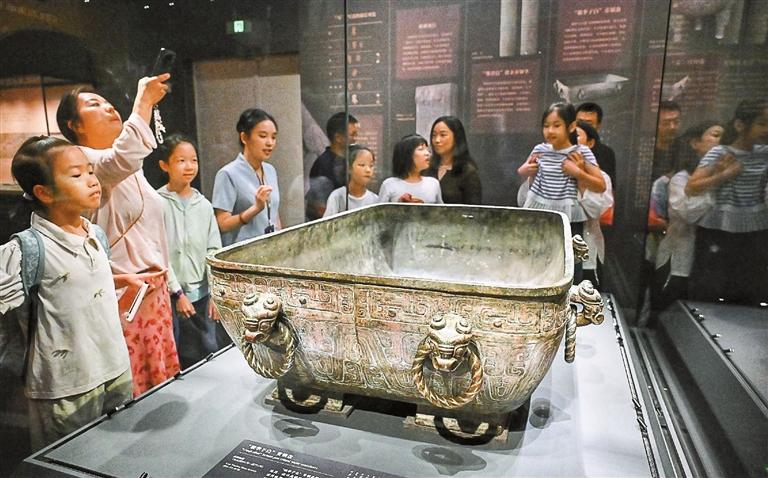
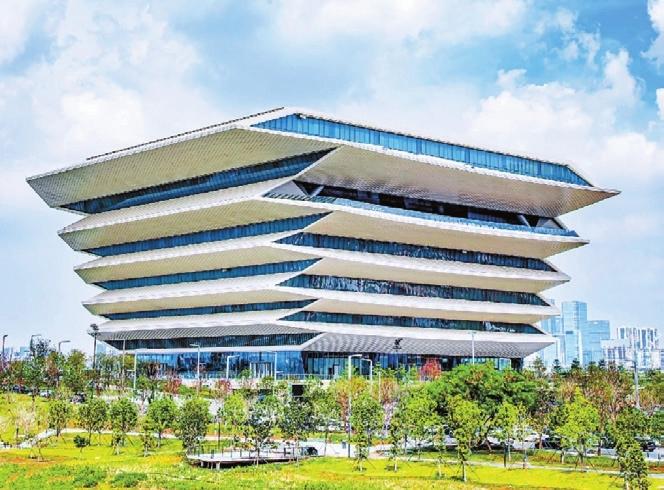
SHENZHEN’S newest cultural landmark, the Qianhai Museum, has opened to the public, offering visitors a rare chance to trace the sweep of Chinese history through treasures from the National Museum of China (NMC). Jointly developed by the Shenzhen Municipal Government and the National Museum of China, the museum is located in the Qianwan area. The building was designed by a team led by He Jingtang, an academician of the Chinese Academy of Engineering, under the concept “Tree of Civilization, Beacon of the Era.” Its form draws on the traditional Chinese architectural motif of “overlapping eaves,” transformed into layered, unfolding roof forms that resemble a growing tree. The museum has a total floor area of 126,000 square meters, including 40,000 square meters of exhibition space. Inaugural exhibitions All four inaugural exhibitions are free to the public. “Ancient China: A Brief History” traces a million years of human history, 10,000 years of cultural history and over 5,000 years of civilization, presenting the historical picture of all ethnic groups creating, developing and consolidating a unified multiethnic country. Ten star artifacts from the NMC are on limited-time display. For example, the “Zi Long” Bronze Ding is the largest known round ding of the Shang Dynasty; lost overseas for nearly a century, it returned to China in 2006 and normally holds the center position in the NMC’s bronze hall. The Guo Ji Zi Bai Bronze Plate is the largest extant Western Zhou bronze plate. Its 111-character inscription records military exploits and rewards — and preserves how people of the time wrote. A partial rubbing of the inscription appears in sixth-grade calligraphy textbooks, making it many people’s first encounter with pre-Qin calligraphy. Dates: Permanent; the 10 highlight artifacts from the National Museum of China will be on display only through Jan. 3, 2027. “Luminous Splendor: Ancient Chinese Jade” features 429 exquisite ancient jade pieces spanning from Neolithic jade discs and Warring States jade huang to Tang jade belts, Song flower-and-bird pendants, Ming plaques and Qing jade mountain sculptures, showcasing the cultural depth and aesthetic appeal of jade across periods. Dates: Through Sept. 30, 2027 “Fire and Clay, Eternal Treasures” selects 232 fine porcelain works covering representative vessel types and important kilns from each development stage of porcelain, with many treasures making their South China debut, systematically presenting the evolution of porcelain use and aesthetics. Dates: Through Sept. 30, 2027 “Civilization’s Radiance: The Unending Legacy,” created with Tencent, uses AI, digital twins, multimodal interaction and cloud rendering to bring static artifacts to life, drawing on cultural resources from Beijing’s Central Axis, Dunhuang murals, Yinxu oracle bones, Jingdezhen porcelain and Sanxingdui. Booking Entry to the museum requires a reservation. Reservations can be made through the museum’s WeChat miniprogram. Booking opens seven days in advance, with new tickets released daily at 5 p.m. Venue: Qianhai Museum (前海博物馆) Metro: Line 5 to Qianwan Park Station (前湾公园站), Exit C, then transfer to shuttle bus B960(SD News) | 